
Lined Curtains for Canberra Apartments: When Are They Better Than Standard Sheers?
Learn when lined curtains may suit a Canberra apartment better than standard sheers, including privacy, light control, drape, winter comfort, maintenance and the QT Canberra Apartment project.
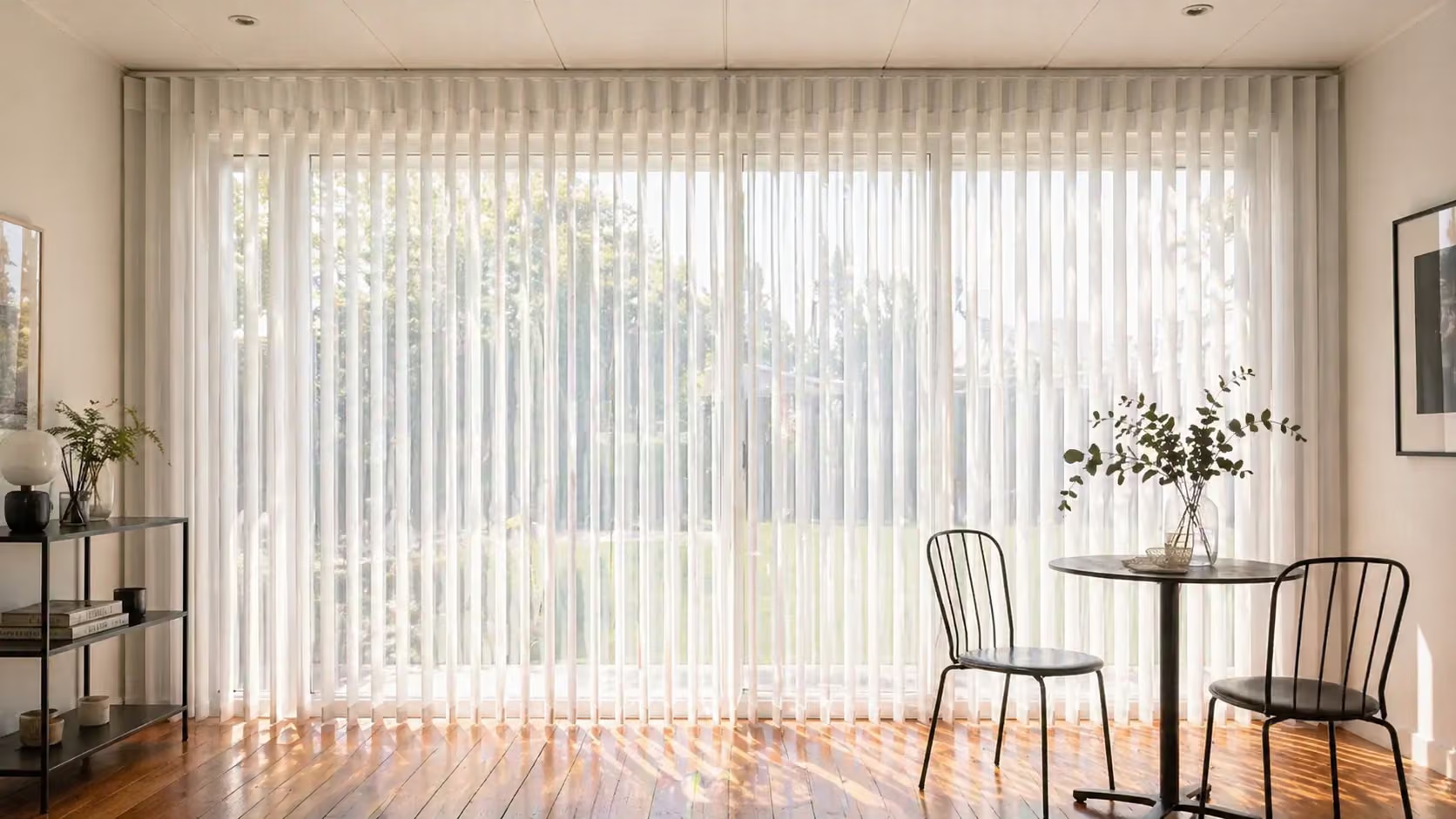
Curtains can change both the performance and atmosphere of an apartment. Standard sheer curtains soften daylight and make large windows feel less exposed, while lined curtains provide more substantial coverage, a fuller drape and stronger privacy.
Neither option is automatically better. The right choice depends on what the room needs during the day and after dark.
Choose standard sheers when maintaining natural light, openness and a soft view through the window are the main priorities. Choose lined curtains when the room requires more privacy, greater light reduction, a heavier visual finish or additional coverage around the glass. In some apartments, the two can be installed together so that each layer performs a separate role.
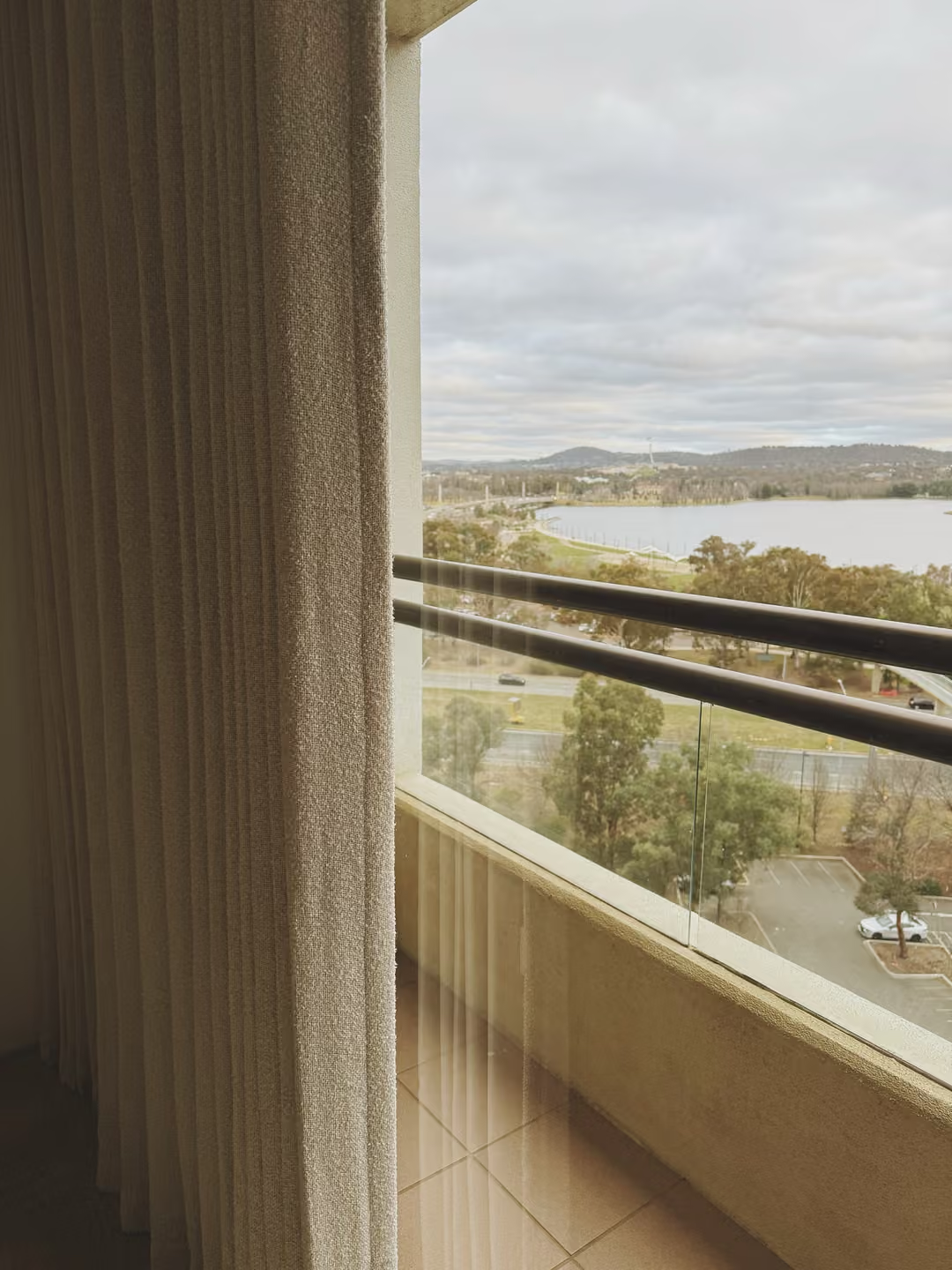
The QT Canberra Apartment provides a real example of lined curtains used as part of a refined apartment interior. Sweet Home Blinds installed wool-finish lined curtains tailored to complement the building’s distinctive design language. The curtains introduced texture and a more substantial drape rather than relying on a lightweight translucent fabric alone.
For comparison, the Griffith Apartment used all-linen sheer curtains to create soft natural light and a calm atmosphere. These two Canberra projects show that curtain selection should begin with the desired result. QT required a richer and more enclosed finish, while Griffith prioritised lightness and daylight filtering.
What Is a Lined Curtain?
A lined curtain is constructed with a face fabric and a separate material attached behind it. The lining sits between the room and the window when the curtain is closed.
The face fabric determines much of the visible colour, texture and style. The lining changes how the complete curtain hangs and performs. It can add weight, reduce light passing through the face fabric and provide greater separation between the room and the glass.
Not every lining produces the same result. Some linings are selected mainly to improve drape and protect the face fabric. Others provide stronger light reduction or privacy. A curtain described as lined should not automatically be assumed to provide complete blockout.
The finished performance depends on the face fabric, lining material, heading, track position, curtain fullness and coverage around the window. Light may still enter above, below or beside a lined curtain if the installation leaves functional gaps.
This is why fabric samples should be assessed as a complete combination. Looking at the decorative face fabric alone does not show how the curtain will behave once the lining has been added.
Homeowners whose main priority is strong room darkening should compare lined options with dedicated blockout curtains and discuss the complete installation during measurement.
How Are Standard Sheer Curtains Different?
Sheer curtains use lightweight translucent fabric. They are designed to diffuse daylight rather than remove it.
When closed during the day, sheers soften the appearance of the glass and reduce the sharp contrast between a bright window and the surrounding interior. Their folds also introduce movement and texture without creating the same visual weight as an opaque curtain.
Standard sheers are particularly effective across large apartment windows and sliding doors. A ceiling-mounted track can connect several areas of glazing into one continuous fabric feature and make the room feel taller.
However, sheers do not provide dependable night-time privacy. Their performance changes according to the relative brightness inside and outside. During the day, a bright exterior can make direct views into the apartment more difficult. After dark, interior lighting can make the room more visible through the fabric.
Sweet Home Blinds explains the role of translucent fabric in its guide to how sheer curtains can transform a Canberra home. The main value of a sheer is its ability to balance softness, daylight and openness rather than provide complete coverage.
A sheer curtain may therefore be sufficient for a private upper-level living room, while a street-facing bedroom usually requires an additional opaque layer.
The Main Difference Is Not Only Fabric Thickness
It is easy to describe lined curtains as heavy and sheers as light, but the difference extends beyond thickness.
A lined curtain creates a more defined visual boundary between the apartment and the window. When closed, it changes the glass wall into a broad fabric surface. The room can feel more enclosed, private and visually settled.
A sheer curtain keeps the relationship with the window more visible. Daylight continues to pass through, and the outline of the exterior may remain present. This helps the apartment feel open even when the curtain is drawn.
The operating experience is also different. A lined curtain contains more material and weight. Its track and fixings need to support the complete construction, particularly across a wide opening. The curtain stack may also occupy more space when open.
Sheers are lighter, but their appearance depends greatly on fullness. A wide apartment window can still require a substantial amount of sheer fabric to create consistent folds.
The decision should therefore consider the complete opening rather than comparing the price or weight of one fabric sample.
A Real Canberra Example: QT Canberra Apartment
The QT Canberra Apartment project demonstrates how lined curtains can contribute to an apartment’s overall design.
Wool-finish lined curtains were tailored for the residence. The material introduced texture and a refined drape that complemented the building’s distinctive interior character.
The value of the installation was not based on making the curtains disappear. Instead, the fabric became a visible part of the room. The fuller construction gave the window a stronger presence and supported an interior that required more depth than a standard sheer could provide by itself.
This approach can work well in apartments where the curtain needs to connect with upholstered furniture, carpet, artwork or other textured finishes. A wool-finish appearance can make a large area of glazing feel warmer and less hard, particularly in an interior dominated by glass and smooth surfaces.
The project should not be interpreted as evidence that lined curtains are necessary in every apartment. They require adequate stacking space, suitable tracks and a design that can accommodate their visual weight.
QT Canberra shows what lined curtains can achieve when texture and drape are part of the design brief. The installation was selected for that specific apartment rather than presented as a universal alternative to sheers.
A Different Canberra Example: Griffith Apartment
The Griffith Apartment demonstrates a lighter approach.
All-linen sheer curtains were chosen to filter natural light throughout the home and create a soft, elegant atmosphere. Instead of forming an opaque boundary, the sheers maintained the brightness that made the apartment feel open.
This solution was appropriate because the desired result centred on natural light and visual softness. The fabric added texture without creating a heavy wall across the windows.
Griffith provides a useful comparison with QT Canberra. Both projects used full-length fabric to improve the interior, but the curtains performed different roles. The QT installation introduced a richer, more substantial finish, while the Griffith sheers preserved a brighter and more translucent atmosphere.
The comparison also shows why “luxury” should not be associated with only one curtain type. A carefully made linen sheer can feel as refined as a lined curtain. The difference lies in the mood, privacy and light control required.
Sweet Home Blinds’ article on softening bright apartment light with sheer curtains explores this lighter approach in more detail.
Which Option Provides Better Privacy?
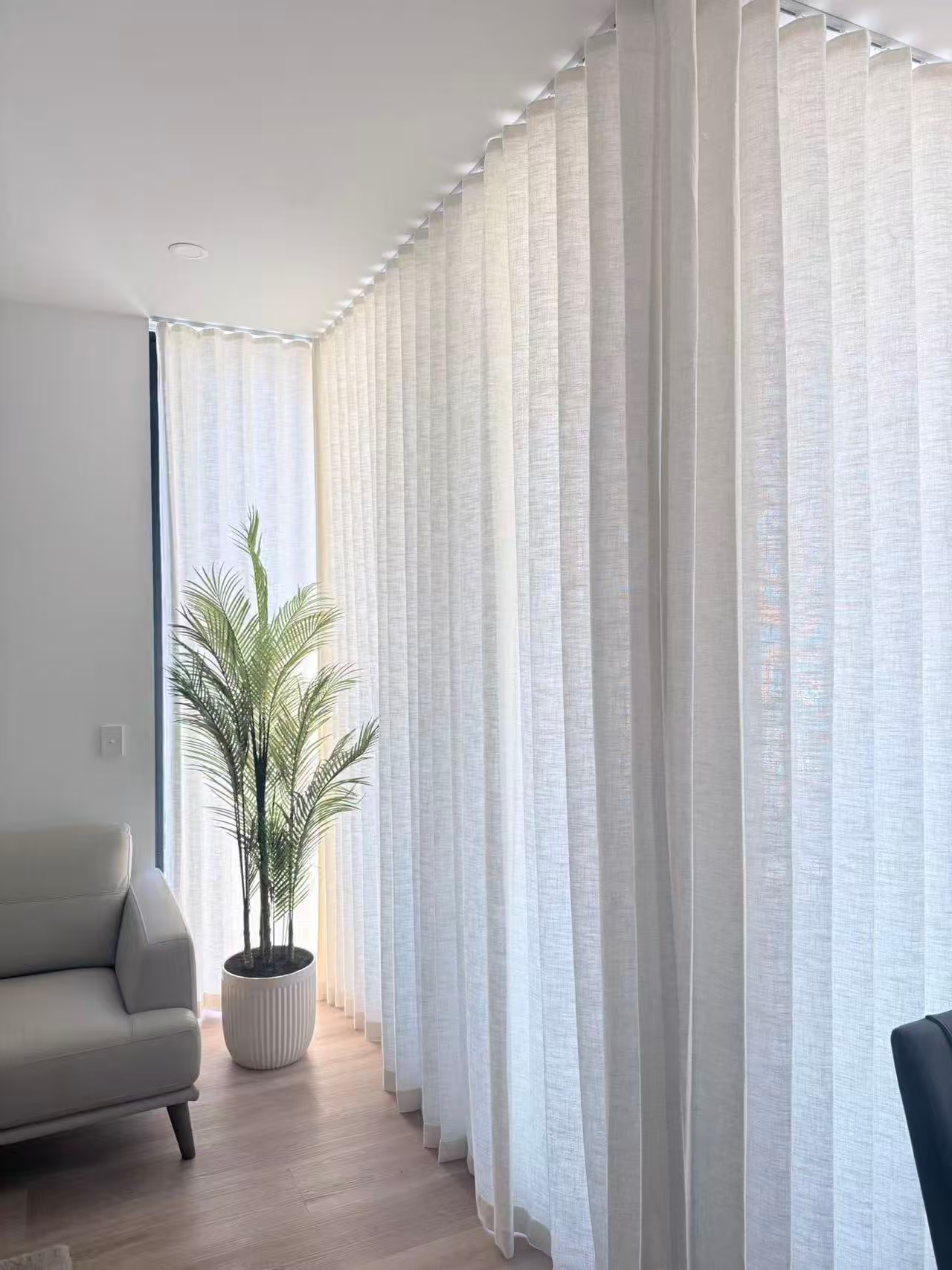
Lined curtains generally provide stronger privacy because the lining reduces visibility through the face fabric.
When the curtains are fully closed, they form an opaque or substantially less transparent layer across the main window area. This makes them useful for bedrooms, ground-floor apartments and living areas facing nearby buildings.
The exact result depends on the selected lining and the gaps around the installation. A centre-opening curtain may leave a small meeting point between its panels. Light and limited views may also remain around the sides if the curtain does not return towards the wall.
Sheer curtains provide conditional daytime privacy. They can reduce direct visibility when the exterior is brighter than the apartment, but the result depends on viewing distance, angle, fabric construction and lighting.
At night, sheers should not be treated as reliable privacy. An apartment with its interior lights on may be visible from a darker exterior or neighbouring building.
This changing relationship between indoor and outdoor brightness is discussed in Sweet Home Blinds’ guide to sheer curtains for soft privacy. Although that article focuses on senior living, the same principle is relevant to apartments: translucent fabric manages daylight and visual softness, while dependable night-time privacy usually requires an opaque layer.
For apartments that need both daytime softness and night-time coverage, combining sheers with lined or blockout curtains is often more useful than asking one fabric to perform both roles.
Which Option Provides Better Light Control?
Standard sheers reduce harshness without removing most of the daylight. They are valuable when an apartment feels too bright but the homeowner does not want to close the room off from the exterior.
The Australian Government’s Your Home lighting guidance explains that useful daylight can reduce reliance on artificial lighting, while poorly controlled direct sunlight may introduce glare and unwanted heat. Sheers support the softer end of this balance by diffusing light across a larger surface.
Lined curtains provide stronger light reduction. The lining limits the amount of daylight passing through the face fabric, and the wider curtain can cover the frame as well as the glass.
However, a lined curtain is not necessarily a blockout curtain. Some light may pass through the fabric combination, while other light can enter around the installation. If darkness is essential, the lining specification and complete coverage arrangement need to be confirmed.
Research reviewing the effects of light on circadian rhythms and sleep explains that the amount, timing and duration of light exposure can affect sleep and the body clock. In a bedroom, reducing unwanted early-morning or night-time light may therefore be more important than maintaining the open appearance preferred in a living area.
Sweet Home Blinds’ article comparing blockout curtains with blockout roller blinds for Canberra apartments provides additional guidance for homeowners whose priority is stronger room darkening rather than decorative lining.
Lined Curtains in Canberra Bedrooms
Bedrooms are one of the clearest applications for lined curtains.
The additional layer can improve night-time privacy and reduce the amount of light passing through the decorative face fabric. The curtain can also extend beyond the window frame, providing wider coverage than many blinds installed inside the recess.
The face fabric gives the bedroom a softer and more finished appearance. This can be useful where the bed faces the window or where the curtain occupies a large part of the visible wall.
However, the installation must account for furniture. Bedheads, bedside tables and desks can interfere with the curtain’s movement or prevent it from hanging freely.
A small bedroom may not have enough wall space for a large curtain stack. In this situation, a compact blockout blind paired with a lighter sheer may preserve more usable floor and wall space.
Lined curtains are most valuable when the homeowner will use both their practical coverage and decorative presence. They should not be added solely because lining is perceived as a premium feature.
Lined Curtains in Living and Dining Areas
A lined curtain can give a living or dining area a more formal and enclosed atmosphere. This may suit apartments with strong interior detailing, rich materials or a hotel-inspired design.
The lining helps the face fabric hang with greater body. Folds may appear more defined, and the curtain can create a more substantial visual edge around the window when open.
When closed, lined curtains can reduce glare on televisions and other screens more effectively than standard sheers. They may also provide stronger privacy for apartments facing neighbouring towers.
The trade-off is reduced daylight and exterior visibility. A living area that relies on one lined curtain may move quickly from fully open to substantially covered, with fewer intermediate settings.
Layering can solve this problem. A sheer curtain can remain closed during the day, while the lined curtain is used after dark or during periods of intense sunlight.
The tracks need enough separation for both fabrics to move freely. The lined curtain should not press against the sheers or distort their folds. Sufficient stacking space is also required so both curtains can open without covering too much of the glass.
Do Lined Curtains Improve Winter Comfort?
Lined curtains create another material layer between the room and the glass. When they are closed, they may reduce direct exposure to a cold window and improve comfort near the opening.
The Australian Government’s Your Home glazing guide explains that well-fitted curtains and blinds can improve the overall thermal performance of a window. It also notes that snugly fitted curtains with pelmets can help trap relatively still air beside the glass.
Academic research conducted in a whole-house test facility also examined the thermal performance of curtains and blinds. The study found that window coverings reduced heat transfer, while also showing that results were influenced by the installation, window condition, heating location and movement of air around the curtain.
This is an important limitation. Adding lining does not produce a guaranteed level of insulation. A curtain with large gaps around its edges may allow considerable air movement, while a well-planned installation can create more effective coverage.
Lined curtains cannot replace efficient glazing, wall insulation or draught sealing. The Australian Government’s guidance on residential windows explains that the glazing system itself remains an important part of reducing unwanted heat transfer.
Daily operation also affects the result. During a sunny Canberra winter day, opening the curtains can allow useful sunlight into the apartment. Closing them before the outdoor temperature drops may help reduce the cold feeling near the glass.
What Happens During Canberra Summers?
Lined curtains can reduce direct sunlight and glare when closed. This may be useful in west-facing apartments that receive intense afternoon sun or in rooms where brightness reaches television and computer screens.
However, internal curtains manage solar energy after it has passed through the glass. The Australian Government’s Your Home shading guide explains that appropriate external shading is generally more effective at preventing unwanted summer heat from reaching the glazing.
Lined curtains should therefore be considered as one part of the apartment’s summer-comfort strategy. Glass type, orientation, balcony depth, building shading and ventilation also affect the result.
Sheer curtains have a different summer role. They diffuse brightness and make the room feel less exposed, but their translucent construction does not provide the same coverage as a lined curtain.
A layered arrangement allows the homeowner to use the sheer during moderate conditions and close the lined curtain only when stronger control is required. This preserves daylight for more of the day instead of keeping an opaque product permanently closed.
Drape, Fullness and Interior Appearance
Lining changes how a curtain hangs.
The extra material gives the curtain more body and can help the folds appear deeper and more consistent. This is particularly noticeable across tall apartment windows where the fabric drop becomes a major part of the room.
A wool-finish face fabric, such as the material used in the QT Canberra Apartment, introduces visible texture. Combined with lining, it can create a richer and more tailored appearance than a lightweight translucent fabric.
Sheers create a different type of movement. Their folds are softer and respond more visibly to airflow. Linen and linen-look fabrics can give the room a relaxed finish while maintaining natural brightness.
Neither appearance is universally more sophisticated. Lined curtains suit interiors that need depth, enclosure and stronger material presence. Sheers suit rooms that need softness without losing openness.
Curtain fullness should be selected according to the fabric and track. Insufficient fullness can make either curtain look flat. Excessive fabric can create an oversized stack and reduce the exposed glass when the curtain is open.
Apartment Space and Curtain Stacking
Stacking space is especially important in apartments because walls beside the window may be limited.
When a curtain opens, its fabric gathers at one or both ends of the track. Lined curtains generally create a larger stack than standard sheers because they contain more material.
If the stack sits in front of the glass, it reduces the available view and daylight. If it extends too far onto the wall, it may interfere with artwork, switches, joinery or furniture.
Sliding doors require further planning. The stack should not obstruct the door panel used for everyday access. Curtain direction should respond to the opening path rather than being selected only for visual symmetry.
Ceiling-mounted tracks can help create a clean floor-to-ceiling appearance, but the fixing surface must be suitable for the weight of the finished curtain. Cornices, bulkheads, sprinklers, air-conditioning outlets and lighting also need to be considered.
These issues are best resolved during professional measurement. Changing the track position after the curtains have been manufactured may affect their length, folds and coverage.
Are Lined Curtains Suitable for Small Apartments?
Lined curtains can work in a small apartment, but the visual and physical weight should be considered carefully.
A face fabric close to the wall colour can help the curtain blend into the room. Mounting the track near the ceiling can emphasise height and reduce the impression that the curtain is cutting across the wall.
A very dark or strongly contrasting fabric may make the window a dominant feature. This can be intentional, but it may also make a compact room feel more enclosed when the curtains are closed.
The stack should be calculated before the final fabric is selected. A heavier construction can occupy valuable space beside a narrow window or balcony door.
Where space is limited, a sheer curtain paired with a compact blockout roller blind may provide softness and privacy with a smaller fabric stack. Sweet Home Blinds demonstrates this kind of layered apartment solution in the Deakin Apartment project, where motorised blockout roller blinds were combined with sheer curtains.
The most appropriate solution depends on whether the homeowner values the appearance of a full lined curtain more than the compact operation of a blind-and-sheer combination.
Tracks, Headings and Installation
The curtain heading controls how the fabric folds beneath the track. Its selection should suit both the material and the desired appearance.
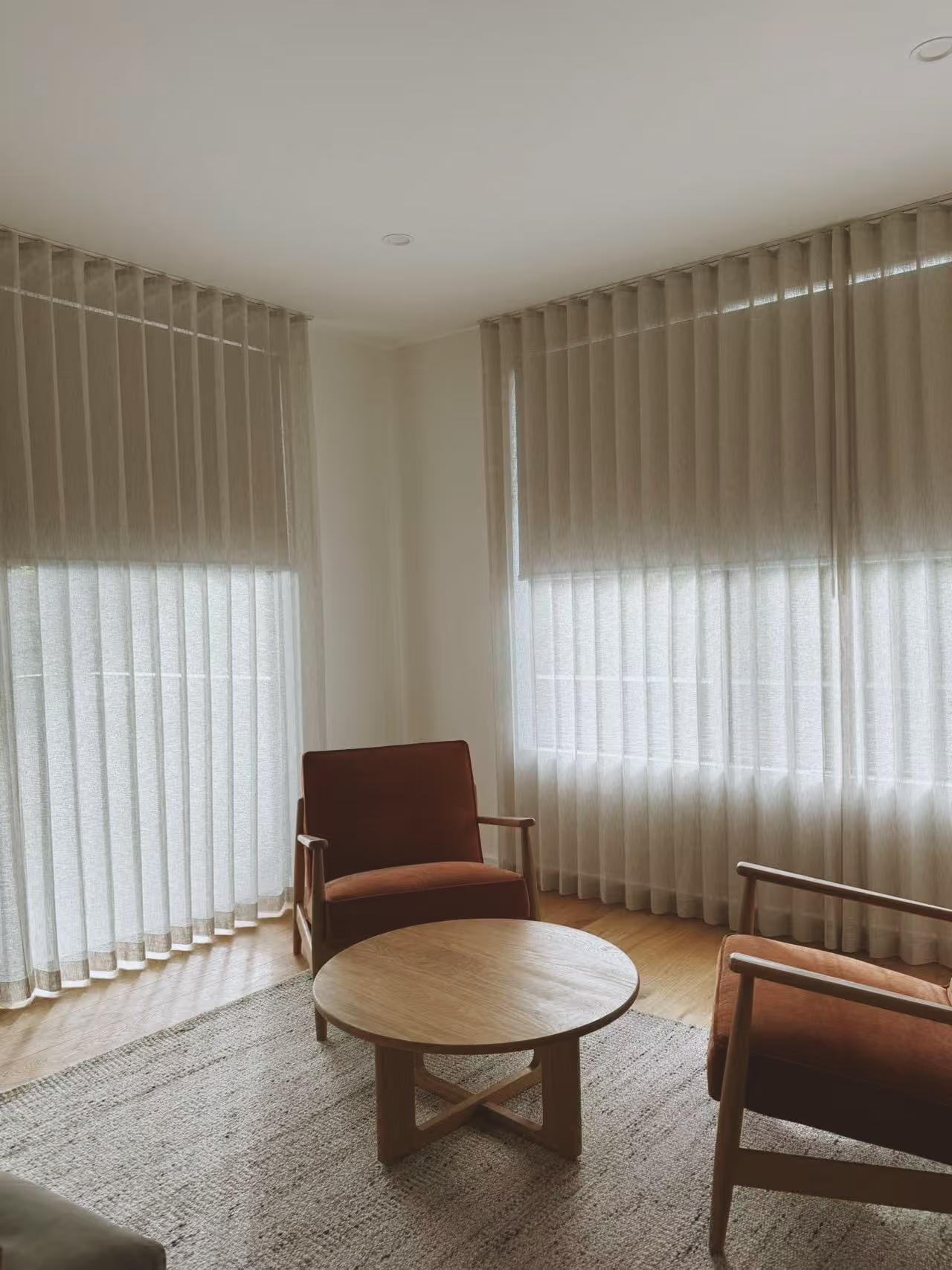
S-wave headings create regular curves and are commonly used in contemporary apartments. Their consistent folds can work with sheers as well as lined curtains, although the track, carriers and spacing need to suit the total fabric weight.
The track must be fixed into an appropriate supporting surface. Lined curtains across a wide opening can place significant load on the track and brackets. Fixing requirements should be assessed rather than assuming that any ceiling surface can support the installation.
Track projection also matters. A curtain mounted too close to the window may rub against handles or locks. In a layered installation, each curtain needs enough separation to travel without catching the other fabric.
The length should be planned according to the room and cleaning requirements. A small clearance above the floor may be practical, while deliberate pooling creates a more decorative effect but requires additional care.
Accurate measurement is particularly important in apartments because floors, ceilings and window frames may not be perfectly level. A minor difference can become noticeable across a long curtain drop.
Cleaning and Maintenance
Lined curtains require fabric-specific care because the face fabric and lining may respond differently to moisture, heat and cleaning.
Routine surface care may involve gentle vacuuming with a soft brush attachment at low suction. Washing, steaming or spot treatment should only be used when the supplied instructions confirm that the complete curtain is suitable.
Placing a lined curtain in a washing machine without approval can cause shrinkage, distortion or separation between the layers. Removing a large full-length curtain from a high track can also be difficult and may require professional assistance.
Sheers are lighter, but they are not automatically easier to wash. Linen and other delicate fabrics can change shape or texture if cleaned incorrectly.
Direct sunlight may affect curtain materials over time. The lining can provide some separation between the glass and face fabric, but no interior textile should be described as completely protected from fading.
Sweet Home Blinds provides general care and maintenance information. Product-specific instructions should always take priority because appropriate care depends on the exact fabric, lining and construction.
Cost and Long-Term Value
Lined curtains generally require more material and manufacturing work than standard sheers. The face fabric, lining, heading, track and total amount of fullness all contribute to the price.
A wide apartment window can require substantially more fabric than its measured glass width. Curtains need sufficient fullness to form folds, while additional width may be needed for side coverage and centre overlap.
Sheer curtains also vary considerably in price. Linen, specialised textures, large drops and generous fullness can place a premium sheer above a basic lined-curtain option. The product name alone does not determine the final cost.
Installation conditions also matter. High ceilings, restricted lift access, difficult fixing surfaces and motorised tracks can affect the complete quote.
Value should be judged according to the function the curtain provides. A lined curtain may represent better value when it solves privacy, glare and design requirements within one product. A sheer may be the better investment when maintaining natural light is the main goal and another existing blind already provides night-time coverage.
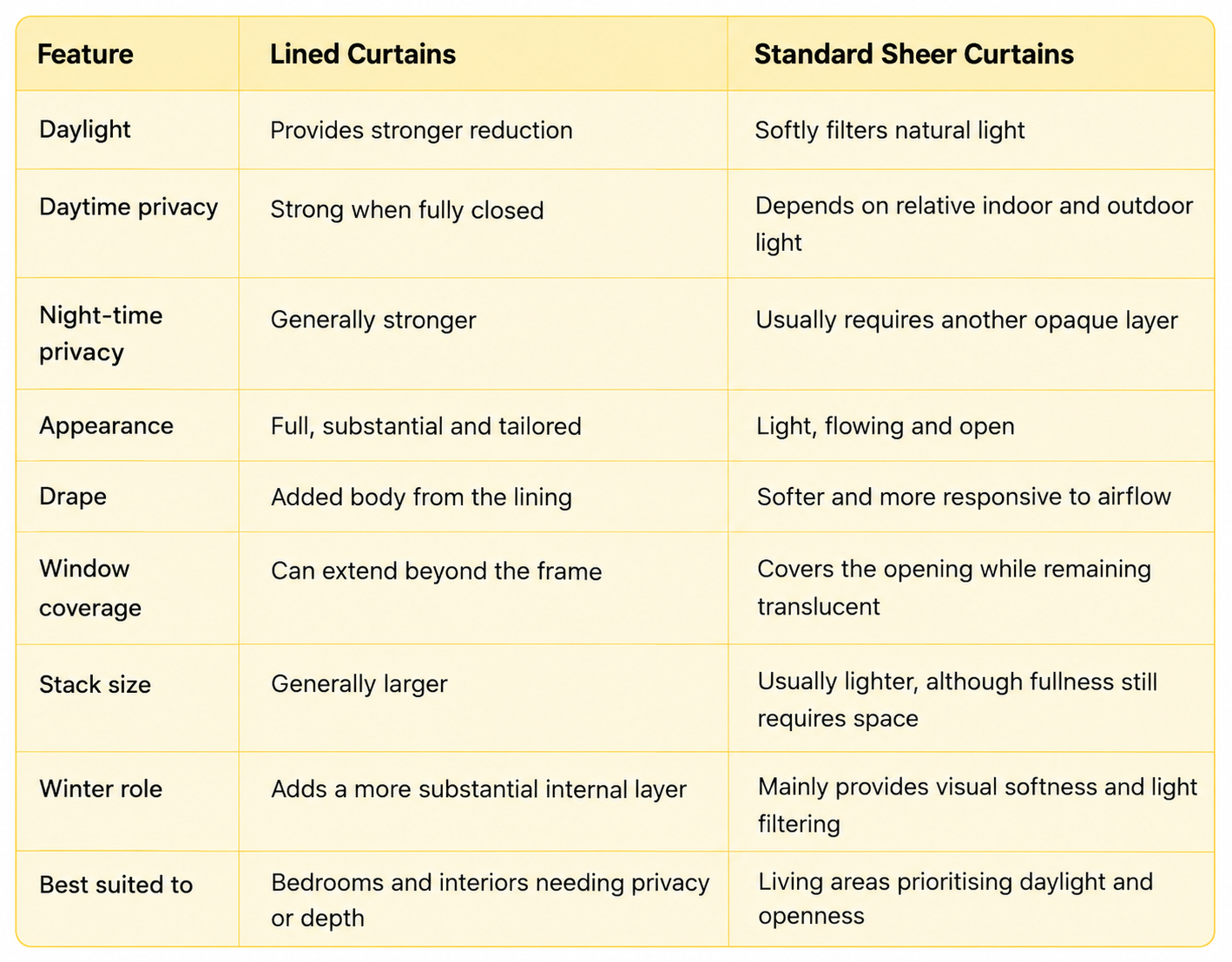
The following comparison summarises the practical differences:
Can Lined Curtains and Sheers Be Combined?
Yes. Combining lined curtains with sheers gives the apartment separate daytime and night-time settings.
The sheer curtain can remain closed during the day to soften direct light and reduce the exposed appearance of the glass. The lined curtain can then be drawn after dark for stronger privacy or during periods of intense glare.
This arrangement provides more flexibility than either product used alone. It also requires more track projection, stacking space and budget.
The two tracks must be positioned far enough apart for the fabrics to move independently. The lined curtain should not compress the sheers or interfere with their folds.
The order of the layers also affects the appearance. Placing the sheer closest to the room keeps its soft fabric visible when the lined curtain is open, while placing the lined curtain in front creates a different visual emphasis. The appropriate arrangement depends on the track system, face fabric and desired result.
Homeowners interested in a layered solution can read Sweet Home Blinds’ guide to seasonal strategies using sheer and blockout curtains before comparing fabrics in person.
Safety and Everyday Operation
Curtain operation should be considered alongside furniture placement and household needs.
Hand-drawn and wand-operated curtains avoid some of the issues associated with accessible looped cords. Motorised tracks may be considered for large, heavy or difficult-to-reach curtains, although they require suitable power, controls and future servicing access.
Where cords or chains form part of a window-furnishing installation, households should follow Product Safety Australia’s mandatory standard for blinds, curtains and window fittings.
Beds, cots, chairs and other climbable furniture should not be positioned without considering nearby controls. Safety requirements should be resolved during measurement and installation rather than treated as an adjustment after the apartment is furnished.
Everyday access also matters. A curtain covering a balcony door should be easy to move without pulling directly on the fabric. Furniture should not trap the curtain or obstruct its track.
Frequently Asked Questions
What is the purpose of lining a curtain?
Lining adds another material layer behind the face fabric. It can improve drape, increase privacy and reduce the amount of light passing through the curtain.
Are lined curtains the same as blockout curtains?
Not always. The performance depends on the lining material and complete construction. A lined curtain should not be assumed to provide full blockout unless that property has been confirmed.
Do lined curtains provide privacy at night?
They generally provide stronger night-time privacy than standard sheers when fully closed. Small gaps may remain around the installation.
Are sheer curtains suitable for apartment bedrooms?
They can soften daylight, but they usually need an additional opaque blind or curtain when dependable night-time privacy and room darkening are required.
Do lined curtains keep an apartment warmer?
They add another layer between the room and the glass and may improve comfort near the window. Their performance depends on the fit, coverage, glazing and surrounding gaps.
Can lined curtains be installed over sliding doors?
Yes, provided there is enough track length and stacking space to keep the main doorway accessible.
Are lined curtains too heavy for a small apartment?
Not necessarily. Fabric colour, track height and stacking direction can help them work in a compact room. The available wall and floor space should be assessed first.
Can lined curtains and sheers share one track?
They normally require a suitable double-track arrangement or separate tracks so that each layer can operate independently.
Which is easier to maintain?
Both require fabric-specific care. Lined curtains contain multiple materials, while delicate sheers can also require professional cleaning. The supplied instructions should determine the cleaning method.
Choosing the Right Curtains for a Canberra Apartment
Choose lined curtains when stronger privacy, reduced light, fuller drape and a more substantial interior finish are the priorities. Choose standard sheer curtains when soft daylight, openness and a lighter visual effect matter more.
The QT Canberra Apartment shows how wool-finish lined curtains can add texture and tailored depth to an apartment interior. The Griffith Apartment demonstrates a different result, using all-linen sheers to maintain gentle natural light and a calm atmosphere.
Neither project proves that one curtain type is universally better. Together, they show why the decision should respond to the room, the exterior outlook and how privacy needs change from day to night.
Some apartments will benefit from lined curtains alone. Others may need sheers with an existing blind. Where space allows, combining sheers with lined or blockout curtains can provide the widest range of settings.
Browse more completed Canberra curtain projects, compare the full range of curtains, blinds, shutters and screens, or book a consultation to discuss fabric, lining, track position and apartment installation requirements.
Considering lined curtains or sheers for your Canberra apartment? Contact Sweet Home Blinds for professional measurement, fabric advice and installation across Canberra and surrounding regions.
Follow Sweet Home Blinds on Facebook and Instagram for completed projects and Canberra window-furnishing inspiration.