
Blockout Curtains vs Blockout Roller Blinds: Which Is Better for Canberra Apartments?
Compare blockout curtains and blockout roller blinds for Canberra apartments, including darkness, privacy, space, winter comfort, motorisation and real project examples.
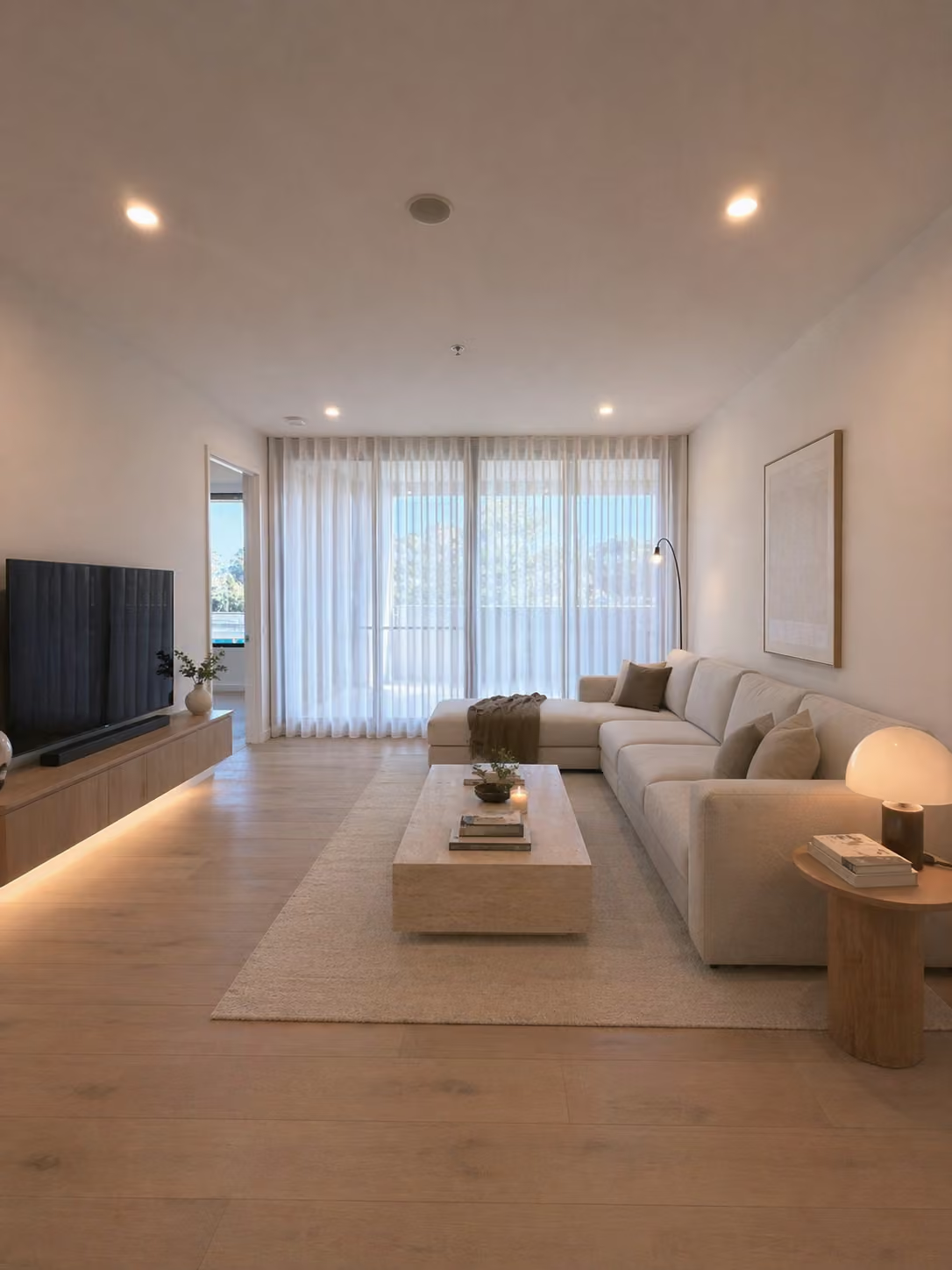
Apartment windows often need to solve several problems at once. Large areas of glass bring natural light and views into the home, but they can also create morning glare, night-time privacy concerns and uncomfortable temperature changes near the window.
Two of the most practical solutions are blockout curtains and blockout roller blinds. Both can provide strong privacy and light control, but they work differently and create very different interiors.
Blockout curtains use fabric that travels horizontally across the window. They can extend beyond the sides of the opening and from near the ceiling to the floor, creating a soft, full-height finish. Blockout roller blinds use a flat fabric that moves vertically around a tube, giving the window a cleaner and more compact appearance.
For Canberra apartment owners, the choice usually comes down to priorities. Blockout curtains are often better when generous coverage, softness and stronger room darkening matter most. Blockout roller blinds suit apartments where space efficiency, simple operation and motorisation are the main concerns.
Two Sweet Home Blinds projects demonstrate these approaches clearly. Eastbourne Apartment uses S-wave sheer and blockout curtains, while Deakin Apartment combines motorised blockout roller blinds with sheer curtains. Neither solution is automatically better; each responds to the way the apartment is used.
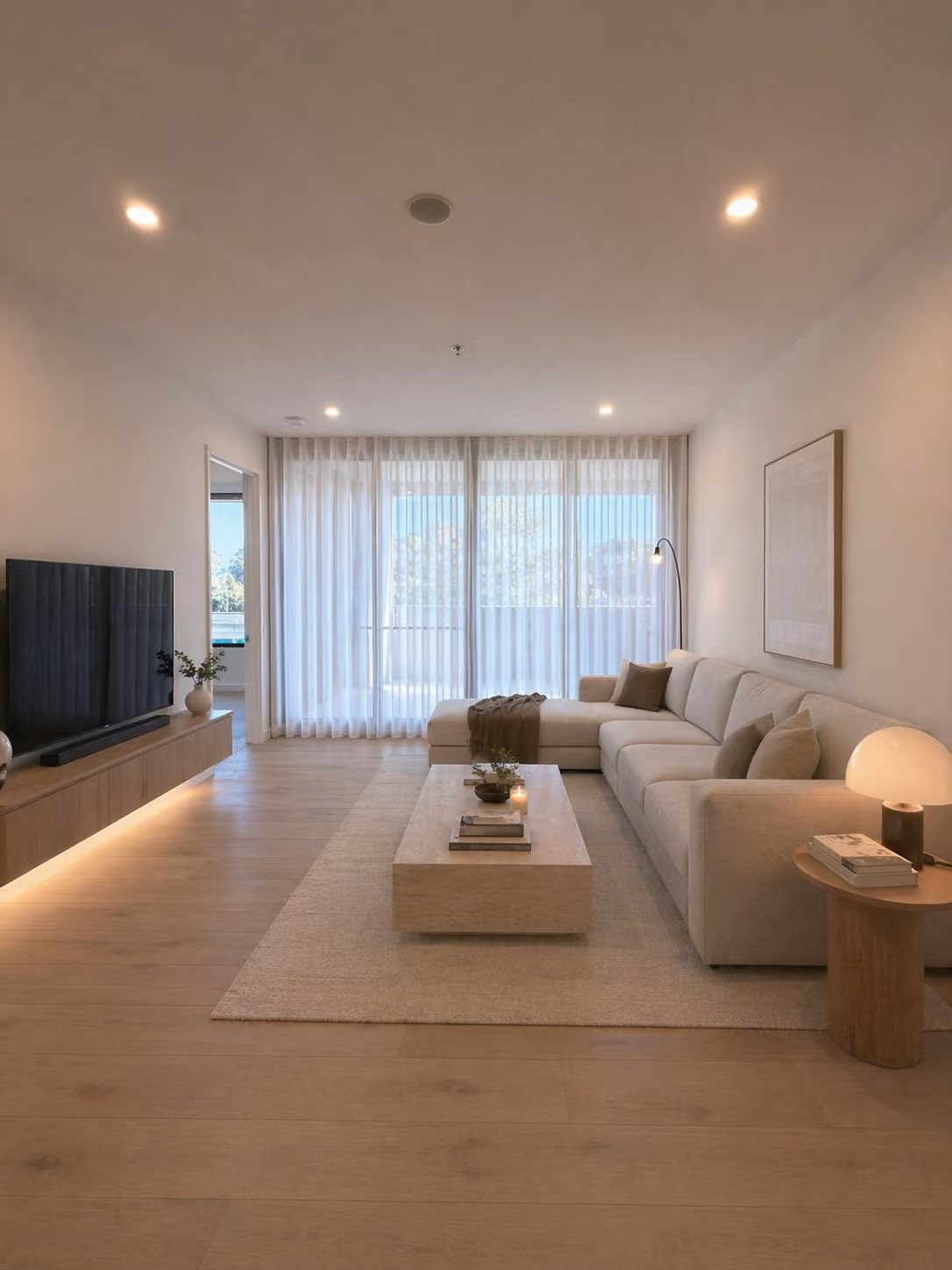
How Do the Two Products Work?
Blockout curtains are made from fabric designed to prevent most light from passing directly through the material. They travel along a track and can be drawn across the entire opening when privacy or darkness is required.
The final performance depends on more than the fabric. Track position, curtain width, length, fullness and side coverage all influence how much light enters around the installation. A blockout curtain mounted close to the ceiling and extending beyond both sides of the window will usually provide better coverage than a curtain fitted closely to the glass.
Blockout roller blinds take a more compact approach. A single piece of blockout fabric rolls around a tube positioned above the window. When lowered, the blind covers the glass; when raised, most of the material is stored neatly around the tube.
The blind may be installed inside the window recess or over the face of the opening. A recess-mounted blind creates a particularly tidy appearance but normally requires small operating gaps beside the fabric. Face-fitting the blind can increase the amount of coverage, although the result depends on the surrounding wall space and window design.
Both products use blockout material, but “blockout” does not automatically mean that the room will be completely dark. Light can still enter around the sides, top or bottom of either installation. The complete measurement and installation matter just as much as the fabric itself.
Sweet Home Blinds’ guide to blockout curtains in Canberra explains why fabric selection and window coverage need to be considered together.
Which One Makes a Bedroom Darker?
Blockout curtains generally have the advantage when the darkest possible bedroom is the main goal.
Because curtains can extend well beyond the window frame, they can cover more of the area where edge light commonly enters. Full-height curtains can also reduce the bright lines that may otherwise appear above and below a shorter window furnishing.
A well-planned curtain track, suitable fabric return and generous overlap in the centre can further improve room darkening. However, small amounts of light may still enter around the track or where the fabric meets the wall.
Blockout roller blinds can also darken an apartment bedroom effectively, especially when the blind is face-fitted with sufficient coverage. However, the fabric needs space to move without rubbing against the frame. This creates functional side gaps, particularly with recess-mounted blinds.
Those narrow gaps may become noticeable in an east-facing bedroom during a bright Canberra morning. Research reviewing the effects of light on circadian rhythms and sleep explains that the timing and intensity of light exposure can influence sleep patterns and the body clock.
This does not mean every bedroom requires the maximum possible darkness. Some residents prefer gentle natural light in the morning, while shift workers, light-sensitive sleepers and families with young children may need stronger coverage.
For homeowners dealing specifically with early sunlight, Sweet Home Blinds has also published a practical guide to using blockout curtains in Canberra bedrooms.
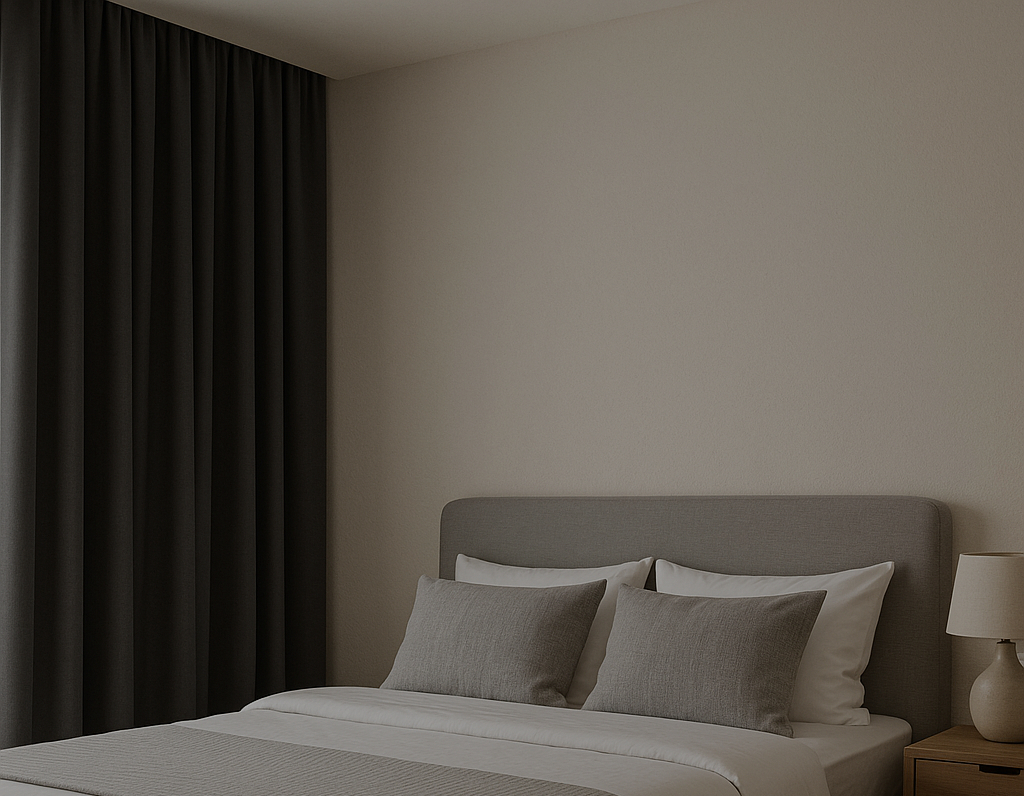
Privacy During the Day and at Night
Both products provide strong night-time privacy when they are fully closed. The main difference is what happens during the day.
A closed blockout curtain removes most of the view and natural light. A closed blockout roller blind does the same. This is why many Canberra apartment owners combine the blockout layer with sheer curtains.
During the day, sheers soften direct sunlight and reduce clear views into the apartment while allowing the interior to remain bright. At night, the blockout curtain or roller blind can be closed for stronger privacy.
The lighting conditions outside and inside still matter. Sheer curtains should not be treated as reliable night-time privacy when the apartment lights are on. Once the exterior becomes darker than the interior, visibility through the sheer fabric can increase.
The Eastbourne Apartment project uses S-wave sheer and blockout curtains as a complete dual-layer system. The project client specifically noted that the installation handled morning light and privacy effectively.
At Deakin Apartment, sheer curtains were paired with motorised blockout roller blinds. The sheers provide the visible soft layer, while the roller blinds can be lowered when stronger privacy and light control are required.
These projects show that choosing between curtains and roller blinds does not mean giving up sheers. Either blockout product can sit behind or alongside a sheer layer when the tracks, projection and available space are planned together.
Which Option Uses Less Space?
Blockout roller blinds usually require less visual and physical space.
When raised, the fabric wraps around the upper tube instead of gathering at the sides of the window. This can be useful in smaller apartments where furniture sits close to the glass or where the homeowner wants to preserve as much wall space as possible.
Roller blinds also remain close to the window. Their flat surface suits simple interiors and does not introduce the same volume of fabric as full-length curtains.
Blockout curtains require more room. The fabric needs space to hang, move and stack when open. A wide window may require a substantial curtain stack at one or both sides, which can cover part of the glass or occupy nearby wall space.
Furniture placement also matters. A sofa, desk or bed positioned too close to the curtains can prevent the folds from hanging properly. Floor-length curtains may also be less practical where pets, children or frequently moved furniture come into contact with the fabric.
However, the additional fabric can also be a design advantage. Curtains soften hard surfaces, make the window feel taller and can help a new apartment feel more settled. In an open-plan living area with concrete, glass and straight architectural lines, the movement of S-wave curtains can create useful visual balance.
The choice is therefore not simply “large” versus “small”. Roller blinds keep the window compact, while curtains intentionally give it greater visual presence.
Which Is Better for Canberra Winter Comfort?
Canberra apartments can feel cold beside large windows even when the rest of the room is heated. Glass, frames, window orientation and air leakage all influence how quickly heat moves through the building envelope.
The Australian Government’s Your Home guide to glazing explains that window furnishings such as blinds and curtains can improve the thermal performance of existing windows. It also makes clear that the glazing, frame, orientation and weather sealing remain important.
Blockout curtains often have an advantage because they can cover the glass, frame and part of the surrounding wall. A full-height installation with suitable side coverage can create a larger layer of separation between the room and the window.
Curtain fullness and track position also affect the result. If air moves freely around large gaps at the top and sides, the curtain may not perform as effectively as a more carefully planned installation.
Blockout roller blinds create another layer over the glass but normally provide less coverage around the window frame. Their performance varies according to whether they are recess- or face-fitted, the size of the edge gaps and the selected fabric.
Neither product can repair a draughty frame or provide the same improvement as upgrading inefficient glazing. Homeowners should therefore be cautious about guaranteed energy-bill or temperature claims.
Daily operation matters as well. During winter, opening the furnishing when useful sunlight reaches the apartment may provide natural warmth. Closing it before the temperature falls in the evening can help reduce discomfort near the window.
What About Strong Summer Sun and Glare?
During summer, both products can reduce direct light after it passes through the glass.
Blockout curtains offer broad coverage when fully closed, which can be useful in a west-facing apartment exposed to strong afternoon sun. The disadvantage is that the room also loses most of its natural light and outdoor view.
Blockout roller blinds provide similar light control with a more compact appearance. Motorised operation can make them easier to lower before the strongest sunlight reaches the window, particularly when several blinds cover a large living area.
However, internal curtains and blinds manage solar energy only after it has reached the glazing. The Australian Government’s guidance on window shading explains that suitable external shading is generally more effective at preventing unwanted summer heat from reaching the glass.
Internal blockout products remain useful for glare, privacy and comfort, but they should be treated as one part of the apartment’s wider window strategy. Orientation, glazing type, balcony overhangs and neighbouring buildings can all change the result.
Where completely closing the blockout layer would make the room too dark, sheer curtains can soften harsh daylight while retaining a brighter interior. Sweet Home Blinds discusses this layered approach in its article about why blockout and sheer curtains work well together in Canberra apartments.
Appearance and Interior Style
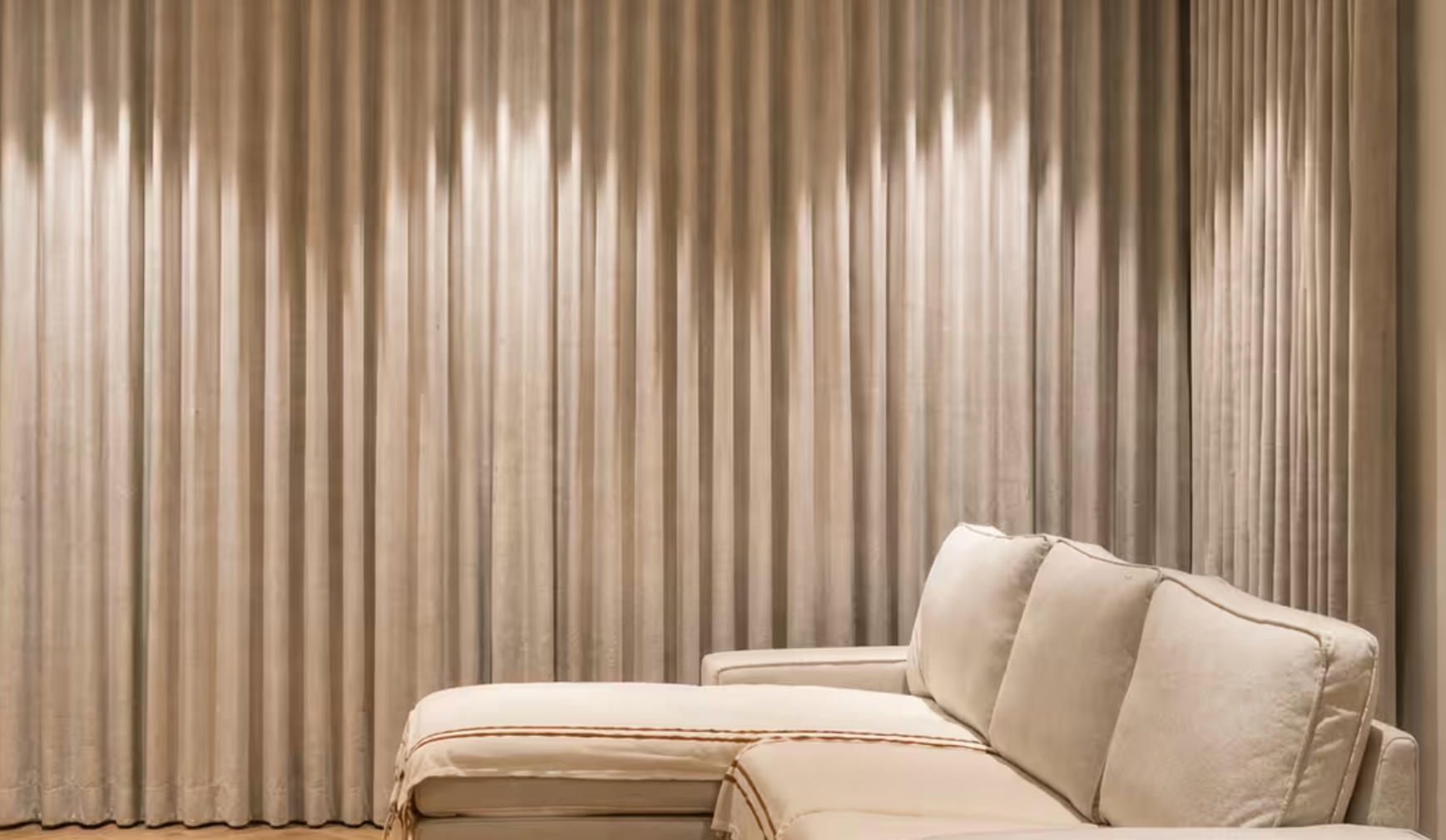
Blockout curtains create a softer and more decorative finish. Their folds add texture and movement, which can help balance the glass, concrete and straight architectural lines often found in modern apartments.
Installing curtains close to the ceiling can make the room feel taller and give a standard apartment window a more complete appearance. S-wave curtains are particularly suitable for contemporary interiors because their folds remain consistent across the track.
Blockout roller blinds are less visually dominant. When raised, most of the fabric is stored around the upper tube, leaving the window and surrounding architecture exposed. When lowered, they create a flat and simple surface.
This makes roller blinds useful when the homeowner wants the sheer curtains to remain the main visible feature. The blockout blind can sit discreetly behind the sheers and only appear when privacy or darkness is needed.
Fabric colour also affects the result. A curtain close to the wall colour can make the room feel calm and continuous, while a contrasting fabric creates a stronger design feature. Roller blind fabric is often selected to blend with the window frame, wall or sheer layer.
Neither product is universally more stylish. Curtains make the window part of the interior design, while roller blinds allow it to remain visually quieter.
Manual or Motorised Operation?
Both curtains and roller blinds can use manual or compatible motorised operating systems. Motorisation becomes more useful when the window furnishing is wide, difficult to reach or adjusted several times each day.
Roller blinds are particularly suited to motorisation because the motor can be contained within the roller tube. At Deakin Apartment, Sweet Home Blinds installed motorised blockout roller blinds behind sheer curtains. The blockout layer can be adjusted without manually reaching behind the curtain fabric.
Motorised curtains are also available. Their value becomes more noticeable across long tracks or when heavy curtains need to be moved regularly. However, the motor, track, curtain weight, stacking direction and available power must be considered together.
A motorised system may use a remote, wall control, app or compatible smart-home platform. Some systems can also operate according to a schedule. Available functions depend on the selected motor and control system, so “motorised” should not automatically be treated as meaning full smart-home integration.
Research from Lawrence Berkeley National Laboratory on automated shading and daylight controls highlights the importance of balancing daylight, glare, energy use and occupant preferences. Although the research does not compare these specific apartment products, it supports the wider principle that automation is most useful when it responds to how people actually use a space.
A simple remote may be enough for an apartment bedroom. In a large living area with several blinds, grouping the motors may make daily operation easier. Sweet Home Blinds’ guide to motorised blinds for modern Canberra apartments explains where this convenience provides the most practical value.
Motorisation does not improve the blockout quality of the fabric itself. Its main advantage is making the furnishing easier and more consistent to use.
Cleaning and Everyday Maintenance
Roller blinds generally have the simpler cleaning routine. Their flat surface can usually be dusted gently or cleaned with a suitable low-suction vacuum attachment. Marks should be treated according to the fabric manufacturer’s instructions.
The upper tube, brackets and motor should remain free from obstruction. If a blind becomes uneven, noisy or difficult to move, repeated operation may cause further problems. The track, brackets and power supply should be checked before the blind is used again.
Curtains can collect dust, pet hair and household odours across a larger fabric area. Routine cleaning may involve gentle vacuuming with a soft brush attachment, but washing, steaming or professional cleaning requirements depend on the selected fabric and lining.
Full-length curtains should not be placed in a washing machine unless the supplied care instructions clearly allow it. Removing the curtains from an S-wave track without understanding the hooks and carriers may also affect the spacing of the folds.
Curtains require more fabric care, while roller blinds require attention to their operating components. Apartment owners can review Sweet Home Blinds’ care and maintenance guidance before cleaning either system.
Two Canberra Apartment Case Studies
The clearest way to understand the difference is to compare two completed Sweet Home Blinds installations.
Eastbourne Apartment: S-Wave Sheer and Blockout Curtains
At Eastbourne Apartment in Campbell, S-wave sheer curtains were paired with blockout curtains.
The sheer layer allows the apartment to retain soft natural light during the day. When stronger privacy or light control is required, the blockout curtains can cover the complete window area.
The project client specifically noted that the installation handled morning light and privacy effectively. This makes Eastbourne a useful example for apartment residents who want the window furnishing to provide both practical coverage and a soft interior finish.
The blockout curtains also create more visual weight around the window. Rather than disappearing into the architecture, they become part of the room’s overall design.
[IMAGE 5 — Case study image: Eastbourne Apartment S-wave sheer and blockout curtain installation.]
Deakin Apartment: Motorised Blockout Roller Blinds and Sheers
At Deakin Apartment, motorised blockout roller blinds were combined with sheer curtains.
This solution separates the visual and practical roles of the two products. The sheers introduce softness and filtered daylight, while the roller blinds provide a compact blockout layer behind them.
Motorisation makes the concealed blinds easier to operate. It also avoids the need to reach through or move the sheer curtains each time the blockout layer is adjusted.
The project client described the bedrooms and living area as feeling both polished and practical. This is the main strength of the arrangement: the sheers provide the decorative finish, while the motorised roller blinds remain visually discreet until needed.
[IMAGE 6 — Case study image: Deakin Apartment sheer curtains with motorised blockout roller blinds positioned behind them.]
These cases do not prove that one product is better for every apartment. They show two different ways to combine softness with privacy and light control.
Eastbourne gives the blockout curtain a visible role within the interior. Deakin allows the roller blind to perform quietly behind the sheer layer.
Cost and Long-Term Value
There is no universal price difference because both products are measured and manufactured according to the individual window.
Blockout curtain pricing is affected by the fabric, lining, track length, ceiling height, fullness and total amount of material. Wide or full-height apartment windows require more fabric than the glass width alone may suggest.
Blockout roller blind pricing depends on the blind dimensions, selected fabric, tube and bracket requirements, operating system and installation access. Adding a motor, remote, hub or smart-home connection increases the initial cost.
Roller blinds often use less fabric, but a motorised installation may cost more than a simple manual blind. Curtains may require a higher material investment, particularly across a wide opening, but motorisation is optional.
Apartment access can also affect the quote. Lift dimensions, loading arrangements, parking, ceiling construction and owners corporation requirements may need to be checked before installation.
The best value comes from selecting the product that solves the actual problem. A less expensive roller blind may offer poor value if edge light prevents the required bedroom darkness. An expensive full-height curtain may be unnecessary if the homeowner only wants compact and straightforward privacy control.
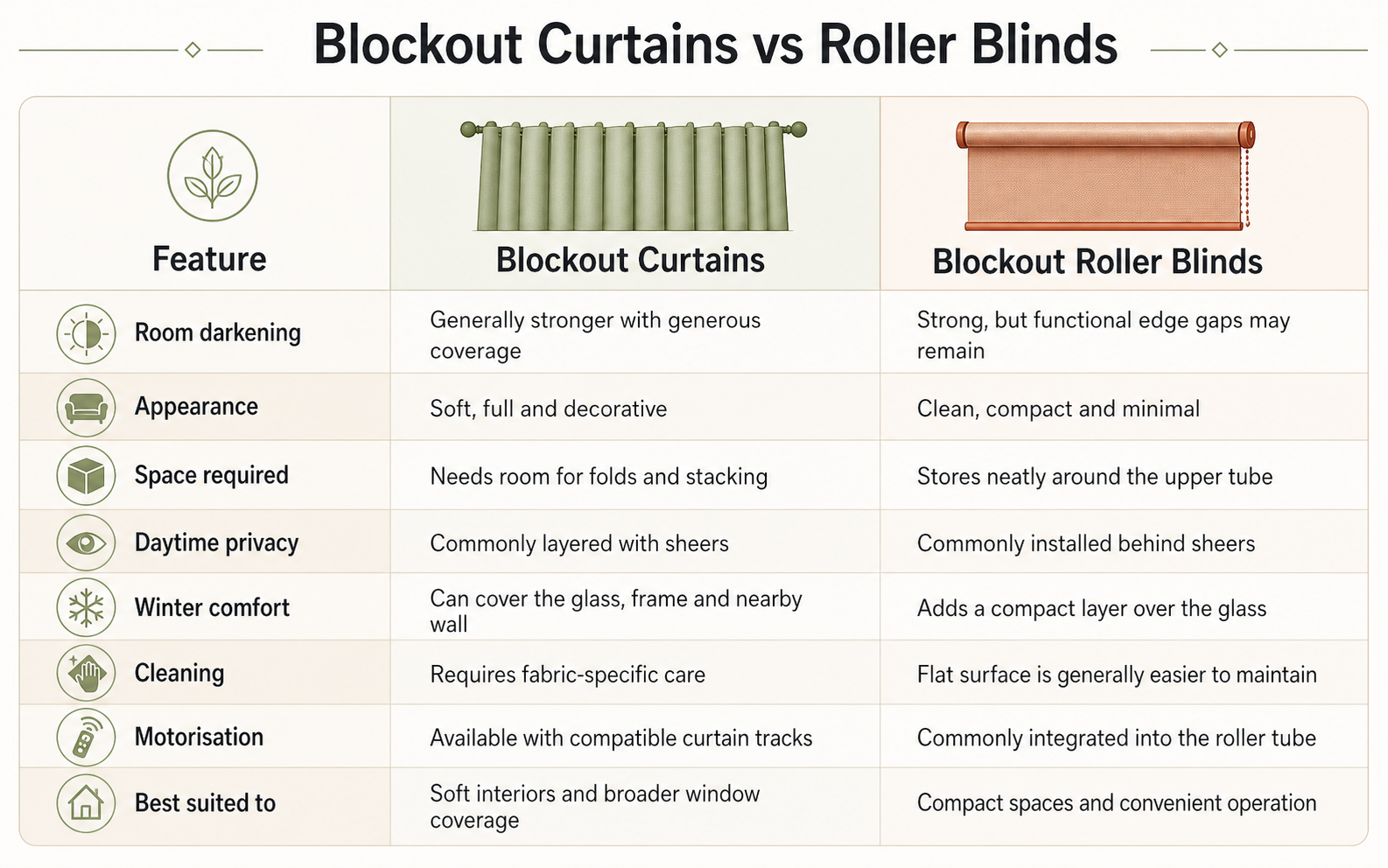
Blockout Curtains vs Blockout Roller Blinds at a Glance
Safety and Apartment Installation
Any blind or curtain that uses cords or chains must be correctly installed. Product Safety Australia’s guide to blinds, curtains and window fittings explains that loose or looped cords can create a strangulation hazard for young children.
Cords must be secured using suitable safety devices and kept away from cots, beds, chairs and other climbable furniture. Motorisation may reduce the need for manual chains, but the complete product still needs to be specified and installed correctly.
Apartment installation also requires practical checks that may not arise in a detached house. These include the ceiling structure, sprinkler clearance, air-conditioning vents, access panels and any owners corporation rules affecting work inside or around the window.
Professional measurement should assess:
Window width, height and recess depth
Available wall and ceiling fixing points
Curtain stacking or blind clearance
Handles, locks and opening direction
Furniture and circulation space
Power or charging access
Required privacy and darkness
Any apartment building restrictions
These details should be resolved before the product is ordered rather than adjusted after installation.
Frequently Asked Questions
Are blockout curtains darker than blockout roller blinds?
They generally provide stronger room darkening because they can extend further beyond the window. Roller blinds still provide effective light control, but functional gaps may remain around the fabric.
Are roller blinds better for small apartments?
They are often more space-efficient because the fabric rolls around the upper tube instead of stacking beside the window. However, curtains may still suit a small apartment when softness and full-height coverage are priorities.
Can blockout roller blinds be installed behind sheer curtains?
Yes. The Deakin Apartment project demonstrates this layered approach. The track positions and projection must be planned so both products can operate without interfering with each other.
Do blockout curtains help during a Canberra winter?
They add another layer at the window and can cover the glass, frame and surrounding area. Actual comfort depends on the fabric, installation, glazing, draughts and daily use.
Are motorised roller blinds worth it?
They can be worthwhile for wide, high or frequently adjusted windows. A small and easily reached blind may not require motorisation.
Do I need approval to install apartment curtains or blinds?
Internal window furnishings may not always require formal approval, but building rules vary. Owners and tenants should check lease or owners corporation requirements, particularly where drilling, electrical work or common property may be involved.
Which option is easier to clean?
Roller blinds generally have the simpler surface to maintain. Curtains require fabric-specific cleaning and may occasionally need professional care.
Which One Should You Choose?
Choose blockout curtains when room darkening, generous coverage and a soft full-height appearance are the main priorities. They are particularly suitable for bedrooms and living areas where the fabric is intended to become part of the interior design.
Choose roller blinds when you want a compact blockout solution, straightforward maintenance or easier motorisation. They work particularly well behind sheer curtains when the homeowner wants the blockout product to remain discreet.
The Eastbourne and Deakin apartments show that both solutions can create a polished layered interior. The best choice depends on the window dimensions, required darkness, available space and preferred method of operation.
Browse more completed Canberra projects, read practical advice in the Sweet Home Blinds Journal, or book a consultation to compare fabrics, tracks and operating systems.
You can also visit the Fyshwick showroom by appointment to examine blockout fabrics, roller blinds and sheer curtains in person.
Ready to compare blockout curtains and blockout roller blinds for your apartment? Contact Sweet Home Blinds for professional measurement, product advice and installation across Canberra and surrounding regions.
Follow Sweet Home Blinds on Facebook and Instagram for recent projects and Canberra window-furnishing inspiration.