
Choosing Curtain for Every Room in Canberra: Light, Privacy & Sleep
Choosing curtains isn’t about trends — it’s about how each room is used. In Canberra homes, living rooms, bedrooms, kitchens and home offices all respond differently to light, privacy and airflow. This room-by-room guide explains how sheer curtains, blockout curtains and flyscreens each play a distinct role, helping homes feel brighter by day, calmer at night and more comfortable across changing seasons.

The right curtains should work with your daily routine, not just match your interior design.
A Canberra living room might need soft daylight throughout the afternoon, while a bedroom may require stronger light control at sunrise. A street-facing apartment can feel private during the day but become exposed when the indoor lights are switched on after sunset.
This is why choosing curtains room by room starts with two questions: How much natural light do you want, and when do you need privacy?
Quick Guide: Which Curtains Work Best During the Day and at Night?
Room | Daytime requirements | Evening or night-time requirements | Curtains worth considering |
Living room | Soft daylight, reduced glare and an open atmosphere | Privacy from neighbours and the street | Sheer curtains with an optional opaque or blockout layer |
Main bedroom | Natural light when awake, with control over early sunlight | Darkness and privacy for sleeping | Blockout curtains, with optional sheers |
Home office | Comfortable daylight without excessive screen glare | Privacy if the space is used after dark | Suitable sheers or light-filtering blinds, with an opaque option where necessary |
Nursery or children's bedroom | Adjustable light for playtime and daytime naps | Greater room darkening for bedtime | Suitable blockout curtains with child-safe operating systems |
Street-facing apartment | Daylight with reduced direct visibility into the room | Reliable privacy under artificial lighting | Sheers combined with lined or blockout curtains |
Dining area | Soft natural light and easy access to windows | Privacy when the room is illuminated | Sheer curtains or a suitable easy-care alternative |
These combinations are starting points rather than fixed rules. Window orientation, nearby buildings, fabric transparency and available installation space can change what works best.
A particularly important distinction is that sheer curtains do not offer the same privacy at every time of day. During daylight hours, some sheer fabrics can reduce visibility into a room. However, when the outside becomes dark and interior lights are switched on, people may be able to see through them more easily.
For rooms requiring dependable evening privacy, an opaque curtain layer is often the more practical choice.
If your windows need several different coverings to manage daylight, privacy and airflow, read our Window Furnishings Canberra: 5 Smart Ways to Combine Curtains, Blinds & Flyscreens guide.
Bedrooms: Choosing Curtains for Better Light Control and Everyday Rest
Bedrooms are one of the most important rooms to consider carefully when choosing curtains in Canberra.
While a living room may benefit from generous natural light, a bedroom often needs more flexibility. You might enjoy sunlight while getting ready in the morning but prefer a darker environment when sleeping, particularly during Canberra's brighter summer months.
The most suitable curtain arrangement depends on your window orientation, privacy requirements and sleeping schedule.
Sheer Curtains for Daytime Bedroom Comfort
Sheer curtains can be a useful daytime option for bedrooms that receive strong natural light or face neighbouring properties.
They soften incoming daylight and help create a lighter, more open interior without completely covering the window with opaque fabric.
For example, a bedroom with large north-facing windows may benefit from sheers that reduce the harsh appearance of direct daylight while maintaining a sense of openness.
However, sheers are not designed to provide complete darkness, and their privacy performance depends on the fabric and lighting conditions.
If a bedroom faces a shared pathway, another apartment or a nearby home, consider whether an additional opaque layer is needed.
Blockout Curtains for Bedrooms Facing Morning Sunlight
For bedrooms where light control is the main concern, blockout curtains are often worth considering.
Blockout fabrics are designed to prevent light from passing directly through the material. This makes them suitable for bedrooms affected by early sunlight, streetlights or nearby illuminated buildings.
However, blockout fabric does not automatically mean a completely dark room.
Light may still enter through gaps above the curtain track, around the sides of the window, below the curtain or between curtain panels.
When planning blockout curtains, consider:
Whether the track can extend beyond the window opening.
Whether the curtain can cover the sides of the window sufficiently.
Whether a ceiling-mounted track, suitable returns or pelmet would help reduce light gaps.
Whether the curtain has enough stacking space to open without obstructing windows or furniture.
For more detailed advice, see our guide to managing early morning sunlight with blockout curtains in Canberra.
What Curtains Are Best for Shift Workers Who Sleep During the Day?
Not everyone follows a typical daytime work schedule.
Healthcare workers, emergency-service staff, hospitality workers and other shift workers may need to sleep while the sun is still shining.
For these bedrooms, room darkening can be especially important.
The US National Institute for Occupational Safety and Health (NIOSH) recommends reducing light in sleeping areas, including through room-darkening window coverings and attention to light entering around their edges.
For a Canberra resident finishing a night shift in the morning, a practical curtain solution may include:
A suitable blockout fabric to reduce daylight entering through the curtain itself.
Careful track positioning and wider window coverage to reduce light leaking around the edges.
An optional sheer layer for the hours when the bedroom is being used normally.
Easy curtain operation so the room can be adjusted quickly when sleeping times change.
For example, consider an east-facing bedroom where strong morning sunlight enters shortly after sunrise. A sheer curtain might soften that light, but it would not provide the darkness needed by someone trying to sleep after an overnight shift.
A well-planned blockout installation would be more appropriate, with particular attention to the track, side coverage and any remaining light gaps.
A practical local example is Sweet Home Blinds' Eastbourne Apartment project in Campbell, where S-wave sheer and blockout curtains were installed together. The two layers provide flexibility between filtered daylight and stronger privacy and room darkening.
For bedrooms with limited wall space, homeowners can also compare blockout curtains and blockout roller blinds before deciding which installation suits their windows.
Street-Facing Rooms: How to Maintain Privacy Without Closing Out Daylight
Street-facing living rooms, bedrooms and home offices can require different levels of privacy throughout the day.
A ground-floor living room near a footpath may feel exposed even when the outside is bright. Meanwhile, an apartment facing neighbouring windows may become more visible after sunset when indoor lighting is switched on.
Are Sheer Curtains Private Enough During the Day?
Some sheer fabrics can help reduce direct views into a home during daylight hours, particularly when it is brighter outside than inside.
However, the level of privacy depends on fabric openness, colour, lighting direction and how close someone is to the window.
It is worth checking actual fabric samples rather than assuming every sheer curtain offers the same degree of privacy.
What Happens When the Lights Come On at Night?
After dark, the privacy performance of sheer curtains changes.
When a room is brightly lit from inside, silhouettes and interior details may be visible through some sheer fabrics.
For windows facing neighbouring buildings, streets or shared outdoor areas, a more opaque covering may be necessary for reliable evening privacy.
This is where lined curtains or blockout curtains can be useful.
A lined curtain may offer greater coverage and privacy than a standard sheer, although not all lining materials provide the same light-blocking performance.
The best solution depends on whether the main priority is soft daylight, complete visual privacy, stronger room darkening or a combination of these.
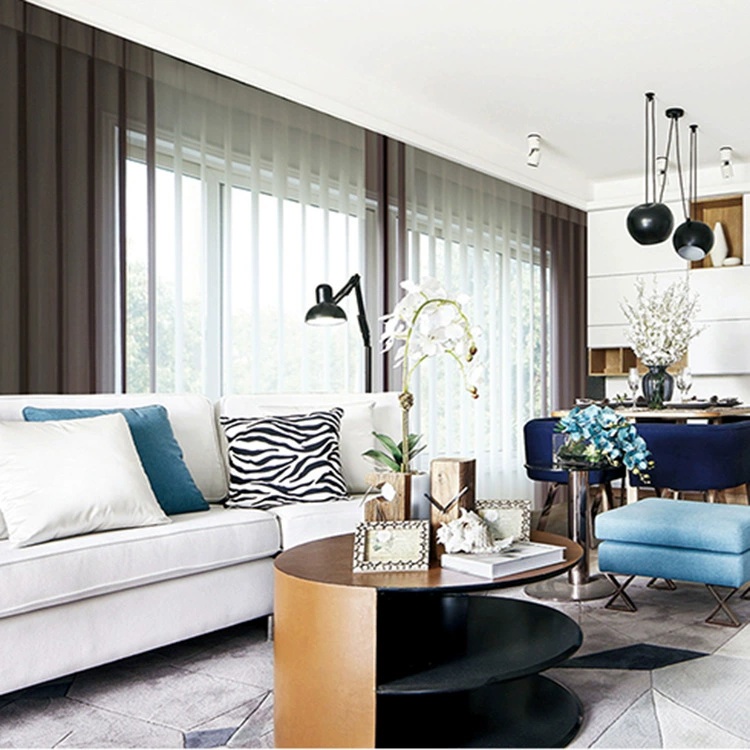
Hallways, Entryways and Transitional Spaces: Often Forgotten, Surprisingly Important
In many Canberra homes, hallways and entryways are treated as purely functional spaces — places people pass through rather than spend time in. Because of this, window furnishings in these areas are often overlooked.
From a designer’s perspective, that’s a missed opportunity.
Transitional spaces shape first impressions. The moment someone steps inside, the quality of light and sense of openness immediately influences how welcoming the home feels. Harsh glare or exposed windows near entryways can make a space feel abrupt or uncomfortable, even if the rest of the home is beautifully designed.
In these areas, sheer curtains are usually the most suitable choice. They soften incoming light without darkening narrow spaces and provide privacy from nearby streets or neighbours. Because hallways don’t require complete darkness or insulation, blockout curtains are rarely necessary here.
In homes where entryways connect directly to outdoor areas, flyscreens can also play a quiet supporting role, allowing fresh air to move through without compromising comfort.
Bathrooms and Laundry Areas: Light and Privacy in Balance
Bathrooms and laundries are often excluded from curtain conversations altogether, but in homes with windows facing neighbours or outdoor areas, light and privacy still need to be managed.
In these rooms, sheer curtains — or sheer-style solutions — can be useful when paired with frosted glass or appropriate window placement. They allow daylight in while maintaining discretion, especially in homes where bathroom windows face shared spaces.
Blockout curtains are rarely appropriate here, but flyscreens are often extremely practical, particularly in laundries where ventilation helps manage moisture and odours.
From a functional standpoint, these rooms benefit most from breathable, low-maintenance solutions that prioritise airflow and light.
Outdoor-Adjoining Rooms: Blurring the Line Between Inside and Out
Rooms that open directly onto patios, balconies or gardens behave differently from fully internal spaces.
In these areas, sheer curtains and flyscreens often work together. Sheer curtains soften daylight and provide privacy, while flyscreens allow doors to remain open for airflow during warmer months.
This pairing is especially effective in Canberra’s milder evenings, where natural ventilation can replace artificial cooling. Blockout curtains may still be used selectively for privacy at night, but during the day, sheers help maintain a seamless connection between indoor and outdoor living.
Design-wise, sheer curtains also move gently with air from open doors, adding softness and a sense of continuity between spaces.
Children's Rooms: Flexible Light Control With Safety in Mind
Children's bedrooms often serve several purposes throughout the day.
During playtime, soft natural light can make a room feel bright and welcoming. For daytime naps or early bedtimes, however, families may prefer stronger light control.
A suitable sheer and blockout combination can offer flexibility, provided the window and available installation space support both layers.
Safety should be considered alongside fabric and design. Curtain and blind cords can create serious hazards for young children, particularly where cots, beds or furniture are positioned close to windows.
The Australian Competition and Consumer Commission's window-covering safety guidance explains the importance of compliant products, safe installation and keeping cords out of children's reach.
When choosing nursery or children's bedroom curtains, prioritise appropriate light control, safe operating systems and practical maintenance rather than appearance alone.
For families comparing different types of coverings, our guide to choosing blinds for every room in Canberra also explains how roller, honeycomb and other blind styles suit different spaces.
Open-Plan Homes: Creating Zones With Curtains
In open-plan Canberra homes, curtains often do more than cover windows — they help define zones.
Sheer curtains can soften light across large spaces, preventing any single area from feeling harsh or overexposed. Blockout curtains can be used selectively to close off media areas or bedrooms without affecting the entire space.
Flyscreens, meanwhile, support airflow across open areas, making the whole home feel more breathable during warmer months.
When chosen thoughtfully, each element supports the others rather than competing.
Choosing Curtains That Work With Your Routine
Every room has a different relationship with natural light.
A living room may need softly filtered daylight, a bedroom may require stronger room darkening, and a street-facing apartment may need separate settings for daytime and evening privacy.
The right result comes from selecting suitable fabrics and considering how the complete installation will work.
If you're deciding whether to use sheers, lined curtains, blockout curtains or several layers together, Sweet Home Blinds can help you explore practical options for your room and window dimensions.
Book a free measure and quote in Canberra to compare curtain fabrics, discuss light-control requirements and plan a solution that suits your home.