
Honeycomb Blinds Canberra: Better Than Rollers in Winter?
Compare honeycomb and roller blinds for Canberra winters. Explore insulation, light control, cost, maintenance and motorisation before choosing.
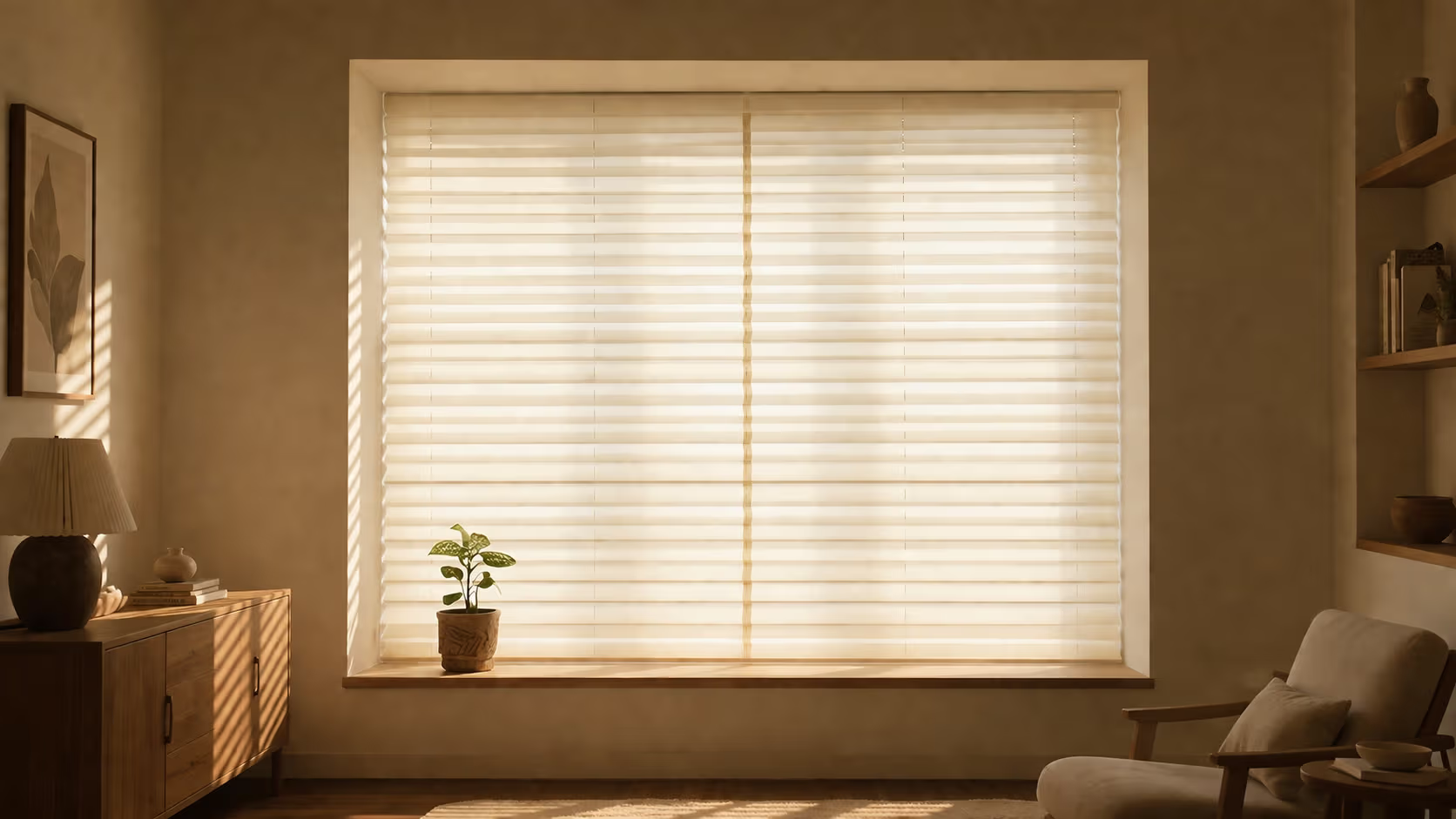
On a frosty Canberra morning, you may notice that the area beside a window feels colder than the rest of the room. Even when the heating is running, cold glass and gaps around the window can make bedrooms and living spaces feel less comfortable.
This is why window furnishings matter during a Canberra winter. They do more than provide privacy or complete the look of a room. When chosen and used properly, they can add another layer between the glass and the interior, helping reduce heat transfer and making the space feel more comfortable.
Two popular options are honeycomb blinds and roller blinds. Both offer a clean finish, flexible light control and different levels of privacy. However, they are built differently and suit different priorities.
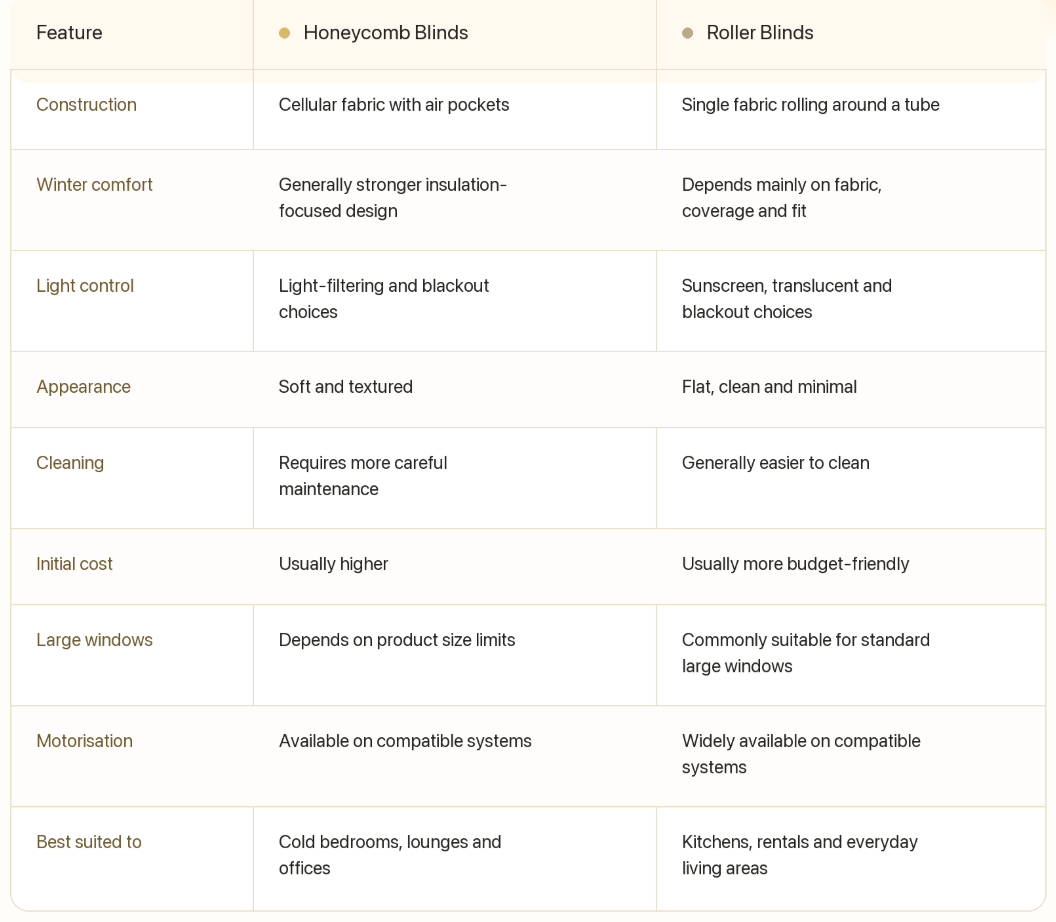
So, are honeycomb blinds better than roller blinds for Canberra winters? The short answer is that honeycomb blinds generally have the stronger insulation-focused design, while roller blinds remain a practical, versatile and often more budget-friendly choice.
The best option depends on the room, window, fabric, installation and how you plan to use the blind each day.
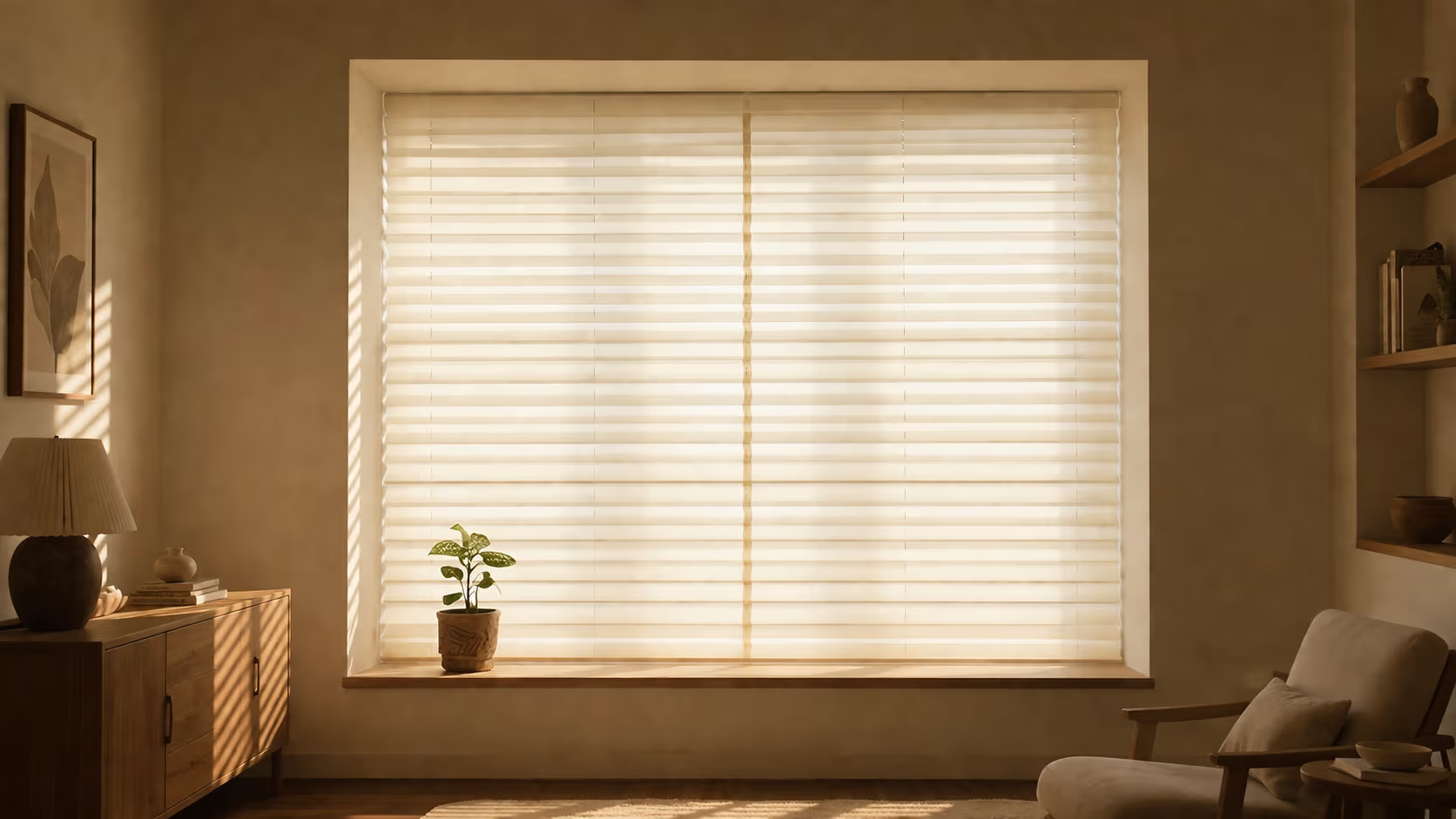
Why Canberra Windows Can Feel So Cold in Winter
Canberra winters have a particular rhythm. The mornings begin with frost, the sun may warm the house during the day, and then the temperature drops quickly once evening arrives. A room that felt comfortable at four o’clock can suddenly feel much colder beside the window a few hours later.
Windows influence this experience because glass generally transfers heat more readily than an insulated wall. The effect may be more noticeable in homes with older glazing, draughty frames or large uncovered windows.
The Australian Government’s Your Home guide to glazing explains that windows affect heat transfer, solar gain and the overall thermal performance of a home. A blind cannot replace efficient glazing or repair a leaking frame, but it can create another layer of separation between the glass and the room.
How you use the blind is important too. On a sunny winter day, opening the blind may allow useful sunlight to enter and warm the room naturally. As the sun begins to disappear, closing the blind can help reduce the uncomfortable cold feeling around the window.
This simple routine can be particularly helpful in bedrooms that cool quickly overnight, home offices positioned beside glass and living rooms with large windows. It also matters in apartments exposed to cold winds and older Canberra homes where upgrading every window may not be immediately practical.
Sweet Home Blinds explores this local problem further in its guide to why honeycomb blinds make sense for Canberra homes.
How Do Honeycomb Blinds Work?
Honeycomb blinds are also known as cellular blinds. From the front, they look like softly pleated fabric. Look at them from the side, however, and you will see rows of hollow cells resembling the structure of a honeycomb.
These cells hold relatively still air between the window and the room. Air is not able to move through the blind as freely as it can around a simple uncovered window, which is why the cellular structure is useful for thermal comfort.
Some honeycomb blinds use a single row of cells, while others use a double-cell construction. The most appropriate option depends on the available product, window size, desired appearance and performance priorities.
Honeycomb blinds do not have to make a room dark. Light-filtering fabric can soften bright daylight while maintaining privacy and a calm interior atmosphere. In a bedroom, a blockout fabric may be preferred for stronger light control and night-time privacy.
Their gently pleated appearance also makes them feel softer than many traditional blinds. When raised, they stack compactly near the top of the window, allowing the room to regain natural light and outdoor views.
However, the honeycomb shape is only one part of the result. A blind that leaves large spaces around the edges may not perform as well as expected. Accurate measurement, installation position and the condition of the window all influence how comfortable the room feels.
Why Are Roller Blinds Still So Popular?
Roller blinds take a simpler approach. A flat piece of fabric moves up and down around a tube installed above the window. Their straightforward design is one reason they remain one of the most familiar types of blinds in Canberra.
They suit many homes because they do not visually dominate a room. When raised, most of the fabric disappears around the tube. When lowered, the blind creates a clean and relatively uninterrupted surface.
What often causes confusion is that “roller blind” does not describe one specific level of light control. A sunscreen roller blind is designed to manage glare while retaining some daytime view. A translucent or light-filtering fabric softens daylight but usually does not provide reliable privacy after dark. A blockout roller blind offers much stronger night-time privacy and room darkening.
Some homeowners choose dual roller blinds, combining sunscreen and blockout fabrics on the same window. During the day, the sunscreen layer can help manage glare without completely removing the view. At night, the blockout blind can be lowered for privacy.
Roller blinds are also popular in investment properties and busy family homes because their flat surfaces are relatively easy to maintain. They work well in rooms where practical light control matters more than achieving the strongest possible insulation-focused design.
Sweet Home Blinds’ article about roller blinds for Canberra homes and investment properties shows why this straightforward product continues to suit such a wide range of interiors.
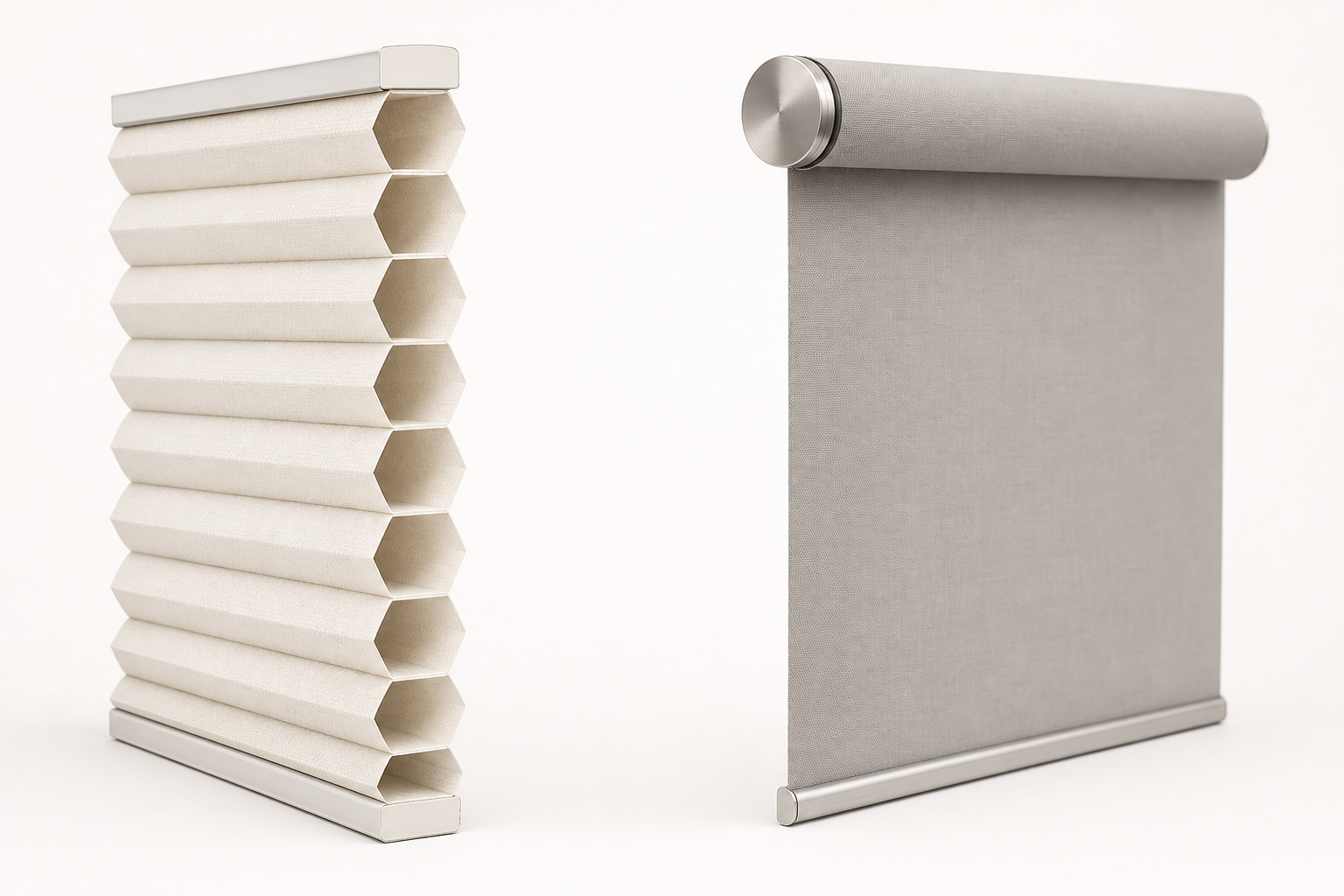
honeycomb blind (left) and roller blind (right)
Which One Feels Better in a Canberra Winter?
If you spend winter evenings sitting close to a cold window, the structural difference between the two blinds becomes more meaningful.
Honeycomb blinds are specifically designed to create air pockets, so they generally offer the stronger insulation-focused solution. They can be especially useful in bedrooms, lounges and home offices where people remain near a window for long periods.
A blockout roller blind can still add useful coverage over the glass. If it is measured carefully and provides good coverage, it may help the room feel more comfortable than leaving the window uncovered. However, its single layer does not trap air in the same way as a cellular blind.
That does not make roller blinds a poor winter choice. It simply means their strengths lie elsewhere. They are versatile, visually simple and often more economical. In a kitchen, rental property or room that needs easy everyday light control, those advantages may matter more than the cellular structure of a honeycomb blind.
It is also worth being cautious about dramatic energy-saving claims. No responsible installer can promise a particular temperature increase or electricity-bill reduction based only on the type of blind. Glazing, window orientation, frame condition, edge gaps, fabric and daily use all affect the result.
In many homes, the most sensible solution is not choosing one winner for every window. Honeycomb blinds can be used in colder bedrooms, while roller blinds serve kitchens, living areas or rooms where simple maintenance is the priority.
What About Light Control and Privacy?
The right choice is not only about temperature. A blind still needs to work with the way the room is used throughout the day.
Light-filtering honeycomb blinds create a soft glow rather than a completely dark room. This makes them an attractive option for living areas and home offices where glare needs to be reduced without losing all natural light. Blockout honeycomb blinds suit bedrooms better, particularly where morning light interrupts sleep.
Roller blinds provide a wider range of familiar fabric combinations. Sunscreen fabrics are helpful when preserving a daytime view matters, but they should not be relied upon for night-time privacy. Once the indoor lights are switched on, visibility from outside can change significantly. A blockout roller blind is the more appropriate choice when privacy after dark is essential.
Neither product should automatically be described as providing 100% darkness. Even with blockout fabric, small amounts of light can enter around the sides, top or bottom. The final result depends on how the complete system is measured and installed.
For homeowners who want practical light control without making the room feel too hard or minimal, roller blinds can also be layered with sheer curtains. The blind manages privacy and glare, while the curtains add softness and movement to the interior.
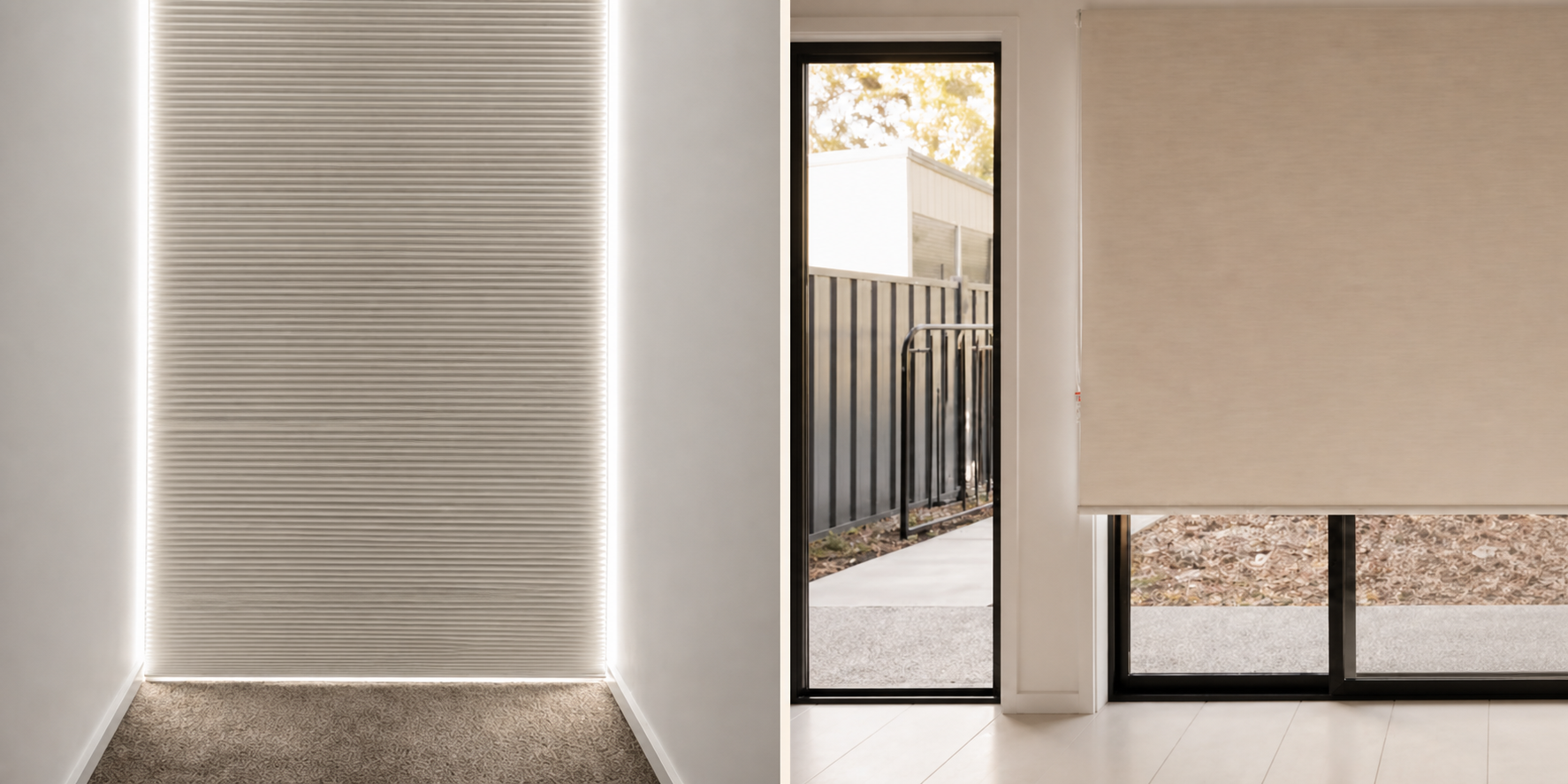
Light-filtering honeycomb blind (left) and blockout roller blind (right).
Which Blind Is Easier to Live With?
A blind is not something you simply look at. It is opened, closed, touched and cleaned every day, so maintenance deserves just as much attention as insulation.
Roller blinds have a clear advantage when easy cleaning is the priority. Their flat surface can usually be dusted gently or spot-cleaned according to the fabric manufacturer’s instructions. This makes them a practical choice for kitchens, investment properties and busy family homes.
Honeycomb blinds need a little more care. Their pleated surface and internal cells can collect dust, and occasionally a small insect may find its way inside. A soft brush attachment on a low-suction vacuum can help remove surface dust, while compressed air may help clear debris from inside the cells. The fabric should always be cleaned according to the manufacturer’s instructions rather than soaked or scrubbed.
This does not mean honeycomb blinds are difficult to own. In a quiet bedroom or home office, they can remain attractive for years with gentle maintenance. However, a roller blind may be more forgiving in a high-traffic room where children, pets or frequent handling are part of daily life.
Does the Price Difference Matter?
Roller blinds generally provide the more affordable starting point, especially when several standard windows need to be covered. Their familiar construction, broad fabric range and straightforward operation make them popular for whole-home installations and investment properties.
Honeycomb blinds usually require a larger initial investment. Their cellular fabric and specialised operating system are more complex, but the extra cost may make sense in rooms where winter comfort is especially important.
Rather than comparing the total cost of furnishing an entire home with one product, it can be more useful to think room by room. A homeowner might choose double-cell honeycomb blinds for a cold bedroom but use roller blinds in the kitchen and general living areas. This directs the budget towards the spaces where each product’s strengths will be noticed most.
The quality of the measurement also affects value. A premium blind that is too narrow or leaves unnecessary gaps may not deliver the expected finish or performance. Professional measuring helps account for handles, recess depth, window operation and the amount of coverage required.
Matching the Blind to the Room
Bedrooms are often where honeycomb blinds make the strongest case. Canberra temperatures can fall quickly overnight, and the bed may be positioned close to a cold window. A blockout honeycomb blind can provide privacy and room darkening while adding an insulation-focused layer at the glass.
In living rooms, the decision becomes more personal. Honeycomb blinds can soften daylight and help a seating area feel more comfortable, while roller blinds offer a cleaner surface and more familiar fabric choices. Where preserving the daytime view matters, a sunscreen roller blind may be especially useful.
Kitchens usually favour practicality. Cooking residue, moisture and frequent activity can make an easy-to-clean roller blind the more convenient choice. In a home office, either product may work. A light-filtering honeycomb blind can soften glare and reduce the cold feeling beside the window, while a sunscreen roller blind can help retain the view.
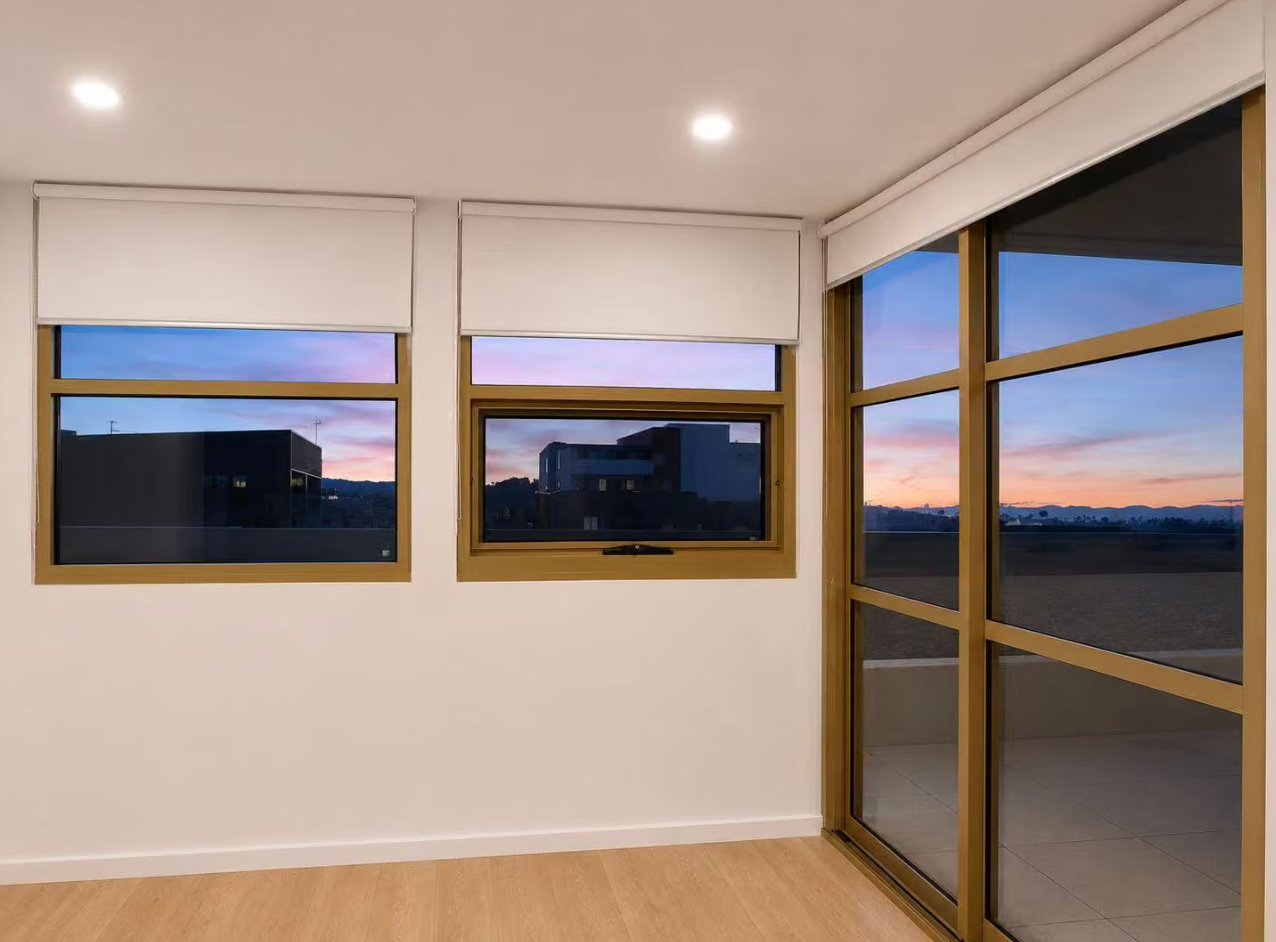
For investment properties, roller blinds are often selected because they look neat, operate simply and are relatively easy to maintain. At Sweet Home Blinds’ Denman Prospect Boulevard project, roller blinds were chosen to provide privacy, reliable light control and a low-maintenance finish.
Can Honeycomb and Roller Blinds Be Motorised?
Motorisation is useful when a blind is large, positioned high above the floor or simply adjusted several times a day. Instead of walking from window to window, the homeowner can operate individual blinds or groups of blinds using a remote, app or compatible automation system.
Roller blinds are commonly available with motorised operation. Depending on the product and the home, this may involve a wired motor or a rechargeable battery motor. Battery-powered blinds can be particularly appealing in an existing property because they may avoid the need to run new electrical wiring to every window.
Some honeycomb blind systems can also be motorised, although availability depends on the model, dimensions and selected operating system. Somfy, Alpha and other motor brands should only be mentioned after compatibility with the particular blind has been confirmed.
During a Canberra winter, automation can support a useful daily routine. The blinds might open when winter sunlight reaches the room and close before the evening temperature falls. This does not change the insulating structure of the blind, but it can make consistent operation much easier.
Sweet Home Blinds explains these options further in its guide to blind motorisation for Canberra homes.
Two Canberra Homes, Two Sensible Choices
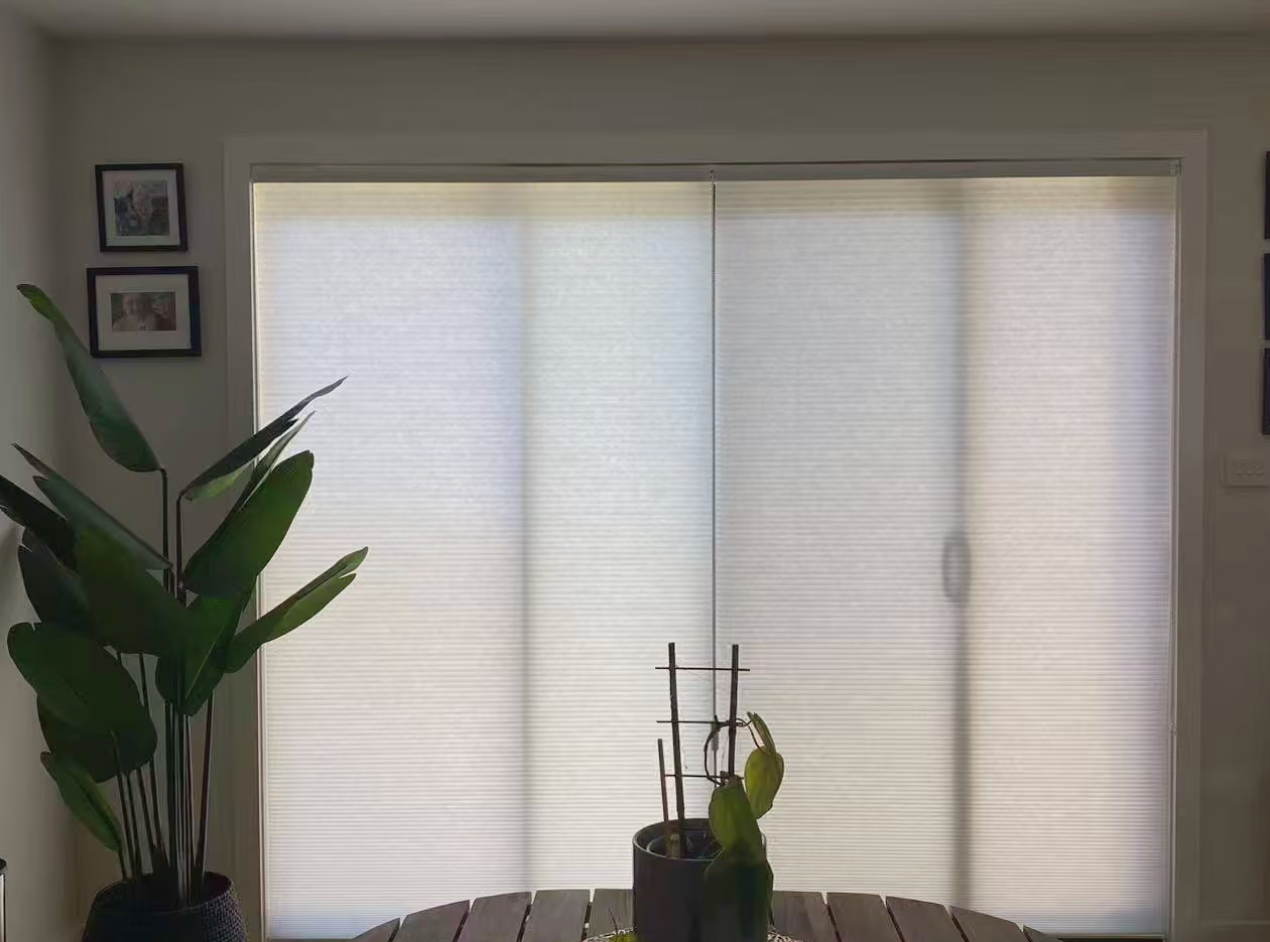
The Griffith House project shows how honeycomb blinds can work in a real Canberra home. Sweet Home Blinds installed light-filtering double-cell honeycomb blinds to soften natural light, preserve clean architectural lines and support comfort through Canberra’s seasonal temperature changes.
The project also challenges the idea that insulation-focused blinds must make a room dark or heavy. The light-filtering fabric allows the interior to remain bright while the double-cell structure adds another layer at the window.

At the Red Hill House project, roller blinds were used in the living room. Their clean finish and straightforward light control suited the way the room was used, while PVC plantation shutters were selected for other areas of the home.
These projects illustrate an important point: the best blind is not necessarily the one with the longest list of features. It is the one that responds most naturally to the room and the people using it.
Frequently Asked Questions
Are honeycomb blinds better than roller blinds?
Honeycomb blinds generally offer the stronger insulation-focused structure. Roller blinds may be the better choice when easy maintenance, flexible fabrics and a more affordable starting price are the main priorities.
Do honeycomb blinds keep a room warmer?
Their cellular design can help reduce heat transfer around a window and improve comfort. The result still depends on the glazing, frame condition, edge gaps, installation and how the blind is used.
Can honeycomb blinds provide complete blockout?
Blockout honeycomb fabric can provide strong room darkening and privacy, but light may still enter around the edges. The finished result depends on the complete installation, not only the fabric.
Are roller blinds suitable for Canberra winters?
Yes. A well-fitted blockout roller blind can add useful coverage over the glass. However, it does not contain the same air-trapping cells found in a honeycomb blind.
Can battery-powered blinds be installed without new wiring?
Battery motors can suit existing homes where adding wiring would be difficult. The motor’s compatibility, charging requirements and suitable blind dimensions should be confirmed during consultation.
Making the Right Choice for Your Canberra Home
Choose honeycomb blinds when winter comfort, softly filtered light and an insulation-focused structure matter most. Choose roller blinds when you want a clean finish, simple maintenance, broad fabric options and a more accessible starting price.
For many Canberra homes, the most practical answer is a combination. Honeycomb blinds can support comfort in colder bedrooms, while roller blinds manage privacy and light in kitchens, living areas and investment properties.
Sweet Home Blinds provides personalised advice, professional measurement and installation across Canberra and surrounding regions. You can also visit the Fyshwick showroom by appointment to compare fabrics, colours and operating systems in person.
Ready to compare Honeycomb Blinds and Roller Blinds? 👇
Book a consultation with Sweet Home Blinds to find the right solution for your windows, lifestyle and winter comfort.
Follow Sweet home Blinds Facebook and Instagram for Canberra project inspiration and completed installations.