
Can Honeycomb Blinds Be Combined With Curtains? A Canberra Layering Guide
Honeycomb blinds and curtains do not need to compete for the same window. When the window and surrounding space are suitable, the two products can be combined to create a more flexible solution. Honeycomb blinds sit close to the glass and provide compact light control. Curtains cover a wider area and introduce softness, texture and additional privacy. A sheer curtain can filter daylight, while a blockout curtain can provide stronger coverage after dark. Used together, the products allow the...

Honeycomb blinds and curtains do not need to compete for the same window. When the window and surrounding space are suitable, the two products can be combined to create a more flexible solution.
Honeycomb blinds sit close to the glass and provide compact light control. Curtains cover a wider area and introduce softness, texture and additional privacy. A sheer curtain can filter daylight, while a blockout curtain can provide stronger coverage after dark. Used together, the products allow the window furnishing to respond to different times of day and changing seasons.
The Denman Terrace project provides a real Canberra example. Sweet Home Blinds installed honeycomb blinds with blockout curtains and sheer curtains in a residential townhouse. The layered arrangement combined privacy, adjustable light control, softness and everyday comfort without expecting one product to perform every role.
However, adding more layers does not automatically produce a better window. The blind, tracks, curtain folds, handles and opening sections must have enough space to operate independently. The products also need to be selected according to the room rather than simply repeated across the whole home.
This guide explains how honeycomb blinds and curtains can work together, when the combination is worthwhile and what Canberra homeowners should check before ordering.
How Honeycomb Blinds and Curtains Perform Different Roles
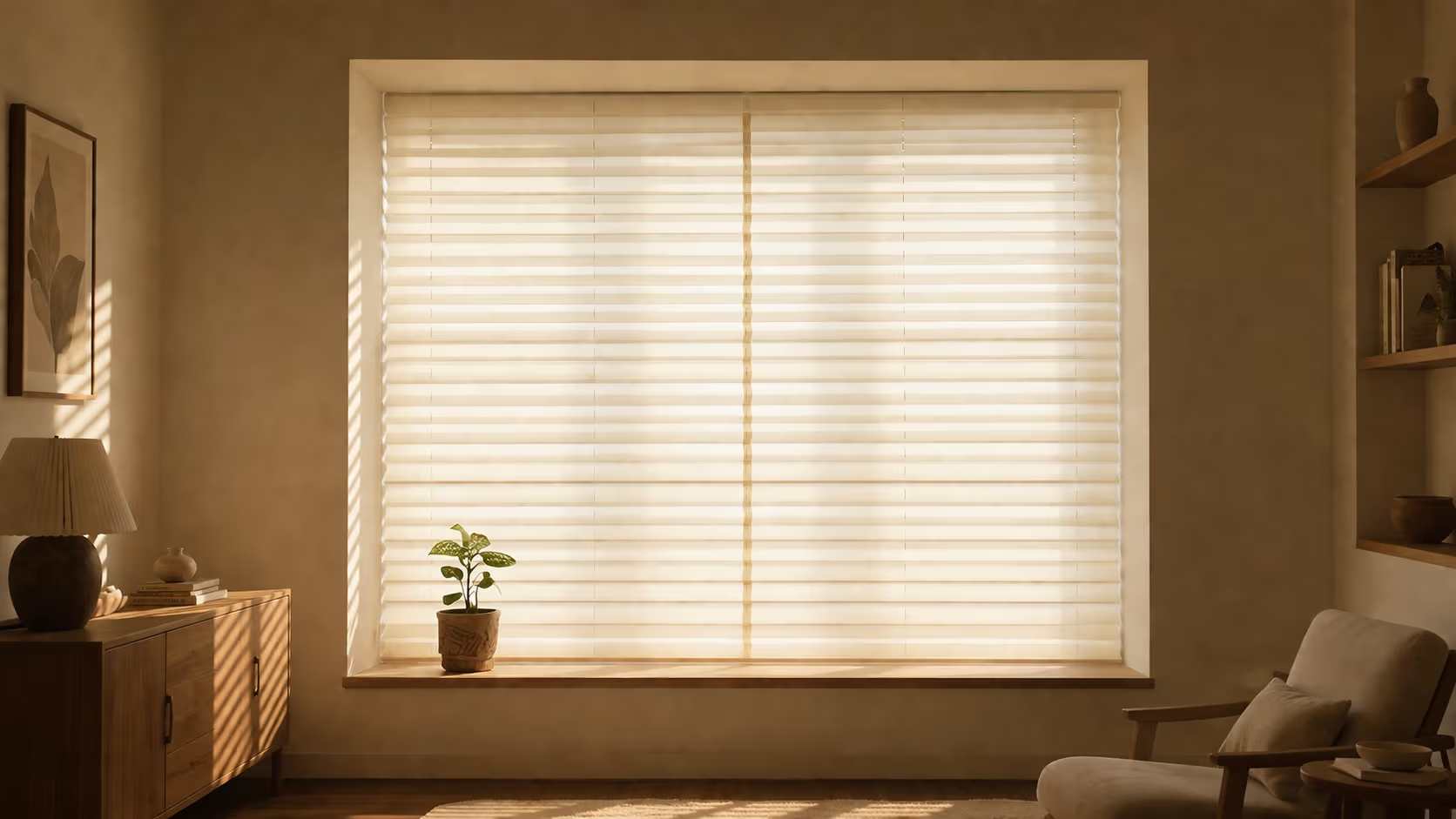
Honeycomb blinds use pleated fabric formed into cellular pockets. When viewed from the side, these pockets resemble a honeycomb. The blind moves vertically, covering the glass when lowered and stacking near the top of the window when raised.
Their compact construction makes honeycomb blinds useful where homeowners want light control without placing a large volume of fabric around the window. Depending on the selected fabric, they may filter daylight or provide stronger room darkening.
Curtains operate across a wider area. Instead of sitting within or immediately around the frame, they can extend beyond the sides of the opening and travel from near the ceiling towards the floor. This wider coverage helps the curtain influence the complete appearance of the wall, not only the glass.
The products therefore solve different parts of the same problem.
A honeycomb blind can provide precise coverage at the window. A sheer curtain can soften incoming daylight and add a continuous decorative layer. A blockout curtain can cover the frame and surrounding area when stronger privacy or darkness is needed.
The purpose of layering is not to keep every product closed at the same time. It is to give the household several useful settings throughout the day.
Why Combine Honeycomb Blinds With Curtains?
A single window furnishing can be enough for many rooms. Layering becomes valuable when the window needs to meet several requirements that one product cannot satisfy comfortably.
For example, a living area may need soft daylight during the morning, reduced glare in the afternoon and privacy after dark. A bedroom may need natural light during the day but stronger room darkening at night. A street-facing townhouse may require privacy without leaving the room permanently covered by an opaque material.
Honeycomb blinds provide a compact functional layer. Curtains expand the visual and practical coverage around the window.
The combination may offer:
More than one level of light control
Flexible daytime and night-time privacy
Wider coverage around the window
A softer, more finished interior appearance
The ability to use different layers during different seasons
Greater flexibility for bedrooms, living areas and street-facing rooms
These advantages depend on the selected fabrics and installation. A light-filtering honeycomb blind will behave differently from a room-darkening blind. A sheer curtain will not provide the same night-time privacy as an opaque curtain.
The complete arrangement should therefore be designed according to the required result rather than described simply as “a blind with curtains.”
A Real Canberra Example: Denman Terrace
The Denman Terrace townhouse demonstrates how several window-furnishing products can form one coordinated interior solution.
Honeycomb blinds were paired with blockout curtains and sheer curtains. Each product contributed something different to the home.
The honeycomb blinds created a compact layer close to the windows. They provided practical control without visually dominating the rooms. The sheer curtains softened daylight and added flowing fabric to the interior. The blockout curtains provided stronger privacy and coverage when required.
This combination was especially suitable for a townhouse because different windows can face streets, neighbouring residences or private outdoor areas. The amount of privacy and sunlight may change considerably from one side of the property to another.
The project does not mean that every window needs three separate layers. Instead, it demonstrates a whole-home approach in which products are selected and combined according to the function of each room.
A bedroom may benefit from honeycomb blinds and blockout curtains. A living area may use a honeycomb blind with sheers. Another window may only require the blind. Maintaining a related colour palette and consistent installation details can still connect the different arrangements visually.
The main lesson from Denman Terrace is that successful layering gives each product a defined job. The blind provides compact control, the sheer manages the daytime atmosphere, and the blockout curtain provides stronger coverage.
Honeycomb Blinds With Sheer Curtains
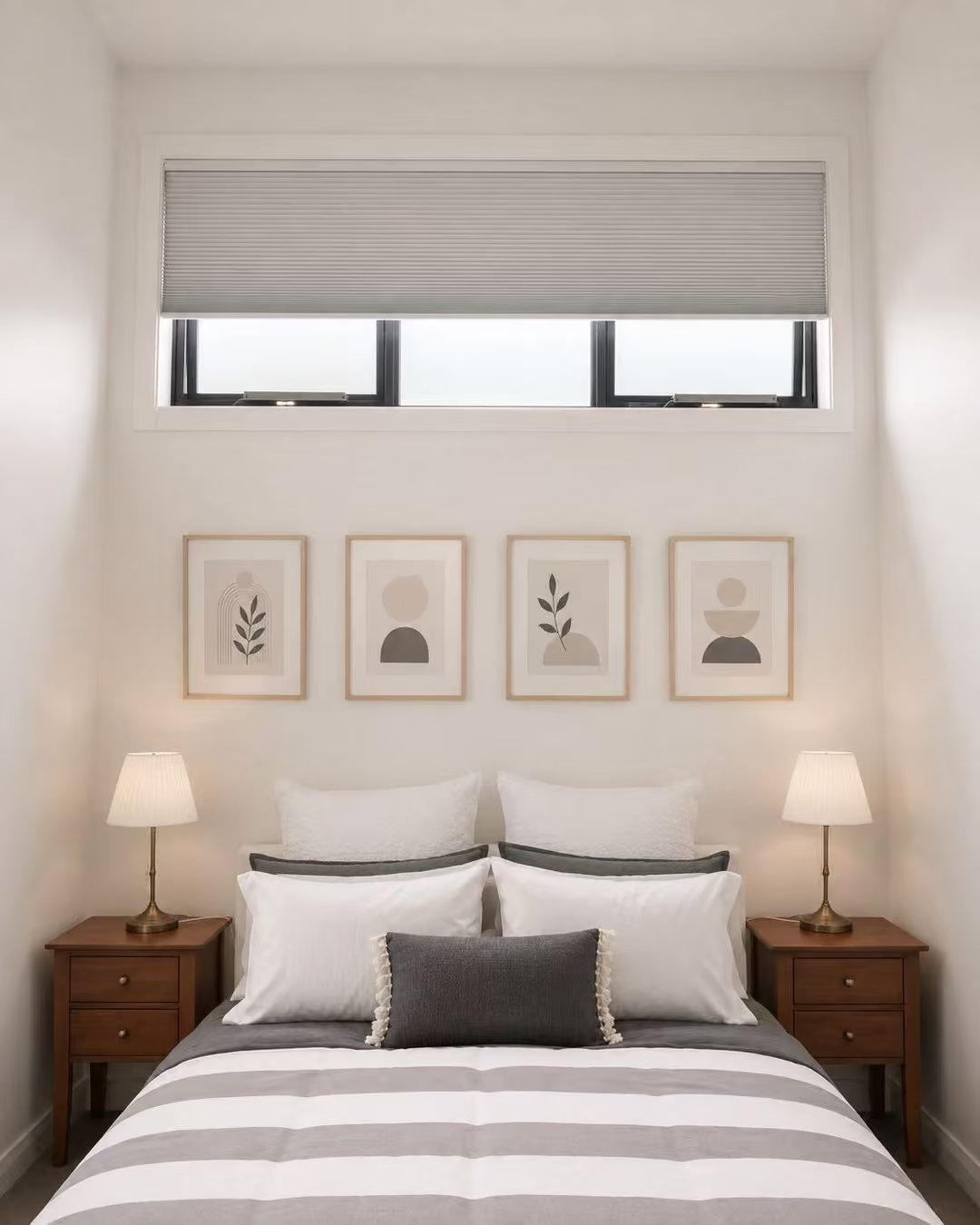
Honeycomb blinds and sheer curtains can work well together in living rooms, dining areas and open-plan interiors.
During the day, the sheer curtain can remain across the window to diffuse bright light. Its continuous fabric softens the appearance of the glass and reduces the visual contrast between the window and the surrounding room.
The honeycomb blind can then be adjusted independently. It may remain raised when maximum daylight is wanted, lowered partially to cover a specific area or closed when additional privacy is required.
This arrangement provides more flexibility than a sheer curtain alone. Sheers can reduce direct visibility under suitable daytime lighting conditions, but their privacy changes when the interior becomes brighter than outside. The honeycomb blind provides another layer when greater coverage is needed.
The combination can also improve the appearance of a compact blind installation. Honeycomb blinds have a clean and restrained form, while curtains introduce vertical folds, movement and texture. The result can feel softer without losing the blind’s practical operation.
However, the curtain must not press against the blind. Suitable track projection is needed so the sheer fabric can hang freely in front of the blind, brackets and controls.
Homeowners considering this combination can compare Sweet Home Blinds’ honeycomb blinds and sheer curtains as parts of one complete window arrangement.
Honeycomb Blinds With Blockout Curtains
Pairing honeycomb blinds with blockout curtains creates a stronger layered solution for bedrooms and other rooms where privacy and darkness are important.
The honeycomb blind provides everyday control close to the glass. It can be used independently when the homeowner wants privacy without closing a full-length curtain.
At night, the blockout curtain can be drawn across the complete opening. Because curtains can extend beyond the window frame, they may reduce some of the light that would otherwise enter around the sides of an inside-mounted blind.
This does not guarantee complete darkness. Light can still appear above, below or beside the curtain, depending on the track position, curtain dimensions and room conditions. Small gaps may also remain around the honeycomb blind.
The benefit is that the two products address different potential light paths. The blind covers the main glass area, while the curtain provides wider coverage around the opening.
A blockout curtain also changes the appearance of the room. When open, it introduces fabric folds at the side of the window. When closed, it creates a broad, continuous surface that can make a bedroom feel quieter and more enclosed.
For a smaller bedroom, curtain stacking space should be assessed carefully. A generous blockout curtain may require significant room beside the window when open. If the stack covers too much glass, the room may lose useful daylight.
Sweet Home Blinds’ blockout curtain range can be considered alongside honeycomb blinds where stronger night-time coverage is required.
Can Three Layers Be Used on One Window?
In some situations, a window can use a honeycomb blind, sheer curtain and blockout curtain. The Denman Terrace project demonstrates how these products can form part of one coordinated townhouse installation.
A three-layer arrangement provides several operating positions:
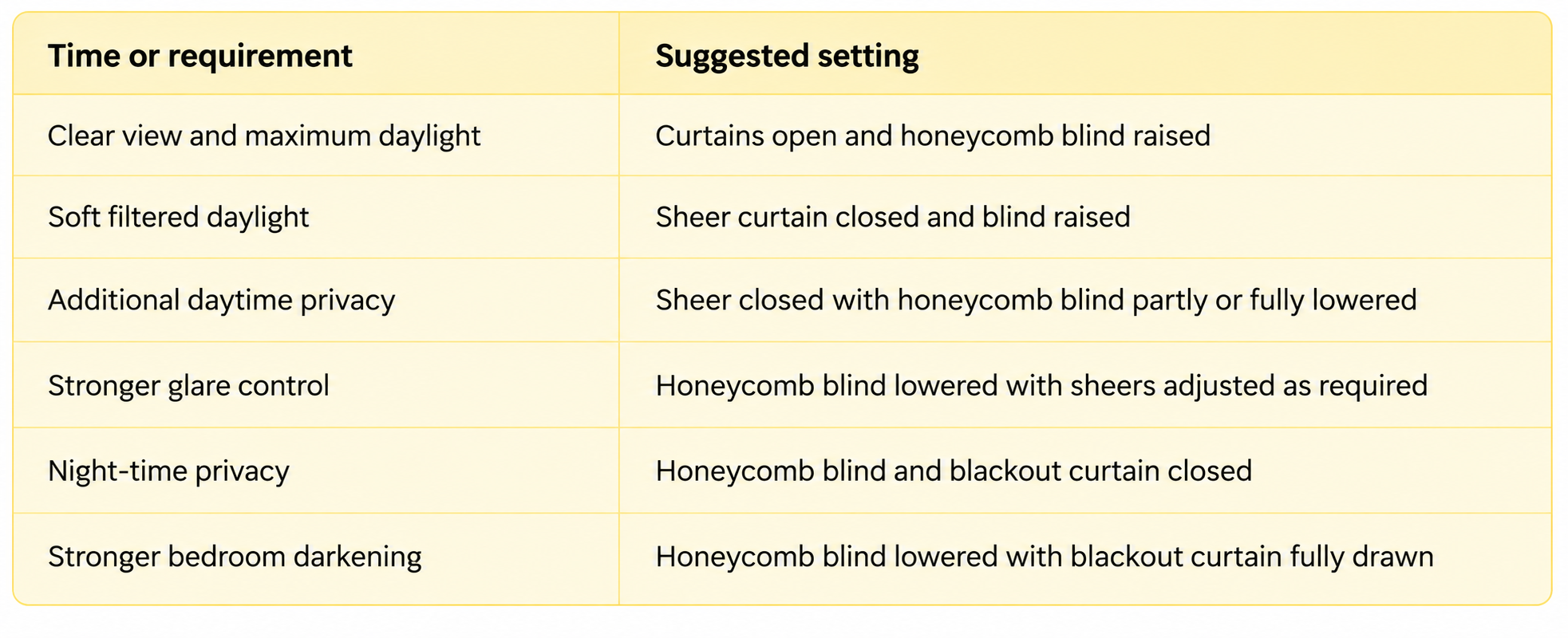
This flexibility can be valuable, but three layers also require more physical space and a larger budget. The blind needs enough depth at the window, while the two curtains require separate track positions and space for their folds.
The curtain tracks must project far enough from the wall for the fabrics to travel without catching on the blind, window handles or each other. The blockout curtain should not push the sheer fabric against the blind when both are closed.
Three layers may be excessive for a narrow room or a window surrounded by built-in furniture. In these situations, two well-planned products may provide a better result than three crowded products.
Which Combination Is Best for a Bedroom?
A bedroom usually places greater importance on night-time privacy and darkness than a living area.
A room-darkening honeycomb blind with blockout curtains is often the stronger combination when sleep conditions are the main priority. The blind covers the glass, while the curtain extends across the wider opening.
Homeowners should still consider how the products will be used during the day. Keeping both opaque layers closed may make the bedroom unnecessarily dark. The honeycomb blind should be easy to raise or adjust so natural light can enter when privacy is not a concern.
If the bedroom faces a street or neighbouring property, adding a sheer curtain may provide another daytime setting. The sheer can soften the view and light while the main blind is raised.
The location of the bed and other furniture also matters. Curtain fabric needs room to hang and stack without being trapped behind a bedhead, bedside table or desk.
For children’s bedrooms, the selected controls and installation must comply with applicable safety requirements. Product Safety Australia provides information about the mandatory standard for blinds, curtains and window fittings. Beds, cots and climbable furniture should be considered during measurement rather than positioned without reference to the window furnishing.
Which Combination Is Best for a Living Area?
Living areas often benefit from softer and more adjustable daylight rather than maximum darkness.
A light-filtering honeycomb blind with sheer curtains can provide several useful settings without making the window feel excessively heavy. The sheers soften direct daylight, while the blind can be lowered when stronger glare or privacy control is needed.
This combination may suit a living room containing a television or computer screen. The honeycomb blind can cover the part of the window producing the strongest reflection, depending on the blind configuration, while the sheer curtain maintains a more consistent appearance across the complete opening.
If the living area is overlooked after dark, an opaque layer may still be required. This could be a room-darkening honeycomb blind or a separate blockout curtain, depending on the level of privacy and available space.
Window direction should guide the decision. A west-facing living room may experience strong low-angle afternoon sunlight, while a south-facing window may need less glare control but more attention to winter comfort.
The Australian Government’s Your Home guidance on shading explains that external shading is generally more effective at preventing unwanted summer heat from reaching the glass. Internal honeycomb blinds and curtains remain useful for managing brightness, privacy and indoor comfort, but they should form part of a wider strategy.
Can Layering Improve Winter Comfort?
Honeycomb blinds are often considered for Canberra homes because their cellular structure traps air within the fabric pockets. Curtains add another layer between the room and the window.
The combination may reduce direct exposure to cold glass and help the area near the window feel more comfortable. A curtain that extends beyond the frame can also cover areas that an inside-mounted blind does not reach.
However, the result depends on more than the number of layers. Gaps at the top, sides and bottom allow air to move around the window furnishings. Track position, curtain length, blind fit and the condition of the window all influence performance.
The Australian Government’s Your Home glazing guide explains that snugly fitted window coverings can improve the thermal performance of a window system. It also makes clear that glazing, frames and air leakage remain important.
Neither honeycomb blinds nor curtains can repair damaged seals or replace efficient glazing. If cold air is entering through the frame, the underlying problem should be assessed separately.
Daily operation is also important. During a sunny winter day, opening the furnishings may allow useful sunlight to enter. Closing the appropriate layers before the outdoor temperature falls can reduce the cold feeling near the glass.
A layered installation provides options, but homeowners still need to use those options at the right time.
What Happens During a Canberra Summer?
During summer, honeycomb blinds and curtains can help reduce glare and provide indoor coverage. The most effective setting depends on the direction of the window and the time direct sunlight reaches it.
A honeycomb blind can be lowered before intense sunlight enters the room. Because it sits close to the window, it provides a compact barrier across the glass.
Sheer curtains can diffuse daylight but should not be treated as a strong heat-control product. Their main role is to soften brightness and maintain a lighter daytime atmosphere.
Blockout curtains provide more substantial internal coverage when closed. However, closing a blockout curtain also removes much of the natural light and exterior view.
Internal window furnishings manage solar energy after it has entered through the glazing. Appropriate eaves, awnings and other external shading methods can be more effective at preventing unwanted heat from reaching the glass.
The layered system remains valuable because the homeowner can select the least restrictive setting that provides enough control. A sheer may be sufficient in the morning, the honeycomb blind may be needed later, and the blockout curtain may only be used during the strongest conditions.
Recess Depth and Blind Placement
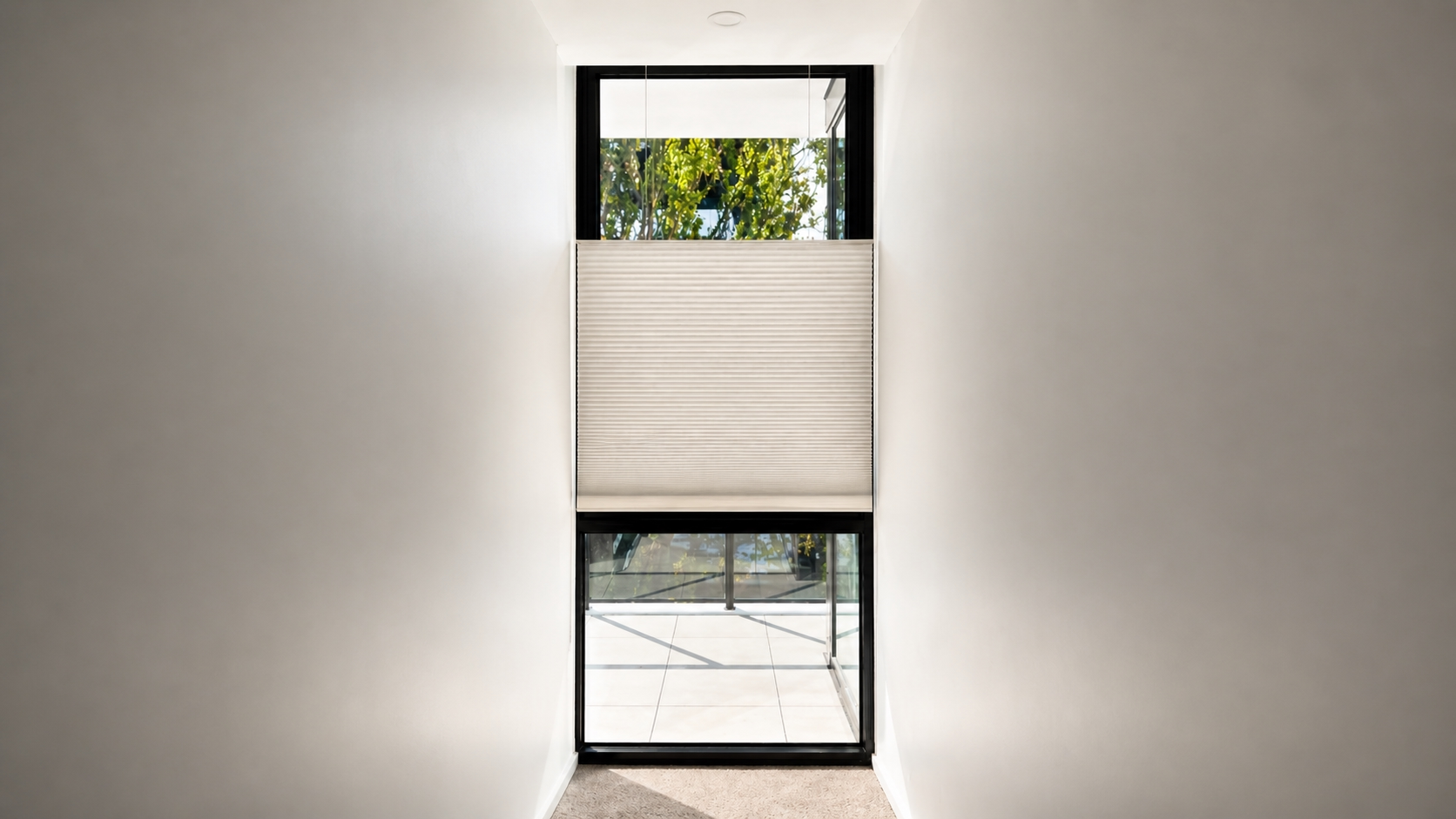
Before combining honeycomb blinds with curtains, the window recess should be measured carefully.
An inside-mounted honeycomb blind needs enough depth to sit within the opening without interfering with handles, locks or moving window sections. If the recess is shallow, part of the blind or its brackets may project beyond the frame.
An outside-mounted blind may solve some depth problems, but it occupies more wall space and changes the position required for the curtain track.
The blind must also remain accessible after the curtains are installed. Controls should not be hidden behind a deep curtain return or positioned where fabric repeatedly catches on them.
Window operation is another consideration. The blind and curtains should not prevent a hinged or sliding window from opening as intended. Flyscreens, security screens and ventilation requirements may also affect the available space.
These details are difficult to judge from photographs or approximate measurements. Professional on-site measurement allows the complete layered system to be planned together.
Track Spacing and Curtain Projection
Track spacing is one of the most important technical details in a layered installation.
A sheer curtain needs room to form consistent folds. If it hangs too close to the honeycomb blind, the folds may rub against the blind or catch on its hardware.
A blockout curtain positioned behind or in front of the sheer also needs enough separation to travel freely. When the tracks are too close, one curtain can drag the other or compress its folds.
The required projection depends on:
The depth and mounting position of the honeycomb blind
The curtain heading and fullness
Whether one or two curtain tracks are used
Window handles and locks
Skirting boards and architraves
The position of furniture beside the window
The size of the curtain stack
The ceiling or wall must provide a suitable fixing surface for the track. Wide or heavy curtains place more load on the fixings than a lightweight decorative panel.
Recessed curtain tracks require earlier planning because the ceiling detail must accommodate the track and fabric. Surface-mounted tracks offer more flexibility in an existing home, but their position still needs to be measured accurately.
Choosing Colours and Fabrics That Work Together
A layered window contains several visible materials. The colours do not need to match exactly, but they should relate comfortably to the room.
A light honeycomb blind can sit quietly against a pale window frame. A sheer curtain in a similar neutral family can then add texture without creating a strong colour break.
The blockout curtain may follow the wall colour for a calm, continuous appearance. Alternatively, it can introduce a deeper tone when the homeowner wants the window to become a stronger design feature.
Samples should be viewed at the actual window where possible. Fabric can appear different under warm artificial lighting, cool daylight and direct sunlight.
Texture also matters. Honeycomb blinds have precise horizontal pleats, while curtains create longer vertical folds. Combining these two patterns can add depth, but an overly busy fabric may compete with the blind and surrounding interior.
The Denman Terrace installation shows how layered products can contribute softness and practical control without losing a coordinated residential appearance. The goal is for the products to look intentional together, not like separate additions made at different times.
Everyday Operation and Motorisation
A layered system should be easy enough to use every day. If reaching a control requires moving furniture or pulling fabric aside, the homeowner may stop adjusting the products and lose much of the intended flexibility.
The operating sequence should feel natural. Curtains should open without catching on blind controls, and the honeycomb blind should raise or lower without rubbing against the fabric.
Motorisation may be considered for large, high or difficult-to-reach honeycomb blinds and curtains. It can also make a multi-layer system easier to manage where several products need to change at different times of day.
However, motorisation requires additional planning. Power supply, control type, charging or battery access and future servicing should be discussed before installation.
Manual operation remains practical for many standard windows. The better choice depends on window size, accessibility, budget and how frequently the products will be adjusted.
Regardless of the operating method, furniture should not obstruct the curtain stack or blind path. A layered design only works properly when each component can move through its full intended range.
Cleaning and Maintenance
Honeycomb blinds and curtains have different cleaning requirements.
Honeycomb fabric contains pleats and internal cells. Dust should be removed gently according to the product instructions. Excessive pressure, unsuitable cleaning products or moisture may affect the shape or surface of the fabric.
Curtains can also collect dust, pet hair and household particles. Routine care may involve gentle vacuuming with a suitable soft attachment, but washing or professional cleaning requirements depend on the fabric, lining and construction.
Curtains should not be placed in a washing machine unless their specific care instructions allow it. Steam and stain-removal products should also be used only when approved for the material.
The space between the products should remain accessible enough for basic care. A curtain track positioned extremely close to the blind may make it difficult to clean either layer without removing components.
Homeowners can review Sweet Home Blinds’ general care and maintenance guidance, while following any product-specific instructions supplied with the installation.
Cost and Long-Term Value
A layered window furnishing costs more than a single blind because it includes additional fabric, tracks, hardware, manufacturing and installation.
Honeycomb blind pricing is influenced by the window dimensions, fabric type, cell construction, operating system and mounting requirements. Curtain pricing depends on fabric, lining, fullness, track length, ceiling height and the number of separate layers.
Motorisation increases the initial cost and may require electrical preparation or future battery maintenance.
The combination should therefore be selected where the additional functions will be used. Installing three layers on a window that only needs simple privacy may add unnecessary cost and complexity.
Value comes from matching the arrangement to the room:
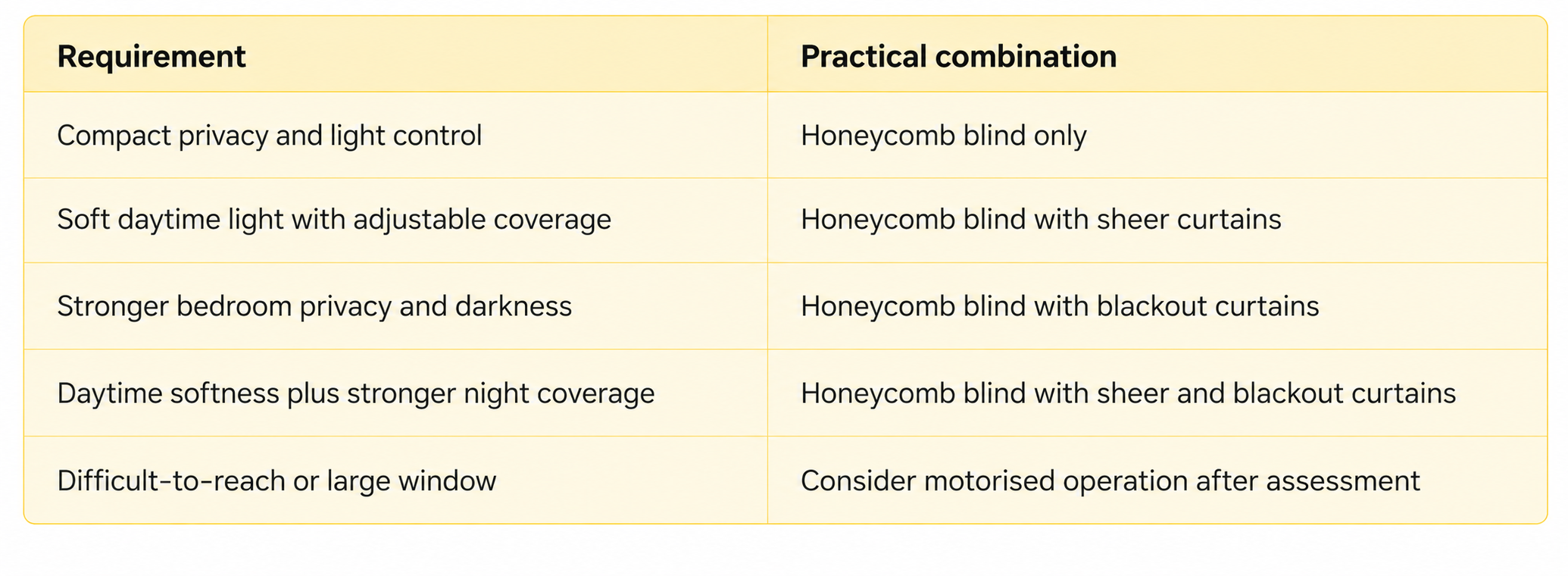
A professional measure can determine whether the window has enough space for the proposed layers before fabrics and operating systems are ordered.
Common Layering Mistakes to Avoid
One common mistake is selecting each product separately. A homeowner may install a honeycomb blind and later add curtains without checking whether the original blind projects too far from the wall. The curtain track may then need to sit further into the room than expected.
Another mistake is forgetting the curtain stack. Full-length curtains require space beside the window when open. If a wall, wardrobe or television unit occupies this area, the fabric may cover part of the glass or obstruct nearby furniture.
Using a sheer curtain as the only night-time privacy layer can also create disappointment. Sheer privacy changes according to the lighting conditions and should not be assumed to remain private after dark.
Homeowners may also expect two blockout products to create complete darkness. Functional gaps can still remain around both blinds and curtains. The complete window, track and surrounding room must be assessed when strong room darkening is required.
Finally, too many layers can overwhelm a small opening. A well-fitted honeycomb blind and one carefully selected curtain may be more practical than placing every available product on the same window.
Frequently Asked Questions
Can honeycomb blinds be installed behind curtains?
Yes. Honeycomb blinds can sit close to the window with curtains installed in front, provided there is enough clearance for both products to operate without touching or catching.
Are honeycomb blinds suitable with sheer curtains?
Yes. The sheers can soften daylight and add fabric texture, while the honeycomb blind provides more adjustable privacy and glare control.
Can honeycomb blinds be combined with blockout curtains?
Yes. This combination may suit bedrooms where stronger privacy and room darkening are required. The final result still depends on gaps, fabric selection and installation.
Do I need both sheer and blockout curtains with a honeycomb blind?
Not always. The correct number of layers depends on the room. A living area may only need sheers, while a bedroom may benefit more from blockout curtains.
Will layered window furnishings make the room completely dark?
Not necessarily. Light may still enter around the edges, above the track or through other parts of the room. Complete darkness should not be assumed.
Can layered window furnishings improve winter comfort?
They can add coverage between the room and the glass and may improve comfort near the window. They cannot replace efficient glazing, insulation or draught sealing.
Is there enough room for curtains over an existing honeycomb blind?
That depends on the blind projection, track position, curtain heading, window hardware and available wall or ceiling space. The complete window should be measured before adding curtains.
Can honeycomb blinds and curtains be motorised?
Depending on the selected products and window configuration, motorised operation may be available. Power, controls and servicing access should be planned before installation.
Planning the Right Layered Window Solution
Honeycomb blinds can be combined successfully with sheer curtains, blockout curtains or both. The best arrangement depends on the room, window direction, privacy requirement, desired darkness and available installation space.
Choose honeycomb blinds with sheer curtains when soft daylight and adjustable daytime coverage are the main priorities. Choose honeycomb blinds with blockout curtains when stronger privacy and bedroom darkening matter more. Consider all three layers when the window genuinely needs several distinct settings and has enough space for each product to operate properly.
The Denman Terrace project demonstrates how honeycomb blinds, sheer curtains and blockout curtains can contribute to one coordinated townhouse interior. Rather than asking one product to solve every problem, the installation uses separate layers for practical control, softness and stronger coverage.
Browse more completed Canberra projects, compare the full range of curtains, blinds, shutters and screens, or book a consultation to discuss measurements, fabrics, track positions and suitable product combinations.
Considering honeycomb blinds with curtains for your Canberra home? Contact Sweet Home Blinds for professional measurement, product advice and installation across Canberra and surrounding regions.
Follow Sweet Home Blinds on Facebook and Instagram for completed projects and Canberra window-furnishing inspiration.