
Best Nursery Blinds for Canberra Homes: Sleep, Safety & Privacy
Discover the best nursery blinds for Canberra homes. Compare blockout, cordless and motorised options, with practical child-safety and light-control advice.
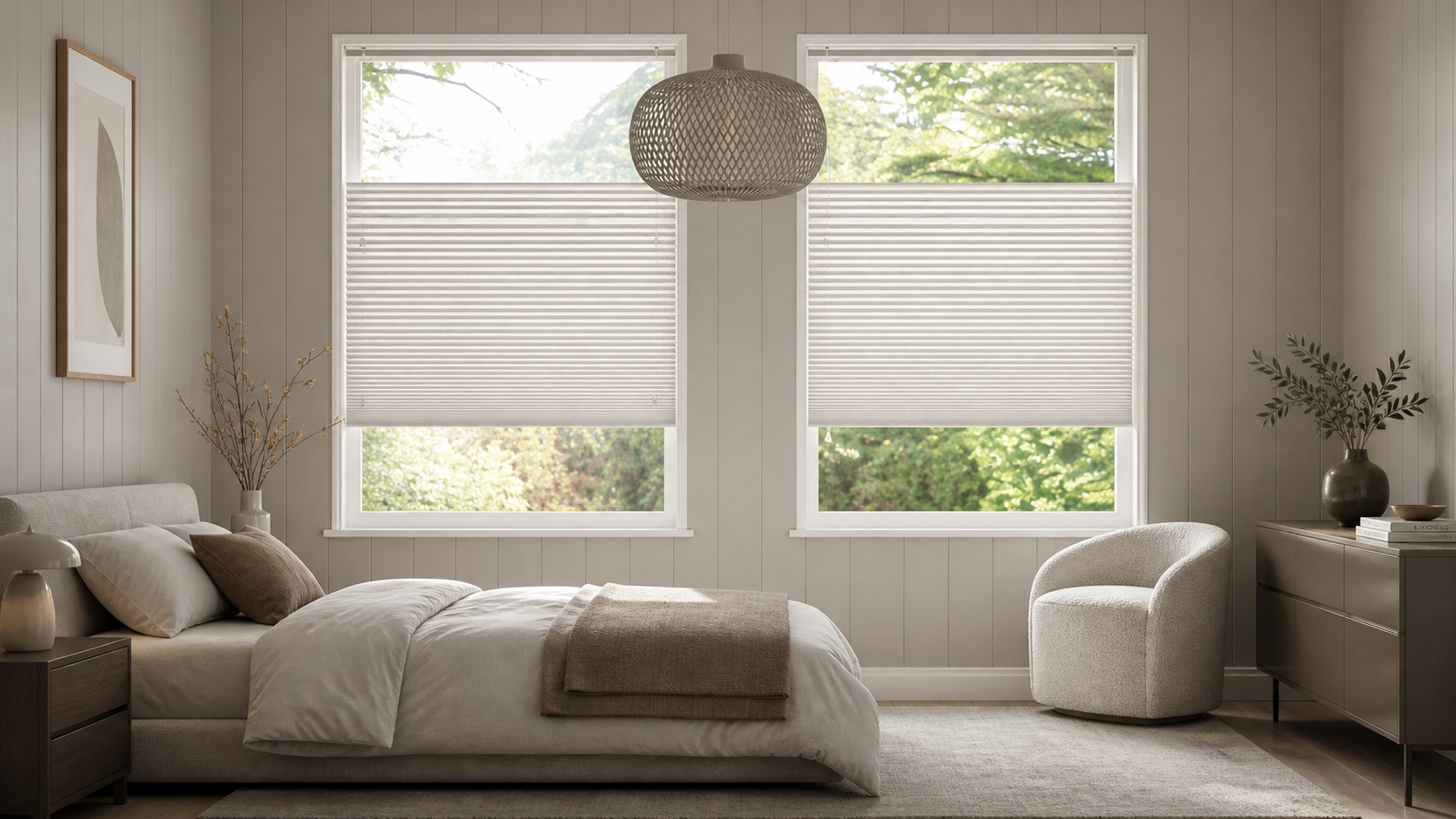
Creating a nursery is about more than choosing a cot, a comfortable chair and a calming colour scheme. The way you manage natural light, privacy and the space around your baby's sleeping area can also make a difference to how the room functions every day.
For Canberra families, choosing nursery blinds brings a few additional considerations. Bright early-morning sunlight can enter east-facing bedrooms during summer, while cold winter nights make window comfort another factor worth considering.
And above everything else, child safety must come first.
Whether you're preparing a room for a newborn or updating a toddler's bedroom, suitable window furnishings should offer practical light control, straightforward operation and a safe installation.
So, what are the best nursery blinds for Canberra homes?
This guide compares blockout roller blinds, honeycomb blinds, Roman blinds and curtains, explains the importance of cord safety, and helps you choose a window treatment that suits your room and family.
What Should You Look for When Choosing Nursery Blinds?
The best nursery window furnishings are not necessarily the most expensive or the darkest. They are the ones that work safely and practically for the room.
Before comparing styles, consider five priorities:
Child safety: Operating cords, chains, fittings and installation must meet applicable Australian safety requirements.
Light control: The covering should help you manage bright daylight and create a comfortable environment for rest.
Privacy: The room may need reliable privacy both during the day and after dark.
Temperature and comfort: The window treatment may help manage glare and heat movement through glazing.
Cleaning and durability: Fabrics and mechanisms should be practical for everyday family use.
A small nursery with a standard bedroom window may only need a straightforward blind. A large, east-facing window might benefit from additional consideration of light gaps and mounting options.
For a broader comparison of window coverings throughout the home, explore our Blinds Canberra: How to Choose the Right Style for Every Room guide.
1. Best Nursery Blinds Compared: Which Type Should You Choose?
Not all window coverings manage light, privacy and everyday use in the same way.
The following comparison provides a starting point for choosing nursery blinds in Canberra.
Window furnishing | Main advantage | Important considerations |
Blockout roller blinds | Compact design and strong fabric-level light blocking | Edge gaps, mounting and safe operating system |
Honeycomb blinds | Cellular construction, with light-filtering and blockout options | Exact fabric, fit and available operating system |
Roman blinds | Soft fabric appearance with a tailored finish | Fold stack, cleaning and cord/mechanism design |
Blockout curtains | Flexible coverage and softer room styling | Track design, light gaps, hanging fabric and safe furniture placement |
Motorised blinds | Convenient operation without a conventional hanging control chain | Compatible motor, power, controls and installation |
No product should be described as automatically child-safe simply because it belongs to one of these categories.
The complete product and its installation must be suitable for the space.
Blockout Roller Blinds: A Practical Starting Point
Blockout roller blinds are worth considering for nurseries because they combine a compact appearance with a choice of fabrics designed to reduce incoming light.
Unlike light-filtering blinds, blockout fabrics are designed to stop light passing directly through the material.
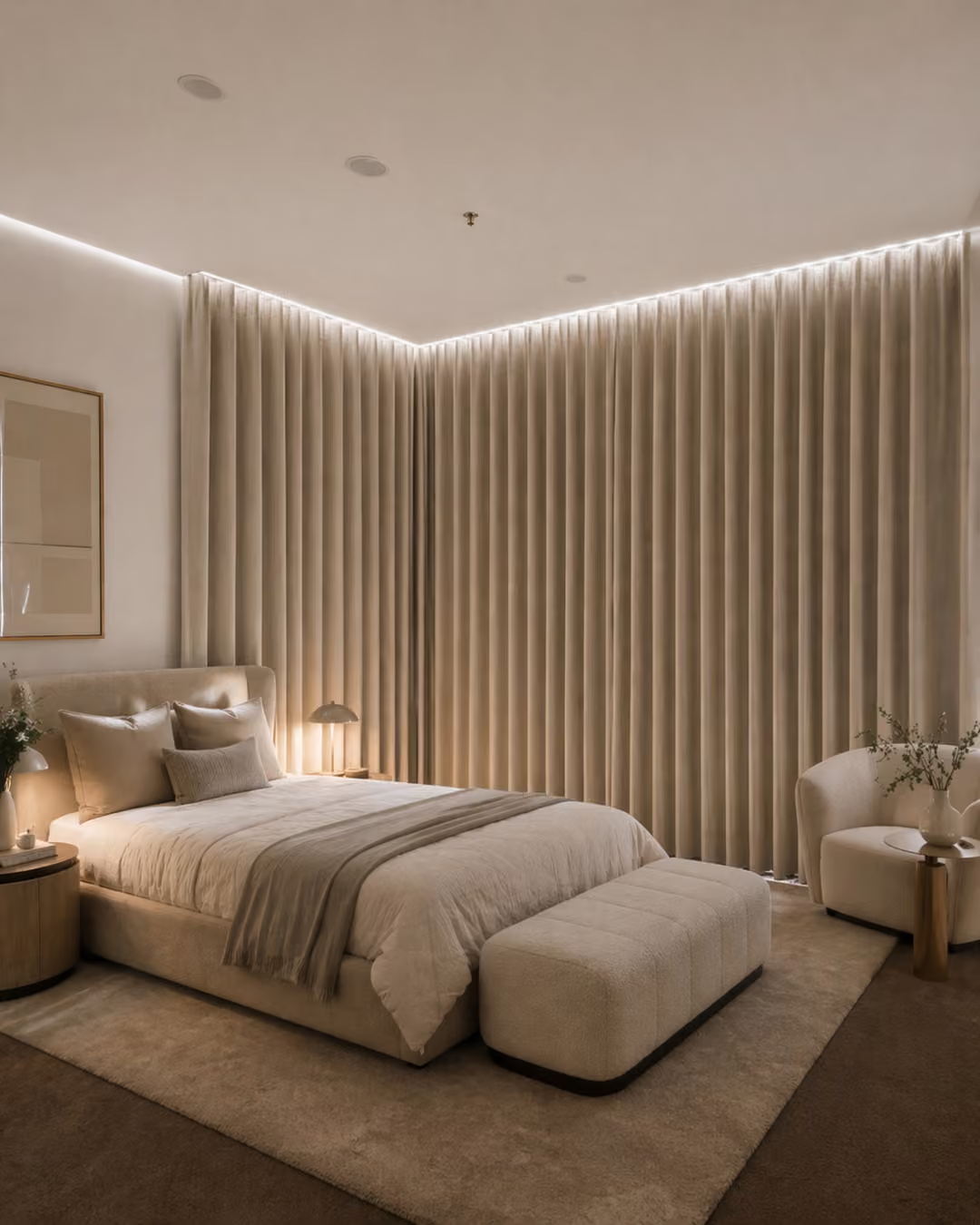
This can make them useful for:
East-facing rooms exposed to early morning sunlight
Bedrooms with large windows
Daytime naps when reduced brightness is preferred
Rooms requiring stronger night-time privacy
However, a blockout fabric does not guarantee complete darkness.
Light can still enter around the sides, above the roller or along the bottom of the blind.
If reducing light leakage is a major priority, discuss the mounting arrangement and available hardware during your consultation.
For a nursery, it is also important to select a suitable operating system rather than assuming a standard chain-operated blind is the right option.
Honeycomb Blinds: Light Control and Thermal Comfort
Honeycomb blinds, also called cellular blinds, contain air pockets within their fabric structure.
These cells can help reduce heat movement through the window area.
That may be useful in Canberra bedrooms where cold winter nights or strong seasonal sunlight make window comfort an important consideration.
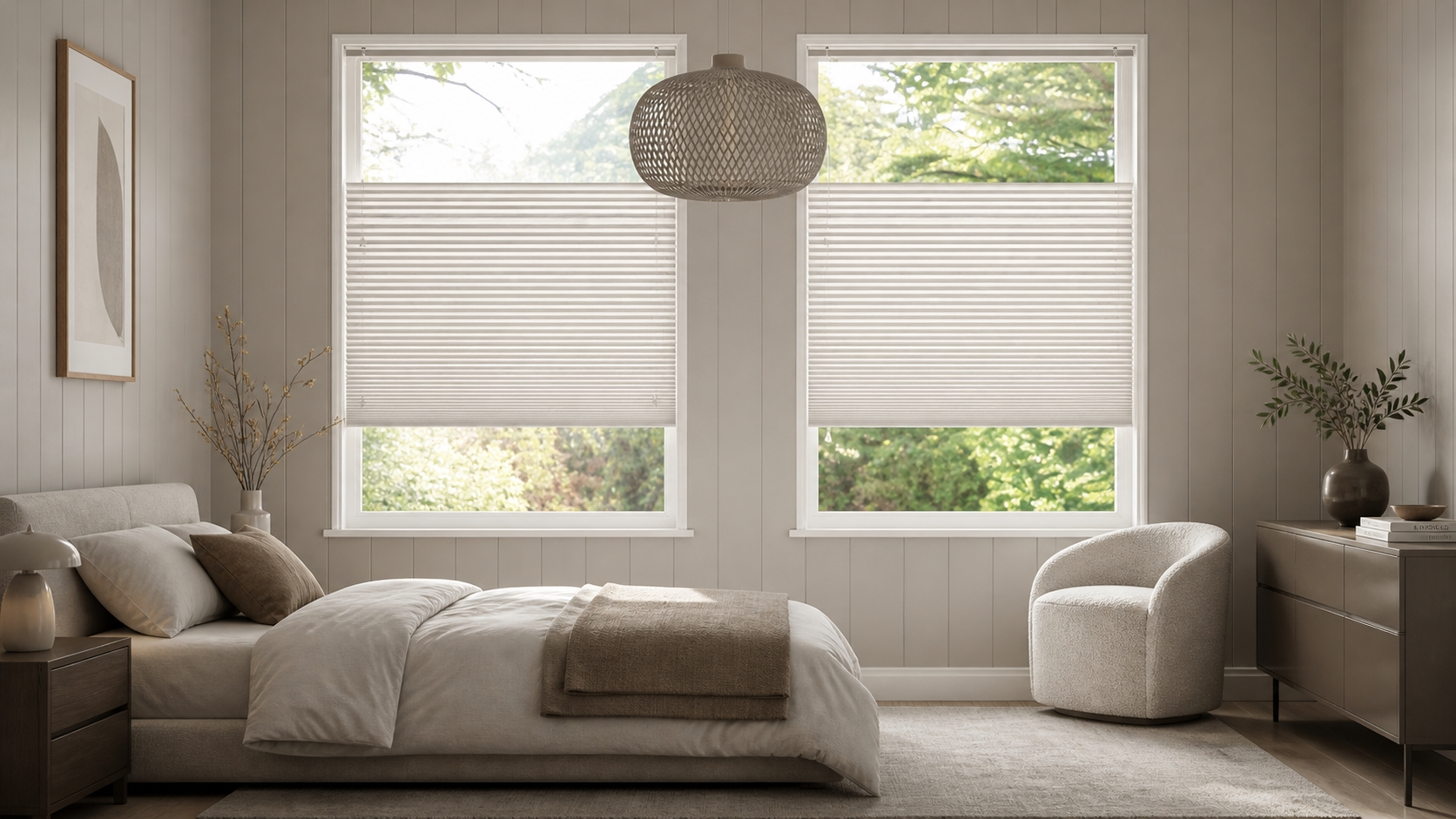
Depending on the selected product, honeycomb blinds can provide light-filtering or blockout options.
Their compact appearance can also suit smaller nurseries where homeowners prefer to avoid large curtain stacks.
Before ordering, confirm:
Whether the selected fabric is light-filtering or blockout
How the blind fits within or outside the window opening
Which operating systems are available
Whether the finished installation is suitable for the child's room
Honeycomb blinds can contribute to comfort, but they do not replace suitable insulation, glazing or safe room-temperature management.
The Australian Government's YourHome glazing guide explains how suitable window furnishings can influence thermal performance, particularly when the installation limits air movement around the covering.
Roman Blinds: A Softer Nursery Design
Roman blinds combine the soft appearance of curtains with the more structured operation of a blind.
They fold into horizontal sections when raised and can suit nurseries where fabric texture is an important design consideration.
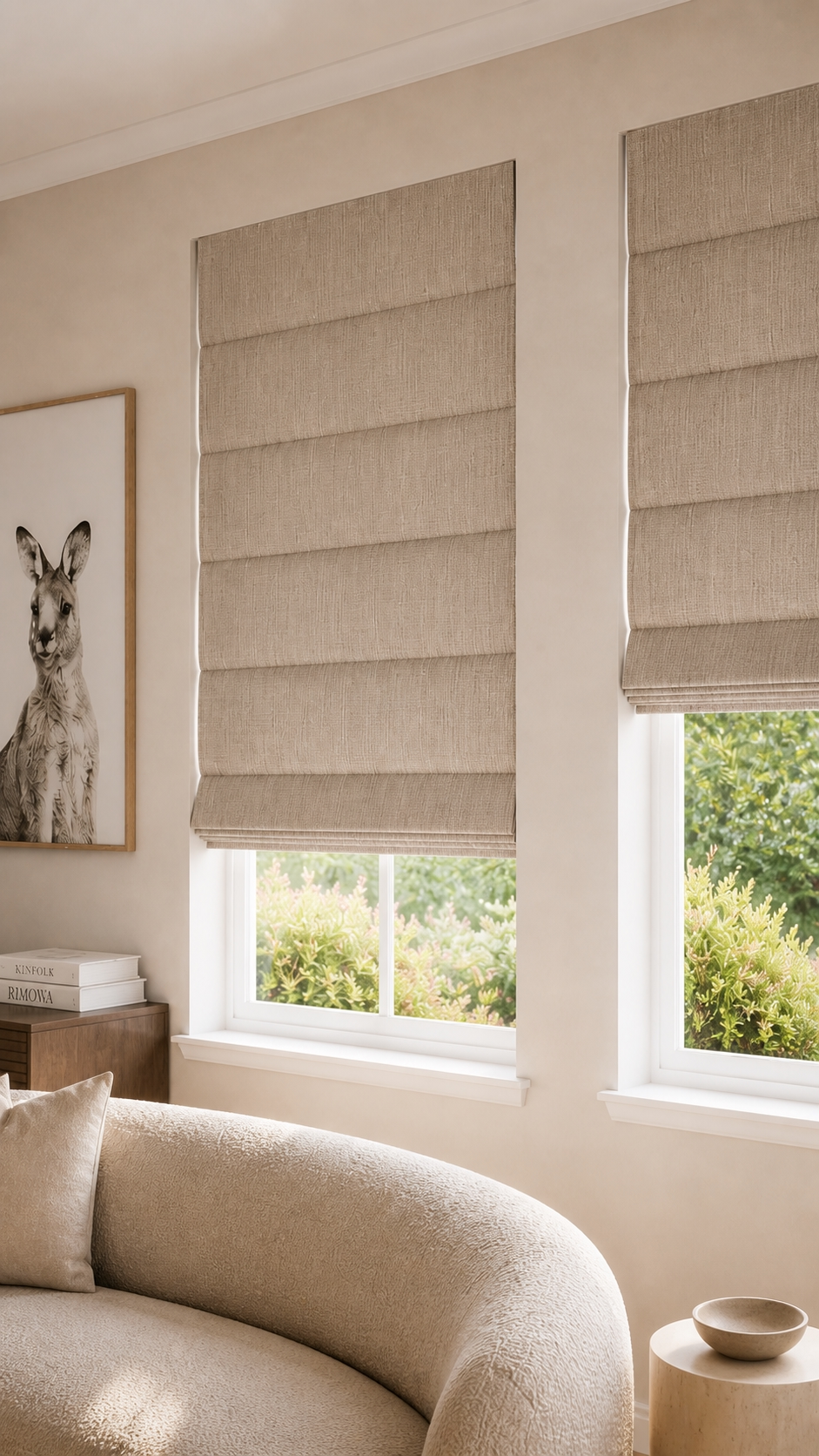
Depending on the available fabric range, Roman blinds may be specified with light-filtering or blockout material.
However, the operating mechanism needs careful consideration.
Some Roman blind systems use cords or other components that create particular safety requirements.
For a child's room, discuss the exact mechanism and compliant installation with the supplier rather than selecting the product based on appearance alone.
Also consider the amount of fabric that stacks at the top of the window when the blind is raised.
Blockout Curtains: Useful for Larger Nursery Windows
Blockout curtains can provide flexible coverage for larger windows and rooms where a softer interior finish is preferred.
They can be especially useful when:
The window requires generous fabric coverage
A blind's edge gaps would be difficult to manage
You want coordinated curtains in adjoining bedrooms
A layered curtain arrangement is preferred
The selected curtain should be planned around the room's furniture and safe sleeping layout.
Keep cots and other children's furniture well away from curtain cords, tracks with accessible operating cords, and any hanging material the child could reach.
If you're interested in using multiple window coverings, our Canberra window furnishing layering guide explains how different products can work together.
2. Are Blockout Blinds Necessary for a Baby's Room?
Blockout blinds can be helpful, but they are not essential for every baby or toddler.
Some children sleep comfortably with daylight in the room. Others may settle more easily when the environment is dimmer and visual stimulation is reduced.
The Australian parenting resource Raising Children Network explains that a dim environment can help some babies and toddlers settle, while also noting that children can sleep when the room is light.
This is an important distinction.
Blockout blinds are a tool for managing the room's light, not a guarantee that a baby will sleep longer or better.
What About Early Morning Sunlight in Canberra?
During Canberra's summer months, east-facing windows can receive strong morning sunlight.
If sunlight enters directly into the sleeping area, a suitable blockout treatment may make it easier to maintain a dimmer environment.
Before deciding which product to install, consider:
Window orientation: An east-facing nursery may have a different light-control requirement from a south-facing room.
Fabric opacity: A translucent blind will diffuse light rather than block it.
Mounting: A blind installed within the window recess can leave gaps around its edges.
Coverage: A correctly planned face-mounted treatment may reduce some light leakage by overlapping the window opening.
Daily use: You may want to open the blind during the day and lower it when a dimmer environment is useful.
For more details about bedroom light leakage, read our guide to blockout curtains and early morning sunlight in Canberra.
Does a Nursery Need to Be Completely Dark?
No. Complete darkness is not a universal requirement for healthy infant sleep.
Parents can use blinds or curtains to manage light as part of a consistent routine, without expecting the window covering to solve every sleep difficulty.
If you need to enter the room for overnight feeding or settling, a suitable dim light may also be useful.
The aim is to create a comfortable environment that works for your family, rather than making the room as dark as possible at all times.
3. Child Safety: The Most Important Nursery Blind Consideration
When choosing blinds for a nursery, cord and chain safety should be the first priority.
Loose or looped blind cords can create a serious strangulation hazard for young children.
This risk is not limited to babies who can already walk. Children may also gain access to cords by climbing onto nearby furniture or reaching from a cot.
Australia has mandatory safety requirements for the supply and installation of corded internal window coverings.
The ACCC Product Safety guide to blinds, curtains and window fittings provides important advice for parents, homeowners and installers.
Cordless and Motorised Options
Where suitable products are available, cordless or motorised systems may help reduce risks associated with exposed operating cords.
Motorised blinds allow compatible window coverings to be operated using controls such as remotes or other supported control systems.
However, motorisation alone does not guarantee that every component of a window covering is safe for a nursery.
The selected product, installation, accessible components and any related electrical equipment must still be assessed.
When discussing a nursery installation, ask your supplier to explain how the operating system works and what safety measures apply.
If You Choose Corded Blinds
Corded systems must comply with applicable Australian product and installation standards.
According to the ACCC mandatory standard for blinds, curtains and window fittings, installation requirements include preventing a loose cord from forming a loop of 220 mm or longer below 1,600 mm above floor level, together with requirements for securing cords and using appropriate safety components.
These are technical installation requirements, not a suggestion that parents should rely on a particular measurement alone to judge whether a blind is safe.
Always follow the manufacturer's installation requirements and use appropriate professional installation.
A Nursery Window Safety Checklist
Before a child uses the room, check that:
The window coverings comply with applicable Australian requirements.
Loose and looped cords are secured and inaccessible.
Required safety devices are correctly installed.
The cot, bed and climbable furniture are positioned away from window-covering hazards.
The child cannot reach curtain cords, chains or other hazardous components from furniture.
The product operates correctly and its safety fittings remain secure.
Remote controls, electrical accessories and batteries are stored safely where applicable.
The ACCC also advises keeping cots, highchairs, playpens and climbable furniture away from windows with hazardous cords.
As children grow, review the layout of the room. A window arrangement that was inaccessible to a newborn may become reachable by an active toddler.
4. Choosing Nursery Blinds for Canberra's Seasons
Canberra's seasonal conditions can influence the type of window furnishing that works best in a nursery.
A bedroom may receive strong summer sunlight, while glazing can contribute to unwanted heat loss during colder months.
The aim is to choose a suitable window treatment that supports comfort without relying on unsupported energy-saving or sleep claims.
Summer: Managing Sunlight and Glare
Blinds and curtains can help reduce direct sunlight entering a room.
For windows receiving strong morning or afternoon light, consider how the material filters or blocks sunlight and how much coverage the installation provides.
Sunscreen fabrics reduce glare but generally do not provide reliable night-time privacy.
Blockout fabrics can offer stronger light reduction where that is preferred.
Keep in mind that internal window coverings do not prevent all solar heat gain. Appropriate glazing, ventilation and external shading may also matter.
Winter: Reducing Heat Movement Around Windows
Honeycomb blinds and suitable lined curtains may contribute to thermal comfort by reducing heat transfer around the window.
The effect depends on the material, construction and installation.
A poorly fitted product with significant gaps may perform differently from a close-fitting system.
For families with young children, safe room temperature remains important regardless of the window furnishings.
The Raising Children Network's safe sleep guidance explains that a baby's sleeping environment should not be too hot and should be free from hazards.
Window furnishings are one part of maintaining a comfortable room, not a substitute for monitoring your child's sleep environment.
5. What Nursery Blinds Are Easiest to Clean?
Practical maintenance matters in a nursery, particularly when managing dust and everyday marks.
Different blind styles require different cleaning methods.
Window furnishing | Typical maintenance consideration |
Roller blinds | Regular gentle dust removal; spot cleaning only as permitted by the fabric manufacturer |
Honeycomb blinds | Gentle dusting or appropriate cleaning methods to avoid damaging the cellular structure |
Roman blinds | Fabric-specific cleaning requirements and care around folds |
Blockout curtains | Follow the selected fabric and lining care instructions |
A smooth roller blind may suit parents looking for a relatively simple appearance and maintenance routine.
However, not every fabric can be wiped down with water or detergent.
Some coated and delicate fabrics require specific cleaning methods.
Before purchasing, ask for the manufacturer's care instructions and consider whether the product suits the way the room will be used.
For practical advice, see our existing guide: How to Clean and Maintain Roller Blinds So They Last Longer.
6. Should You Choose Blinds or Curtains for a Nursery?
Both can work well when properly selected and installed.
The better option depends on the window dimensions, room layout, desired appearance and available operating systems.
Choose Blinds If You Prefer:
A compact, minimal window covering
Straightforward access to the window
A range of light-filtering and blockout fabrics
A suitable cordless or motorised operating system, where available
Less fabric extending into the room
Consider Curtains If You Prefer:
A softer, more decorative finish
Fuller coverage across a large opening
Coordinated fabrics across neighbouring bedrooms
A suitable layered window treatment
More flexibility in fabric fullness and track design
For either choice, assess cords, accessible fabric, fixtures and furniture placement carefully.
Is It Worth Combining a Roller Blind with Curtains?
Sometimes.
A blockout roller blind can provide compact light control, while curtains may provide additional coverage or visual softness.
However, layering adds hardware and complexity.
For a smaller nursery, a single well-specified window treatment may be more practical.
If you are considering two layers, plan the mounting space, curtain movement, blind operation and furniture layout before ordering.
7. How Much Do Nursery Blinds Cost in Canberra?
The cost of nursery blinds depends on the same practical factors that influence other made-to-measure window furnishings.
These include:
Window dimensions
Blind type and fabric
Blockout or light-filtering specification
Manual, cordless or motorised operation
Mounting and installation requirements
Additional tracks, curtains or other approved components
A motorised system will generally involve additional components compared with a basic manual configuration, although the actual quotation depends on the products selected.
When comparing prices, focus on the complete installed solution rather than fabric cost alone.
In particular, ask what is included for safe operation, installation and any required safety fittings.
A lower initial price is not good value if the selected product is unsuitable for the room.
For a more accurate estimate, Sweet Home Blinds offers a free measure and quote consultation.
8. Planning a Nursery That Can Grow With Your Child
A nursery will not always be a nursery.
Over time, the room may become a toddler's bedroom, a playroom or a space for an older child.
It is worth considering how the window furnishings will function as the child becomes more mobile and independent.
A few practical questions can help:
Can the blind be operated easily by an adult?
Consider whether you will regularly need to adjust the covering while holding your child.
Will the furniture layout change?
Check how the position of the cot, bed, desk or shelving could affect access to the window.
Is the fabric practical for regular use?
Choose finishes and materials that suit your household's cleaning needs.
Will the room need different light control later?
A child who eventually uses the room for reading and studying may benefit from more adjustable daylight.
Are the safety features appropriate for the child's changing abilities?
Reassess cords, controls, accessible hardware and furniture placement as your child grows.
Good nursery design should be adaptable without compromising safety.
9. Five Questions to Ask Before Ordering Nursery Blinds
Before choosing a product, ask your window furnishing supplier:
1. What operating systems are available for this blind?
Ask about suitable cordless and motorised options, and the safety requirements for any corded product.
2. How much light will enter around the edges?
Discuss whether the selected fabric and mounting arrangement will provide the level of light control you want.
3. Is the fabric suitable for the room?
Check how it responds to sunlight, how it should be cleaned and whether it provides sufficient privacy.
4. Will the installation work with the furniture layout?
Explain where the cot and other furniture will be positioned, including any likely future changes.
5. What is included in the quotation?
Confirm fabric, hardware, controls, installation, applicable safety devices and product care information.
These questions can make your consultation more useful and help you compare options confidently.
Frequently Asked Questions About Nursery Blinds
What are the best blinds for a baby's nursery?
Suitable cordless or motorised blockout roller blinds and honeycomb blinds are options worth considering, depending on the available products and window configuration.
The best choice must also meet applicable Australian safety requirements and be installed appropriately.
Are cordless blinds safer for babies?
Blinds without exposed operating cords can reduce the hazards associated with loose or looped cords. However, the complete product and installation must still be assessed for safety.
Do not assume that a product is safe solely because it is advertised as cordless.
Do babies need blackout blinds to sleep?
Not necessarily. Some babies sleep comfortably with daylight, while others may settle more easily in a dimmer environment.
Blockout blinds can help manage light, but they do not guarantee better or longer sleep.
Can I use roller blinds in a nursery?
Yes, a suitable roller blind can be a practical option. Consider the fabric, mounting arrangement, operating mechanism and child-safety requirements before ordering.
Are honeycomb blinds suitable for children's bedrooms?
Honeycomb blinds can offer light control and contribute to thermal comfort. Their suitability depends on the exact product, operating system and installation.
Are motorised blinds a good option for a nursery?
Motorised blinds may be convenient and can eliminate the need for certain exposed manual operating cords, depending on the system.
However, the whole installation must still be safe and suitable, including the motor, controls and electrical components.
Should nursery blinds be inside the window recess?
Not necessarily.
Inside-recess installations can provide a compact finish but may leave more visible light gaps depending on the product.
Face-mounted systems can offer greater overlap, where the window and surrounding wall allow it.
The correct arrangement depends on the room, hardware and safety requirements.
Can I combine blockout blinds with sheer curtains?
Yes, where a safe and practical installation can be achieved.
Sheer curtains may soften daylight, while blockout blinds can provide stronger light control when needed. Consider any accessible hanging fabric, cords, track fittings and furniture placement.
Final Thoughts: Safe, Practical Nursery Blinds for Canberra Families
Choosing the right nursery blinds is about balancing everyday comfort with thoughtful design and appropriate child safety.
A blockout roller blind might be a practical solution for a bright bedroom. Honeycomb blinds may suit a room where thermal comfort is a consideration. Roman blinds or curtains may offer a softer appearance.
But no particular style is automatically the best choice for every nursery.
Start with the needs of the room, then consider the fabric, operating system, installation and how the space will change as your child grows.
At Sweet Home Blinds, we help Canberra homeowners compare window furnishings, materials and operating options to find a solution suited to their home.
Planning a nursery or updating your child's bedroom?
Book a Free Measure & Quote to discuss suitable window furnishings for your space.
You can also explore our roller blinds, honeycomb blinds and blockout curtains before your consultation.