
Sheer or Blockout Curtains? What Works Best for Canberra Businesses
Curtains in a commercial building must do more than complete the interior design. They may need to soften daylight in a residential care environment, provide privacy in a meeting room, reduce glare around screens or support the visual identity of a retail store. These requirements become particularly important as Canberra moves towards summer. Longer days and stronger sunlight can make large windows feel bright and inviting, but the same glazing may also introduce glare, reflected light and...
Curtains in a commercial building must do more than complete the interior design. They may need to soften daylight in a residential care environment, provide privacy in a meeting room, reduce glare around screens or support the visual identity of a retail store.
These requirements become particularly important as Canberra moves towards summer. Longer days and stronger sunlight can make large windows feel bright and inviting, but the same glazing may also introduce glare, reflected light and uncomfortable conditions during the working day.
Two common choices are sheer curtains and blockout curtains. Both use fabric and tracks, but they perform different roles.
Sheer curtains filter daylight and create a softer visual boundary without completely closing the room from the outside. Blockout curtains provide more substantial coverage, stronger privacy and greater control when direct light needs to be reduced.
The right choice depends on what happens inside the space.
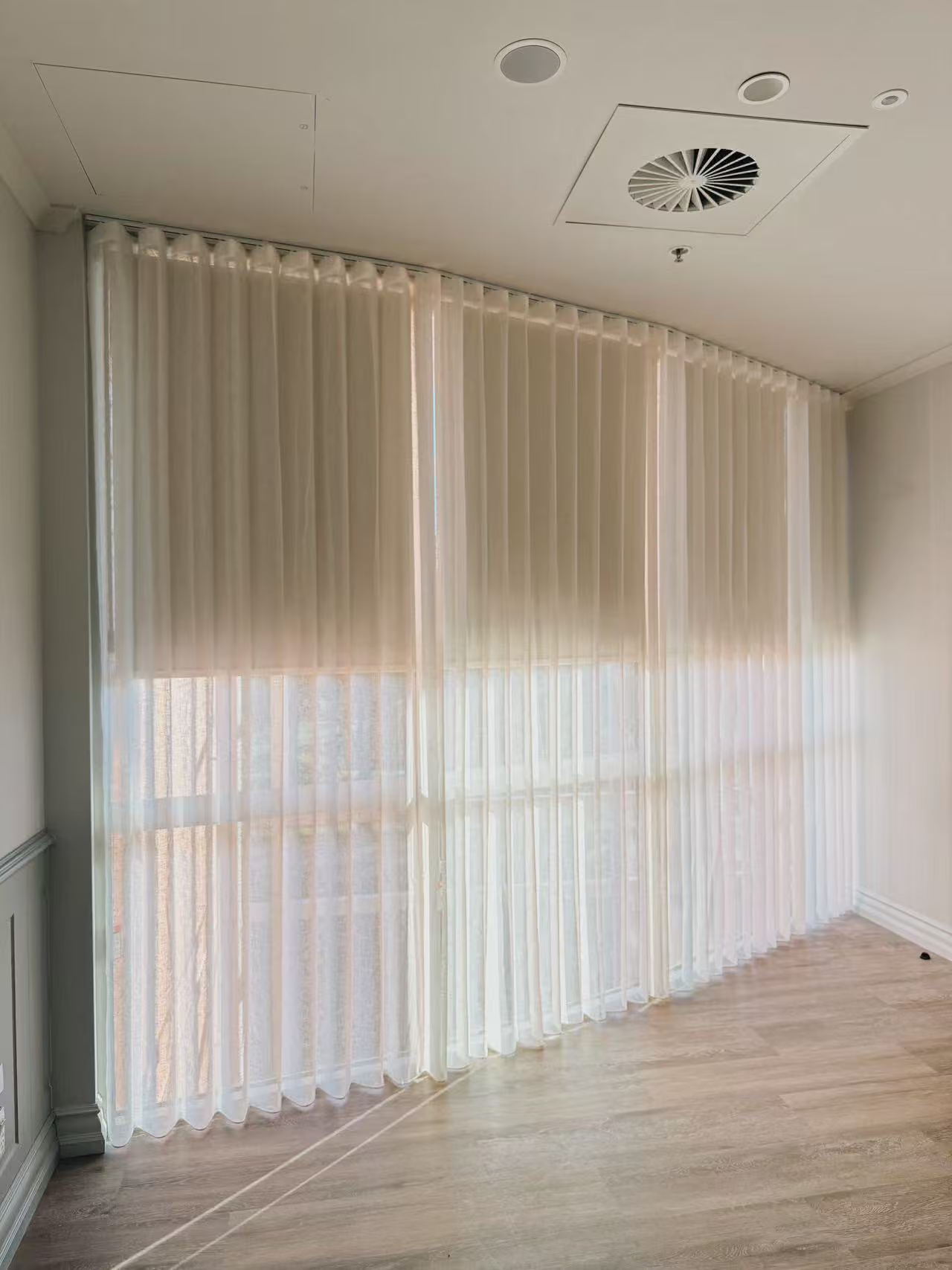
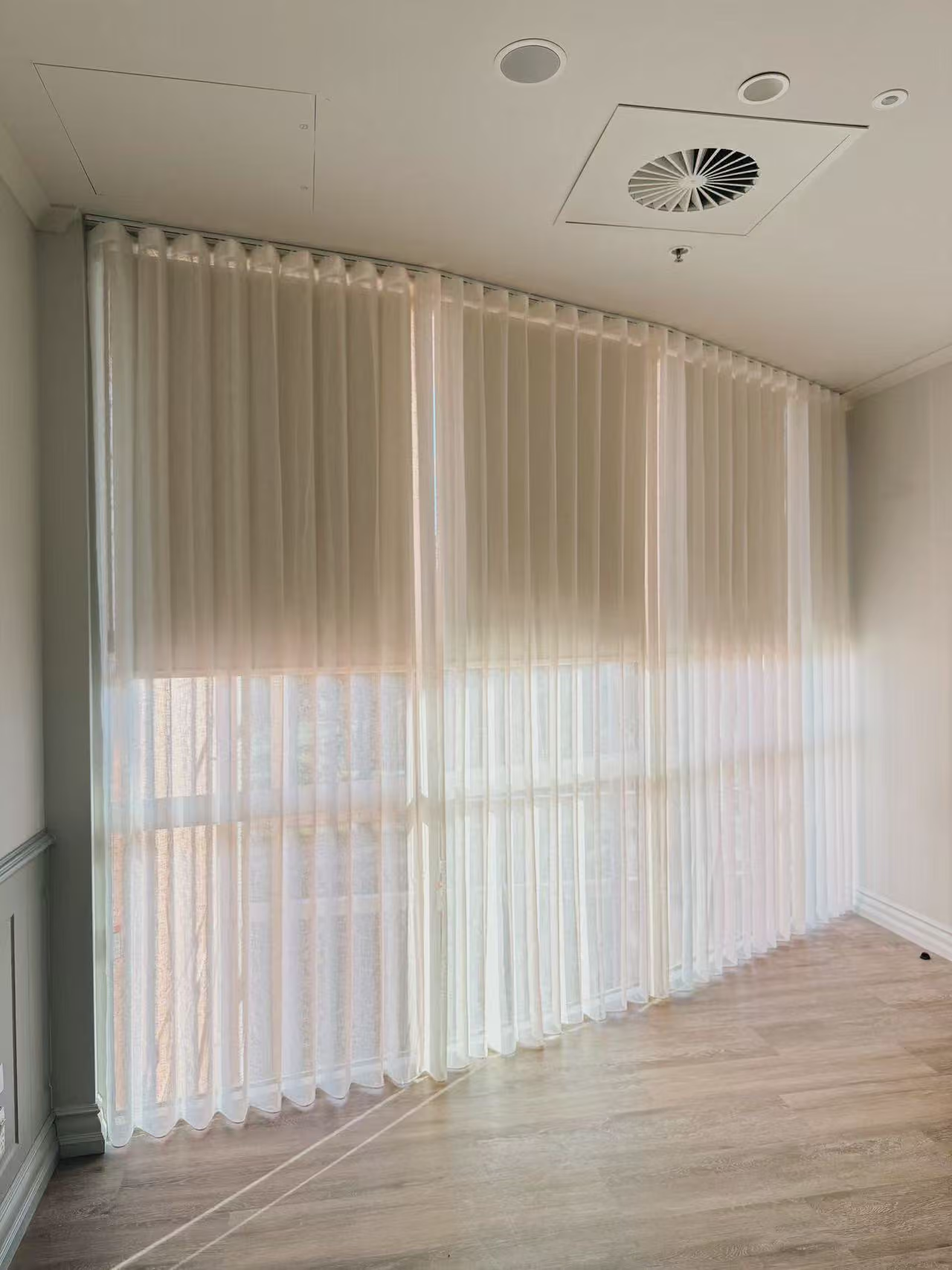
The completed LDK Greenway Views project shows how sheer curtains can bring softness, privacy and comfort to a high-end aged-care residence. The Blackshaw Gungahlin Office demonstrates the different role of blockout curtains in meeting areas requiring privacy, light control and a professional finish.
A third Canberra project, the Canberra Centre July Store, shows how custom curtains can also become part of a commercial brand environment.
These projects suggest that there is no universal commercial curtain. The better question is whether the room needs filtered daylight, dependable visual coverage or a carefully planned combination of both.
How Do Sheer Curtains Work in a Commercial Interior?
Sheer curtains use lightweight, translucent fabric to diffuse incoming daylight. Instead of completely covering the window with an opaque surface, they spread light more softly across the room.
This can reduce the hard contrast between bright glazing and darker interior surfaces. The room still feels connected to the outdoors, but the window becomes less visually dominant.
Sheers are often installed from ceiling to floor. Their continuous folds can make a commercial interior feel taller, calmer and more finished, especially where the architecture contains large areas of glass, hard flooring or simple walls.
The fabric can also reduce direct daytime visibility under suitable lighting conditions. This may be useful in waiting rooms, reception areas, communal spaces and residential care environments where occupants want some separation from nearby paths or buildings without feeling completely enclosed.
However, sheer curtains should not be treated as dependable night-time privacy. When the interior is brighter than the exterior, visibility through the fabric can increase. A room that requires reliable privacy after dark may need a separate blockout curtain, blind or other opaque layer.
Sheers also provide limited room darkening. They may soften intense sunlight and reduce visual harshness, but they are not intended to create the low-light conditions required for presentations, confidential meetings or rooms containing light-sensitive displays.
Their main strength is balance. They manage brightness while preserving daylight, openness and fabric softness.
How Do Blockout Curtains Work?
Blockout curtains use opaque fabric or a suitable lining to provide substantially stronger coverage across the window.
Because the curtain can extend beyond the glass, it may cover the frame and part of the surrounding wall. This broad coverage can reduce light entering around the sides more effectively than a product contained entirely within the window opening.
In commercial interiors, blockout curtains are often considered for meeting rooms, private consultation spaces, training rooms, presentation areas and offices where visual privacy is important.
When closed, the fabric creates a clear barrier between the interior and the window. It can reduce distractions, prevent direct views and make lighting conditions easier to control around displays or video calls.
The term “blockout” does not guarantee complete darkness. Light may still enter above the track, beneath the fabric, around the sides or between curtain panels. The result depends on the fabric, curtain dimensions, track position, fullness and surrounding architecture.
Blockout curtains also remove more natural light when closed. This makes them effective when strong coverage is required, but less suitable as the only daytime layer in a room that should remain naturally bright.
Their main advantage is control. They allow the room to move from an open daytime setting to a more private or darker environment when the task requires it.
Preparing Commercial Spaces for Canberra’s Summer Light
Canberra’s transition into summer changes the way commercial windows perform. The days become longer, direct sunlight can reach deeper into interiors, and west-facing glazing may experience strong brightness later in the working day.
A window that felt comfortable during winter may begin producing screen reflections, sharp contrasts or patches of intense sunlight across furniture and floors.
The Australian Government’s commercial lighting guidance explains that window design needs to balance useful daylight with the control of direct sunlight, reflected glare and heat. It also identifies curtains and shades as part of an effective daylight strategy.
This does not mean that every commercial window should be covered by an opaque curtain throughout summer. Permanently removing daylight may increase reliance on artificial lighting and make customer or resident spaces feel unnecessarily enclosed.
The better approach is to identify when and where direct light becomes a problem.
A north- or west-facing communal lounge may benefit from sheer curtains that soften brightness while preserving a welcoming atmosphere. A meeting room receiving direct afternoon sunlight may require blockout curtains when presentations or confidential conversations are taking place.
Orientation is only one factor. The size of the glazing, external shading, surrounding buildings, reflective surfaces and the time the space is occupied all affect the result.
Internal curtains manage sunlight after it has passed through the glass. They can improve everyday control, but they are not a replacement for effective glazing or suitable external shading. Where summer heat gain is a major concern, the complete façade and building design should also be assessed.
For a broader seasonal overview, Sweet Home Blinds’ guide to the best window furnishings for Canberra spring explains how changing daylight, ventilation and privacy requirements affect product selection as the warmer months approach.
Which Curtain Provides Better Glare Control?
The answer depends on whether the goal is to soften glare or remove the source of light more completely.
Sheer curtains diffuse incoming light. They can reduce the sharp transition between a bright window and the surrounding interior while allowing the room to remain naturally illuminated.
This makes them useful in lounges, waiting areas, reception spaces and other rooms where people are not constantly viewing detailed information on a screen.
Blockout curtains provide stronger control. Closing them removes most of the direct view of the bright window and may reduce reflected light across desks, screens and display surfaces.
SafeWork NSW advises that workplace lighting should be assessed according to the tasks being performed, the position of light sources and the presence of glare, contrast, reflections and shadows. Its workplace lighting guidance also explains that excessive light and glare can cause visual discomfort and make it more difficult for people to see clearly.
For computer-based work, WorkSafe Queensland recommends controlling glare and reflections with suitable window coverings and avoiding workstation positions with windows directly in front of or behind the user. Its visual comfort guidance shows why the curtain should be considered together with screen placement and room layout.
A sheer curtain may be sufficient where the objective is to moderate general brightness. A blockout curtain may be more appropriate when direct sunlight falls across a display or when consistent lighting is needed for a presentation.
Neither curtain should be expected to solve every glare problem independently. Screen orientation, workstation position, wall finishes and artificial lighting still influence visual comfort.
Privacy in Customer, Resident and Meeting Spaces
Commercial privacy is not the same in every room.
A reception area may need to reduce direct visibility from outside while remaining open and welcoming. A resident lounge may benefit from a soft boundary that allows daylight to continue entering. A meeting room may require complete visual separation during confidential discussions.
Sheer curtains can provide a useful level of daytime screening when the exterior is brighter than the interior. People inside can retain a sense of light and space while direct views from outside become less distinct.
This effect changes as the light balance changes. In the evening, interior lighting can make occupants more visible through the fabric. Sheers should therefore not be described as guaranteed privacy curtains.
Blockout curtains provide stronger visual privacy because their opaque fabric prevents direct views through the covered part of the window. They are better suited to rooms where privacy must not depend on the time of day or relative lighting conditions.
However, blockout curtains do not provide acoustic confidentiality. Fabric may influence the acoustic character of a room, depending on its weight and construction, but curtains should not be presented as soundproofing. Confidential meeting rooms still require suitable walls, doors and acoustic treatment.
The required level of privacy should be identified before fabric is selected. Choosing a curtain by colour alone can produce an attractive installation that does not perform the room’s main task.
Case Study One: Sheer Curtains at LDK Greenway Views
LDK Greenway Views is a completed high-end aged-care residence in Greenway, ACT. Sweet Home Blinds installed sheer curtains across the development.
The project demonstrates why sheers can suit a residential care environment. The curtains bring softness to the rooms, provide a degree of daytime privacy and avoid the heavy appearance that may result from using opaque fabric as the only window layer.
This distinction matters in a space that needs to feel comfortable and residential rather than clinical. Large windows can provide valuable daylight and visual connection, but uncovered glass may feel exposed. A sheer curtain introduces a gentle boundary without removing the openness of the room.
The client described the curtains as softening the residences, adding privacy without feeling heavy and being installed professionally around the site schedule.
The result does not mean that sheer curtains are the correct answer for every aged-care room. Bedrooms, treatment spaces or areas used after dark may require an additional opaque product. However, the project provides a clear example of sheers being used where atmosphere, daylight and visual softness are central to the experience of the space.
As summer approaches, the filtering role becomes particularly relevant. Sheers can remain across the glazing for longer periods, moderating bright daylight without making communal or residential spaces feel closed throughout the day.
Case Study Two: Blockout Curtains at Blackshaw Gungahlin Office
The requirements were different at the Blackshaw Gungahlin Office.
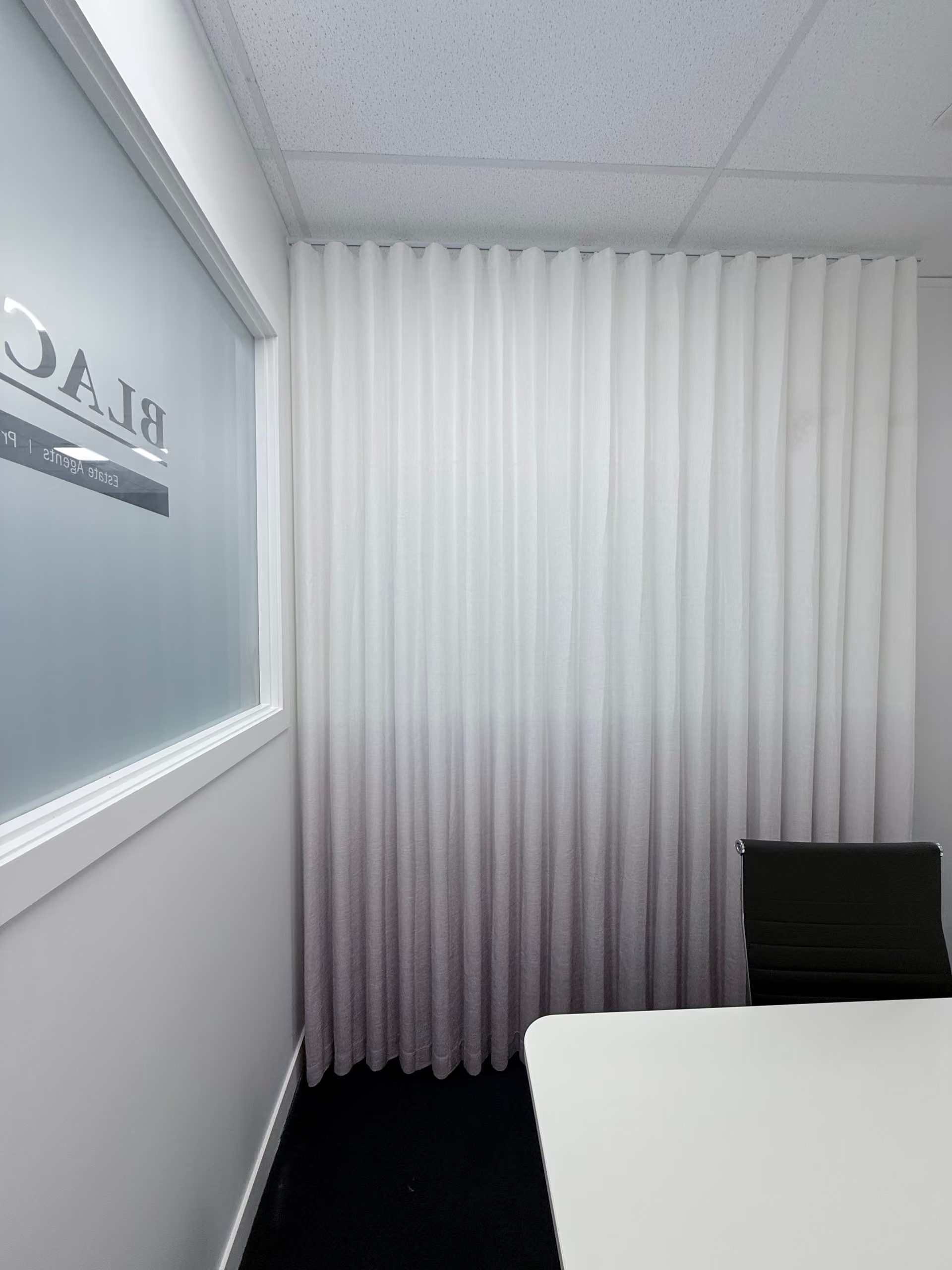
Sweet Home Blinds installed blockout curtains as part of the completed commercial office fitout. The purpose was to provide privacy, light control and a polished professional finish.
The client specifically noted that the curtains gave meeting areas privacy while contributing to the professional appearance of the office.
This project illustrates why blockout curtains can be more appropriate than sheers in rooms used for discussions, presentations or client meetings. The curtain can be closed when the room needs separation and opened when natural light and outside views are preferred.
The opaque fabric also provides more control over changing daylight. This may become valuable during Canberra’s summer months when direct sunlight moves across an office during the afternoon or creates inconsistent conditions around screens.
A sheer curtain alone would not provide the same degree of visual separation. Although it could soften daylight, its privacy would depend on the lighting inside and outside the room.
The Blackshaw installation therefore supports a task-based decision. The blockout curtain was not selected simply because it looked more formal. It matched the privacy and light-control requirements of the meeting environment.
A Third Commercial Approach: Custom Curtains at the July Store
Commercial curtains can also play a branding and presentation role.
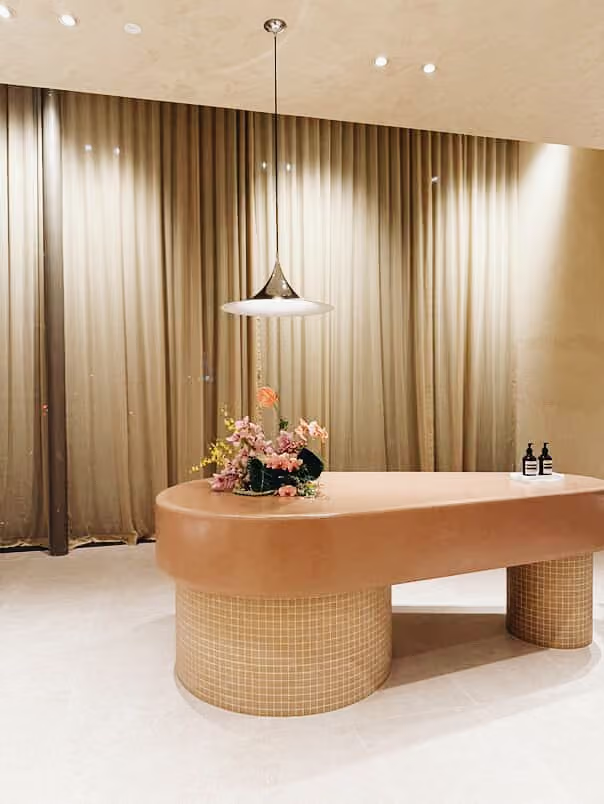
At the Canberra Centre July Store, Sweet Home Blinds supplied custom curtains for July’s first Canberra location. The clean lines and refined detailing were selected to complement the store’s sleek, modern fitout.
The project was also delivered within a tight opening schedule, demonstrating another important part of commercial curtain planning: the product must be measured, manufactured and installed in coordination with the wider fitout program.
In a retail environment, a curtain may be visible to customers throughout the day. Its folds, track position, colour and movement therefore become part of the brand experience rather than a background technical detail.
The July Store does not represent a simple sheer-versus-blockout decision. It demonstrates that the final curtain may need to respond to a specialised commercial purpose.
Retail curtains may be used to divide areas, provide screening, frame a display or introduce texture into a minimal interior. The required opacity and construction should follow the intended use rather than being assumed from the appearance alone.
Together, the LDK, Blackshaw and July projects show three distinct priorities: residential softness, meeting-room privacy and brand-led presentation.
Sheer and Blockout Curtains Should Not Be Treated as Opposites
Sheer and blockout curtains are often compared as if a commercial project must select one product for the entire building. In practice, the two curtains solve different problems and may be used in separate rooms or combined at the same window.
A reception area may use sheers to maintain a welcoming atmosphere. A neighbouring consultation room may use blockout curtains for visual privacy. A multipurpose room may use both layers so that staff can change the setting throughout the day.
Layering places the sheer curtain and blockout curtain on separate tracks. The sheer layer can remain closed during bright daytime conditions, while the blockout curtain is available when greater privacy or reduced light is required.
The tracks need enough separation for both fabrics to travel freely. If the curtain folds rub together, operation may become difficult and the fabrics may not hang correctly.
Layering also requires more space. Both fabrics need somewhere to stack when open, and the track projection must clear handles, window ledges and surrounding fitout elements.
The added fabric and hardware increase the project cost. A layered system is therefore most valuable where both settings will genuinely be used rather than included only for appearance.
Comparing Sheer and Blockout Curtains
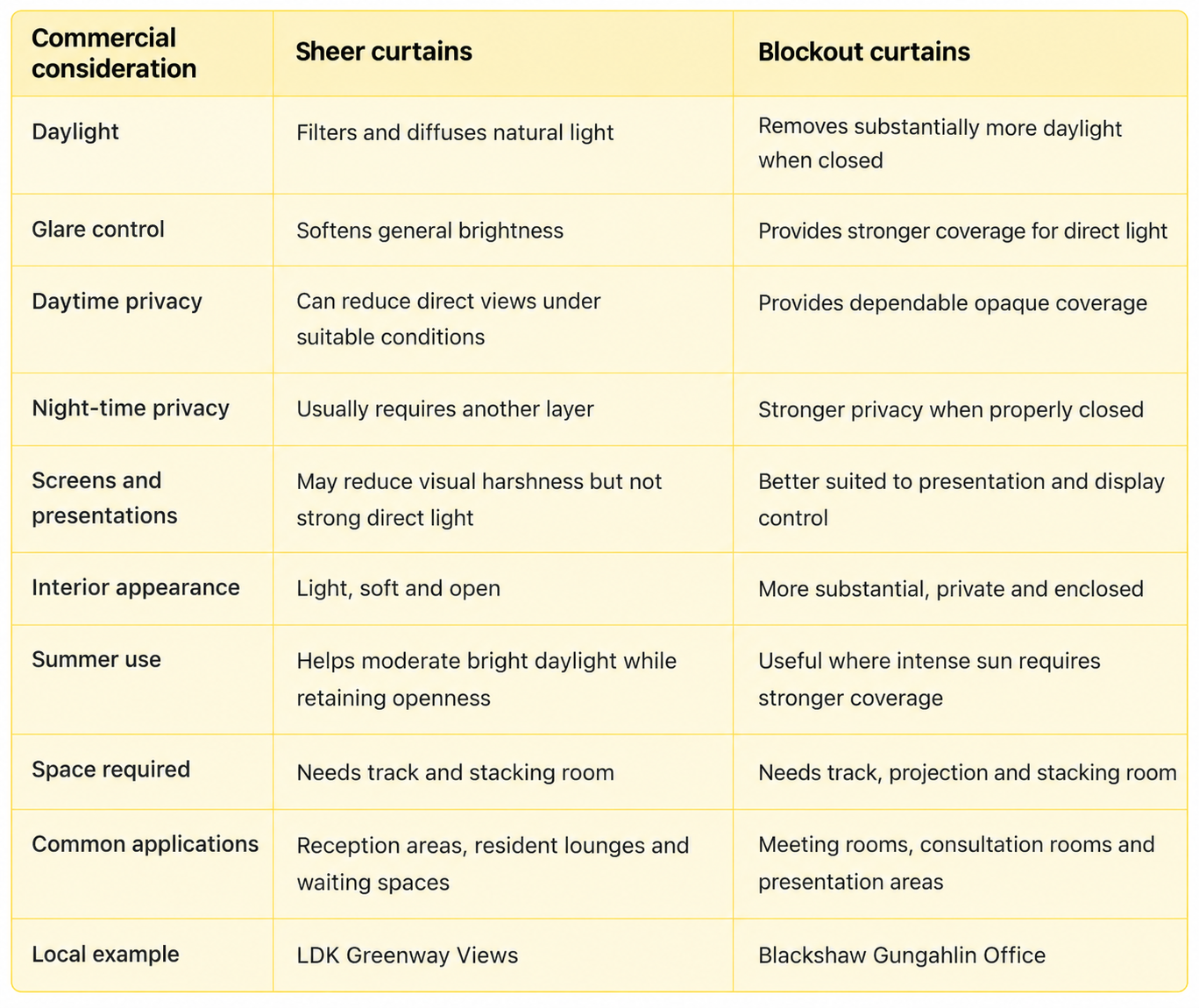
The table provides a useful starting point, but the decision should still be based on the individual room. Window orientation, hours of use, external visibility and the position of furniture can change the most suitable solution.
Track Position, Curtain Fullness and Stacking Space
The performance of a commercial curtain depends on more than the fabric.
Track position affects the amount of light entering above and around the curtain. A ceiling-mounted track can create a continuous full-height appearance, while a wall-mounted track may be required where the ceiling structure or building services prevent ceiling fixing.
The fixing surface must be suitable for the weight of the complete curtain. Wide or tall commercial curtains contain considerably more fabric than a standard domestic window treatment.
Fullness determines how the curtain forms its folds. Too little fabric may make a large installation appear stretched and flat. Excessive fullness can produce an unnecessarily bulky stack and may interfere with doors, furniture or circulation.
Stacking space should be identified before the curtain is ordered. When open, the fabric needs sufficient room beside the glazing. If it covers part of an access door or important view, the curtain may become inconvenient in everyday use.
Commercial fitouts also contain services that must remain accessible. Curtain tracks and stacks should be coordinated with lighting, air-conditioning outlets, sprinklers, access panels, power points and signage.
Early planning is particularly important where the curtain must be installed before a fixed opening date. The July Store project demonstrates why coordination with the broader commercial schedule is part of a successful result.
Cleaning and Maintenance in High-Use Environments
Commercial curtains may experience more frequent contact than curtains in a private home. Staff may operate them several times a day, customers may pass close to the fabric and cleaning requirements may be affected by the function of the space.
Sheer fabrics are lightweight and can collect dust across their folds. Their lower edges may also show marks if positioned beside busy walkways or frequently used doors.
Blockout curtains contain more substantial fabric or lining. Their weight can make removal and reinstallation more difficult, particularly across wide or full-height windows.
Routine care may involve gentle vacuuming with a suitable soft attachment, but the correct method depends on the fabric and construction. Curtains should not be machine washed, steamed or treated with chemicals unless the product-specific instructions permit it.
Sweet Home Blinds provides general care and maintenance guidance, although the instructions supplied for the selected commercial fabric should always take priority.
Maintenance access should be considered during measurement. A curtain installed behind fixed furniture or across a difficult-to-reach void may be attractive when new but unnecessarily complicated to service.
For high-use environments, long-term value depends on whether the fabric, track and operating method suit the frequency of use.
Manual or Motorised Operation
Standard commercial curtains may be operated by hand or with a wand, depending on their size and configuration.
Motorisation may be considered where curtains are particularly tall, heavy, numerous or difficult to reach. It can also help rooms move quickly between different settings.
A conference room could open the curtains for general daylight and close them when a presentation begins. A large communal space could adjust several curtains without staff walking to each window.
Motorisation requires earlier planning. Power supply, controls, grouping, access for maintenance and any connection to a building-management system should be considered before construction work is complete.
It should be selected to solve a real operational problem. A motorised system may provide significant value across high or frequently adjusted windows, but it may be unnecessary for a small curtain that staff can operate comfortably by hand.
Cost and Commercial Value
There is no universal price difference between sheer and blockout curtains because both are custom measured.
Sheer-curtain pricing depends on fabric selection, track length, ceiling height, curtain fullness and the total width of the installation. Although the fabric is lightweight, a wide full-height curtain may require a substantial quantity of material.
Blockout-curtain pricing is influenced by similar factors, with the addition of the opaque fabric or lining construction. Greater weight may also affect the track and fixing requirements.
Layered installations require two fabrics and two tracks, increasing the initial cost as well as the required installation space.
Commercial value should be measured against the purpose of the room. A sheer curtain that makes a residential care lounge feel comfortable while preserving daylight may provide excellent value. A blockout curtain that supports privacy in a meeting room may be worth more than a lighter product that cannot perform the same task.
A low-cost curtain is not good value if staff must keep it permanently open because it makes the room too dark. An attractive sheer is not suitable value if confidential areas remain visible after dark.
The complete quote should reflect the intended result, installation access, site schedule and expected frequency of operation.
Frequently Asked Questions
Are sheer curtains suitable for commercial spaces?
Yes. They can suit reception areas, waiting rooms, communal lounges, residential care environments and other spaces where filtered daylight and a softer interior are important.
Do sheer curtains provide privacy?
They can reduce direct daytime visibility when the exterior is brighter than the interior. They should not be relied upon for dependable night-time privacy.
Are blockout curtains only suitable for bedrooms?
No. They can be useful in commercial meeting rooms, consultation spaces, offices, training rooms and presentation areas requiring stronger privacy or light control.
Do blockout curtains make a room completely dark?
Not automatically. Light may still enter around the track, sides, bottom or centre opening. The result depends on the complete installation.
Which curtain is better for summer glare?
Sheer curtains are useful for softening general brightness while retaining daylight. Blockout curtains provide stronger control where direct sunlight affects screens, presentations or room use.
Can sheer and blockout curtains be installed together?
Yes, provided there is enough room for separate tracks, fabric movement and stacking. Both layers should be planned as one complete system.
Which option is better for a meeting room?
Blockout curtains are generally better when strong visual privacy and presentation control are required. A sheer layer may be added if the room also needs softer daytime light.
Which option is easier to maintain?
Maintenance depends on the selected fabric, curtain size and installation height. Sheers are lighter, while blockout curtains may contain heavier fabric or lining. Both require product-specific care.
Should commercial curtains be planned before the fitout is completed?
Yes. Early planning helps coordinate fixing points, tracks, ceiling services, furniture, power requirements and installation dates.
Choosing the Right Curtain for a Canberra Commercial Space
Sheer and blockout curtains should be chosen according to the work performed inside the room.
Choose sheer curtains when the priority is to soften daylight, reduce the exposed appearance of large glazing and create a calm, welcoming interior. The completed LDK Greenway Views project demonstrates how sheers can support privacy and comfort without making a high-end aged-care environment feel heavy.
Choose blockout curtains when dependable visual privacy and stronger light control are more important. The Blackshaw Gungahlin Office shows how blockout curtains can support meeting areas while maintaining a polished professional finish.
Where the curtain needs to contribute directly to the identity of the space, the Canberra Centre July Store demonstrates the value of a custom solution coordinated with the complete retail fitout.
With Canberra moving towards summer, now is a practical time to assess how direct sunlight travels through commercial windows. A room that becomes uncomfortable or difficult to use in the afternoon may need a different level of coverage from a softly lit reception area.
Browse more completed Canberra commercial and residential projects, compare the full range of curtains, blinds, shutters and screens, or read Sweet Home Blinds’ comparison of roller blinds and blockout curtains for Canberra offices.
Planning curtains for a Canberra office, retail store, care facility or commercial development? Book a consultation with Sweet Home Blinds for product advice, professional measurement, commercial quoting and coordinated installation.
Follow Sweet Home Blinds on Facebook and Instagram for completed commercial projects and Canberra window-furnishing inspiration.