
Roller Blinds vs Blockout Curtains: Which Is Better for Canberra Offices?
Compare roller blinds and blockout curtains for Canberra offices, including screen glare, meeting-room privacy, presentations, maintenance, motorisation and commercial fitout planning.
Office window furnishings need to do more than complete the interior design. They must control daylight around computer screens, provide privacy for meetings, support presentations and remain practical in a space used by employees, clients and visitors every day.
Two common choices are roller blinds and blockout curtains. Both can provide effective coverage, but they suit different types of commercial spaces.
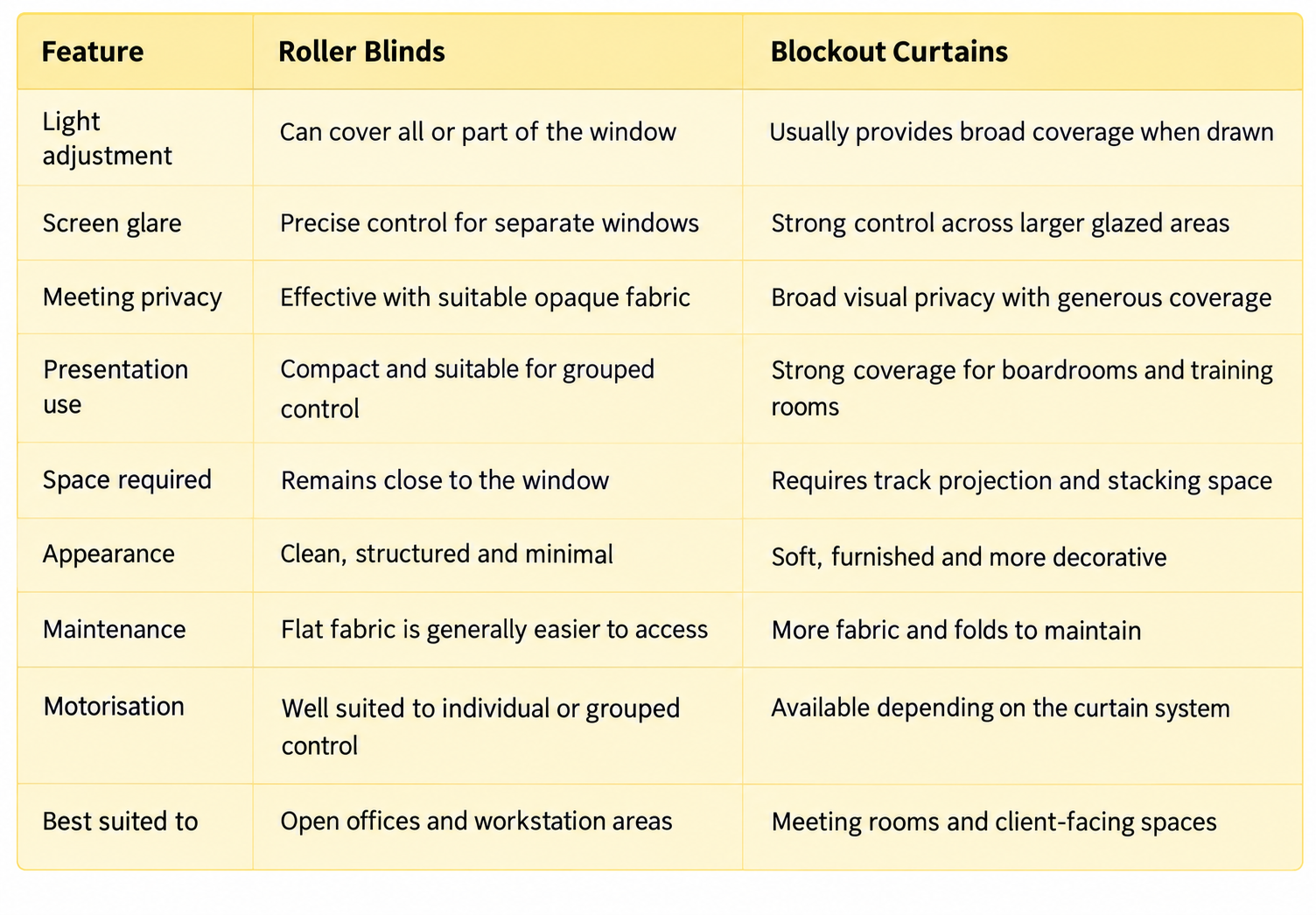
Roller blinds are often the more practical option for open offices, individual workstations and rooms containing several separate windows. They sit close to the glass, use relatively little space and can be adjusted window by window.
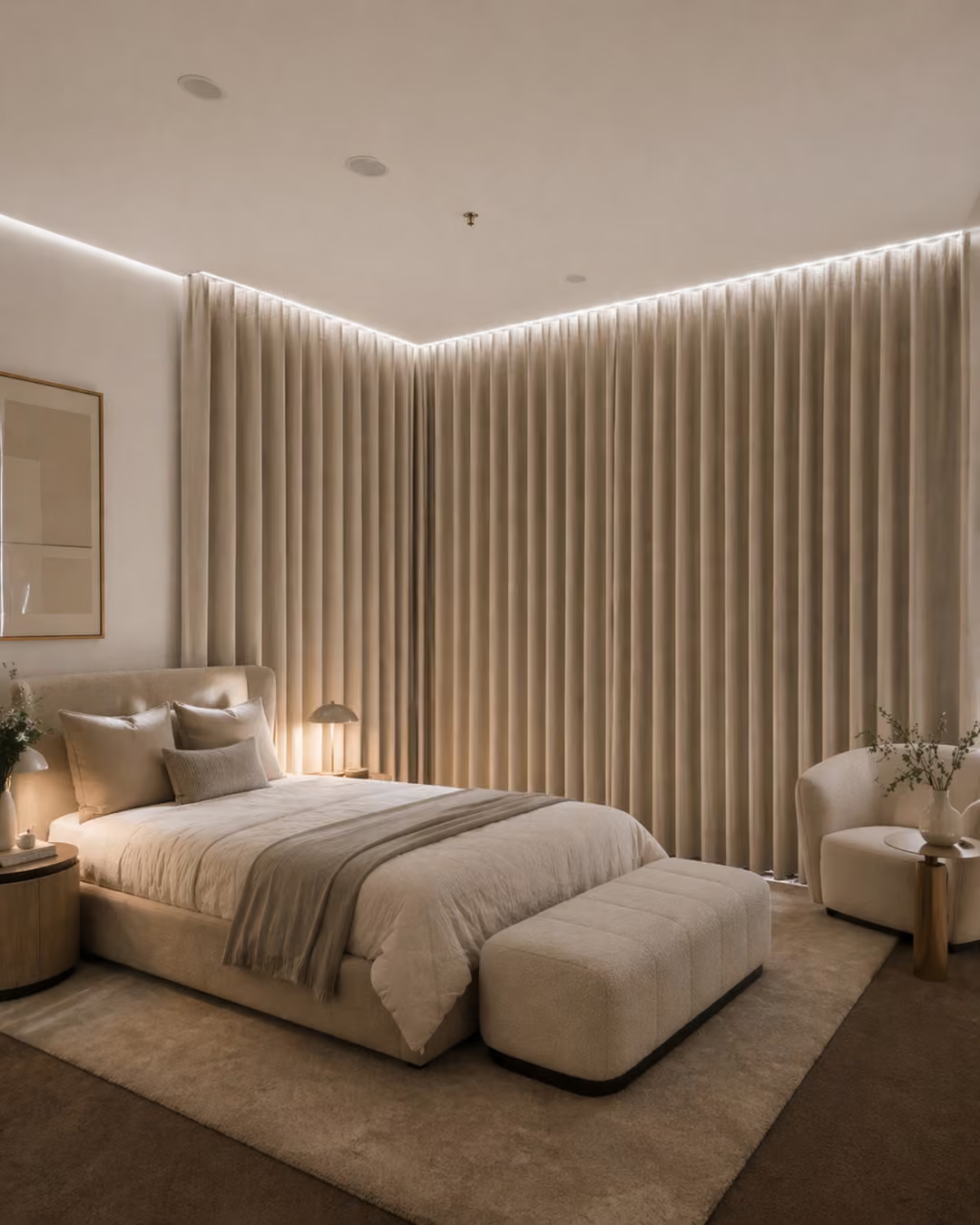
Blockout curtains provide broader fabric coverage and a softer finish. They may be better suited to meeting rooms, consultation spaces, executive offices and presentation areas where stronger privacy or reduced light is required.
The right answer does not need to be one product throughout the entire building. The Canberra Data Centre Hume 6 project demonstrates the clean, practical result achieved with roller blinds, while the Blackshaw Gungahlin Office shows how blockout curtains can support privacy and create a polished professional finish.
How Do Roller Blinds Work in an Office?
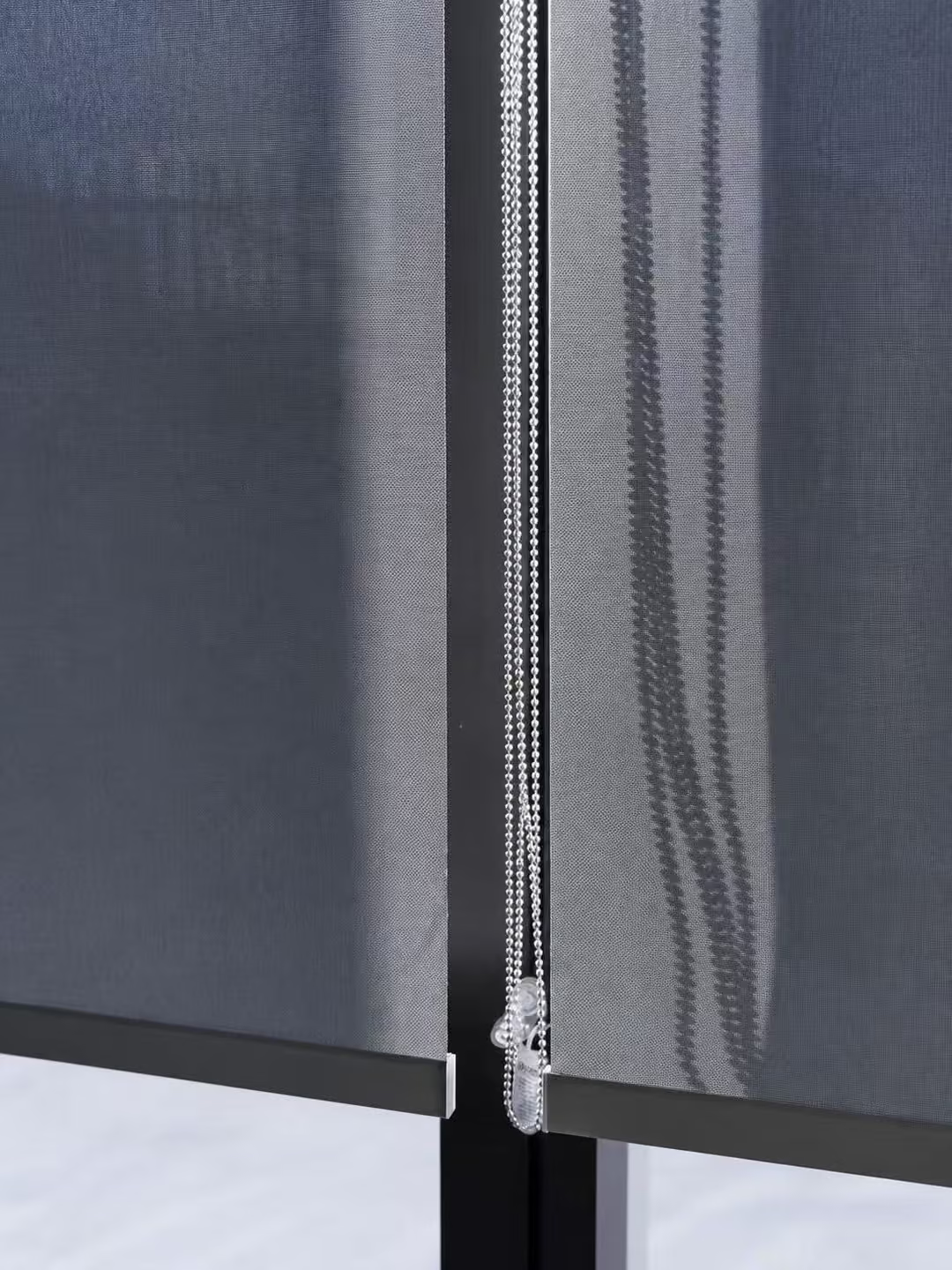
Roller blinds use a fabric panel that rolls around a tube positioned above the window. The blind can be lowered to cover all or part of the glass and raised when an unobstructed view or more daylight is preferred.
Their compact construction is one of their main commercial advantages. A roller blind normally stays close to the window and does not require floor space for hanging fabric. This can make it easier to position desks, cabinets, meeting tables and circulation paths near the glazing.
Different fabrics provide different results. A light-filtering or sunscreen fabric can reduce visual harshness while preserving some daylight and outward visibility. A blockout roller-blind fabric provides more substantial coverage when privacy or room darkening is important.
The finished performance depends on more than the fabric name. Light may remain visible around the sides and bottom of the blind, particularly when it is installed inside a window recess. A roller blind can significantly reduce incoming light without automatically creating complete darkness.
Where an office has a row of windows, separate blinds can also be operated independently. Staff can lower the blind beside a screen affected by sunlight while leaving neighbouring windows open. This local adjustment can be useful in shared work areas where daylight conditions vary across the room.
Sweet Home Blinds offers custom roller blinds for residential and commercial applications, with the fabric and operating arrangement selected according to the window and intended use.
How Do Blockout Curtains Work in a Commercial Space?
Blockout curtains use opaque or lined fabric that travels horizontally across the window on a track. Unlike a roller blind, the curtain can extend beyond the window frame and cover some of the surrounding wall.
This wider coverage can help reduce light entering around the sides of the glass. It also creates a softer visual effect, replacing the straight lines of blinds with fabric folds and texture.
In an office, blockout curtains may suit meeting rooms, boardrooms, private consultation spaces and areas used for presentations. When closed, the fabric provides a clear visual barrier and can make the room feel more separated from the surrounding workplace.
Curtains require more physical space than roller blinds. The fabric needs enough track length and wall area to stack when opened. Desks, cupboards, heaters, access doors and floor-level services must therefore be considered before the track position is finalised.
The curtain length matters as well. Floor-length curtains can create a refined and continuous appearance, but they must not obstruct circulation or become trapped behind furniture. In some commercial interiors, a shorter curtain may be more practical, depending on the window and the surrounding fitout.
Sweet Home Blinds supplies custom blockout curtains that can be planned around the dimensions, privacy requirements and visual character of an office.
Which Option Is Better for Computer Screen Glare?
Roller blinds usually provide more precise control around individual workstations. A blind can be lowered only as far as required to cover the bright part of the window while leaving some daylight above or below it.
This flexibility is useful when direct sunlight moves across the office during the day. It may not be necessary to darken the complete room simply because one workstation is affected by glare.
Screen position is also important. A monitor placed directly in front of a bright window can create an uncomfortable contrast, while a window reflected in the screen may make text and images more difficult to see. Repositioning the workstation may reduce the problem, but this is not always possible in an established fitout.
The Australian Government’s Your Home lighting guidance explains that daylight can reduce reliance on artificial lighting, although uncontrolled daylight may also introduce glare. An effective office solution should therefore manage direct brightness without unnecessarily removing all natural light.
Blockout curtains offer stronger overall coverage but less local adjustment. Once the curtain is drawn across the window, a substantial part of the view and daylight may be removed. This can be appropriate in a screen-based meeting room, but it may be less convenient in an open office where different employees have different lighting needs.
For general desk work, light-filtering or sunscreen roller blinds may provide the more balanced option. For a room where presentations and video displays are the main priority, blockout curtains or blockout roller blinds may provide more suitable coverage.
Privacy for Meetings and Client Conversations
Privacy involves both visibility and the atmosphere of the room. A meeting room used for confidential discussions may need dependable visual coverage, particularly when its windows face a street, shared courtyard or neighbouring building.
Blockout curtains provide a strong visual barrier when closed. Their broad fabric coverage can suit consultation rooms, private offices and meeting spaces where occupants do not want movement or information visible from outside.
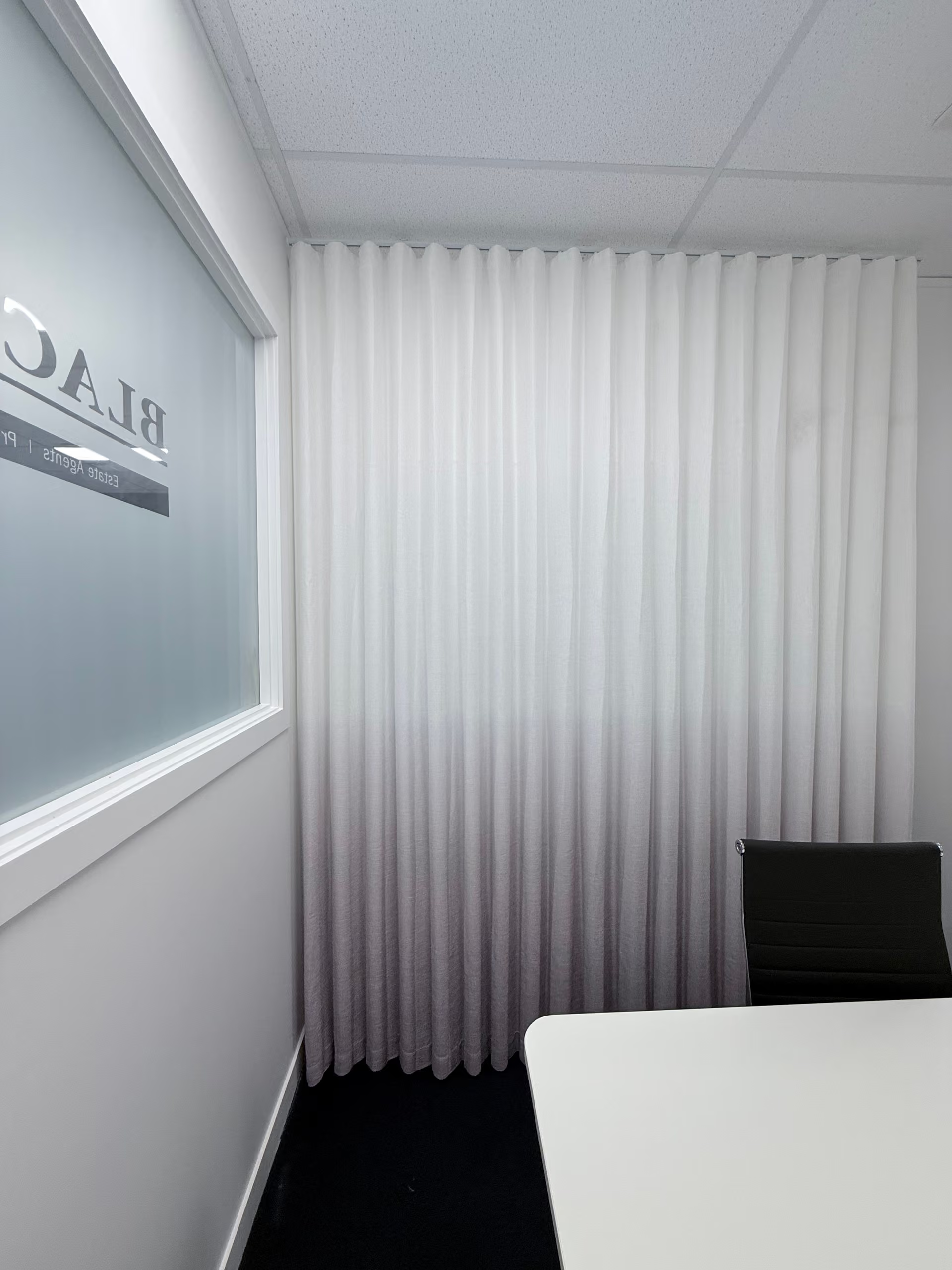
This is the role demonstrated by the Blackshaw Gungahlin Office. Sweet Home Blinds installed blockout curtains to provide privacy, light control and a professional finish within the commercial workspace. The curtains were not simply a decorative addition; they supported the practical use of the meeting areas.
Roller blinds can also provide effective visual privacy. A blockout roller blind creates an opaque panel across the main window area, while a sunscreen blind can reduce direct daytime visibility under suitable lighting conditions.
However, sunscreen fabric should not be treated as dependable night-time privacy. When the interior is brighter than the exterior, visibility through an open-weave fabric can change considerably.
Neither product provides acoustic confidentiality by itself. Curtains may help soften some reflected sound depending on the fabric weight, fullness and room design, but they should not be advertised as soundproofing. Sensitive conversations still require appropriate walls, doors, seals and acoustic treatment.
Presentations, Projectors and Video Conferencing
Presentation rooms require more control than ordinary work areas. Direct light on a display can reduce contrast, while strong backlighting behind a speaker can affect the quality of video calls and recorded presentations.
Blockout curtains provide broad coverage that can be useful when the goal is to reduce light across an entire wall of glass. They may suit boardrooms, training rooms and multipurpose spaces where the lighting conditions need to change between general meetings and projected presentations.
Roller blinds can achieve a cleaner and more compact result. Several blinds can cover separate window sections, allowing users to close only the parts responsible for glare. Blockout fabrics can provide stronger room darkening, although small gaps may remain around individual blinds.
No internal window furnishing should automatically be described as creating complete darkness. Light may enter around the track, between adjacent blinds, below the fabric or through internal glass doors.
The position of the display should be assessed during planning. A suitable furnishing cannot fully compensate for a screen installed directly opposite a highly reflective window if the coverage and viewing angles have not been considered.
For spaces used regularly for presentations, motorised operation may make the transition between settings easier. Staff can close several blinds without moving around the room or interrupting a meeting.
Motorisation in Larger Commercial Spaces
Manual operation can be suitable for standard office windows that are easy to reach. The decision changes when the windows are tall, numerous or positioned behind furniture.
Motorisation allows blinds to be controlled by a wall switch, remote control or compatible automation system. Multiple blinds may be arranged into groups so that a complete room can be adjusted together.
The Campbell High School project provides a relevant Canberra example. Sweet Home Blinds installed Somfy motorised blinds throughout the school hall. Their quiet operation suited assemblies, presentations, performances and ordinary daily use.
Although a school hall is different from an office, the same planning principles apply to conference rooms, training facilities and large commercial presentation spaces. Quiet movement is important when window furnishings need to operate while people are speaking or content is being displayed.
Motorisation also reduces the need to reach across desks or use long manual controls on difficult windows. However, it introduces additional planning requirements. Power supply, control location, access for maintenance and integration with other building systems should be considered before ceilings and walls are completed.
Motorisation is most valuable when it solves a genuine access or operational problem. It may not be necessary for every small office window.
Floor Space, Furniture and Fitout Coordination
Roller blinds normally require less usable room around the window. Because the fabric moves vertically and remains close to the glass, desks and storage units can often be placed nearby without interfering with operation.
Clearance is still required. Window handles, mullions, deep frames and inward-opening sections can affect the mounting position. Furniture should not prevent staff from reaching a manual chain or control.
Curtains require stacking space at one or both sides of the opening. The track also needs enough projection for the fabric folds to move without rubbing against the glass, handles or window ledge.
These details are especially important when the office layout is still being designed. Window furnishings should be coordinated with ceiling grids, lighting, air-conditioning outlets, sprinklers, wall partitions and power points.
A late change to the curtain track or blind position may affect several other elements of the fitout. Early measurement and communication between the window-furnishing supplier, builder, electrician and interior designer can help avoid these conflicts.
If the furnishing is being installed in an existing office, workstations and access routes should be assessed before ordering. A product that looks suitable on a plan may operate differently once monitors, cabinets and meeting tables are in position.
Which Option Creates a More Professional Appearance?
Roller blinds create a restrained and structured appearance. Their flat fabric panels and simple horizontal lines can work naturally with contemporary offices, particularly where visual consistency across many windows is important.
The Canberra Data Centre Hume 6 installation illustrates this approach. Roller blinds were selected to provide practical light control and privacy while maintaining a clean commercial finish across the workspace.
Curtains introduce more texture and visual softness. They can make a meeting room or client-facing office feel less clinical, especially when the interior contains hard flooring, glass partitions and simple furniture.
The fabric colour can either blend with the walls or become part of the organisation’s design identity. Neutral curtains create a quiet background, while a carefully selected colour can reinforce the palette used in reception areas, furniture or branding.
Neither result is automatically more professional. The appropriate appearance depends on the business and the room. A technical workspace may benefit from the compact uniformity of roller blinds, while a property, legal or consultation office may prefer the more furnished appearance of curtains.
Consistency is still important. Track finishes, blind hardware, control positions and fabric colours should be coordinated across areas that can be seen together.
Cleaning and Everyday Maintenance
Roller blinds are generally straightforward to maintain because they contain a single flat sheet of fabric. Routine care may involve gentle dusting or vacuuming with a suitable soft attachment, depending on the material.
The blind should be operated using its intended control and should not be pulled unevenly by hand. Chains, brackets and motorised components should be inspected if operation becomes irregular.
Curtains contain more fabric and may collect dust across their folds. Routine cleaning requirements depend on the fibre, lining and construction. Some fabrics may be gently vacuumed, while others require professional cleaning.
Commercial curtains should not be machine washed unless the supplied care instructions specifically allow it. Removing a wide or full-height curtain without understanding its heading and track system may damage the fabric or hardware.
A high-traffic office may require a different material from a room used occasionally. Curtains near entry doors, kitchens or busy walkways can be more exposed to marks and contact, while roller blinds positioned behind desks may receive less handling.
Sweet Home Blinds provides general care and maintenance guidance, but the instructions supplied for the selected product and fabric should always take priority.
Light, Heat and Canberra’s Seasonal Conditions
Canberra offices can experience strong summer sunlight and cold conditions near glazing during winter. Internal window furnishings can help manage comfort, but their performance depends on the complete window system.
Roller blinds can reduce direct sunlight and glare when lowered. A sunscreen fabric may preserve some outward visibility, while a blockout fabric provides stronger coverage.
Curtains can cover the window frame and part of the surrounding wall, depending on their dimensions. This wider coverage may help reduce the immediate feeling of exposure to a cold or bright window.
The Australian Government’s glazing guidance explains that glazing, frames, orientation and air leakage all influence thermal performance. Curtains and blinds can contribute another layer, but they cannot repair damaged seals or replace efficient glazing.
Internal blinds and curtains also manage sunlight after it has passed through the glass. Appropriate external shading is generally more effective at preventing unwanted summer heat from reaching the glazing.
Office orientation should therefore influence product selection. A west-facing meeting room may require stronger afternoon coverage than a south-facing office, while an east-facing workspace may experience glare earlier in the working day.
Comparing Cost and Long-Term Value
There is no universal price difference between commercial roller blinds and blockout curtains. The final quote depends on the dimensions, fabric, hardware, operating system and installation conditions.
Roller-blind pricing is influenced by window width, drop, fabric type, tube and bracket requirements, manual or motorised operation and the number of separate blinds required. A long row of windows may need multiple units rather than one oversized blind.
Curtain pricing depends on fabric quantity, fullness, lining, track length, room height and stacking arrangement. A curtain requires more fabric than the visible width of the window because the folds must still appear full when the curtain is closed.
Motorisation increases the initial cost but may improve everyday usability in rooms with numerous or inaccessible windows. The required electrical and control work must also be included in the complete budget.
Value should be measured against the room’s purpose. A simple roller blind that controls glare at twenty workstations may deliver better value than a more decorative system. A blockout curtain may be more valuable in a client meeting room where privacy and presentation quality are used every day.
Three Canberra Commercial Examples
The Canberra Data Centre Hume 6, Blackshaw Gungahlin Office and Campbell High School projects show that commercial window furnishings should be selected according to how each space operates.
At Canberra Data Centre Hume 6, roller blinds provided practical light control, privacy and a clean commercial finish. The solution suited a workspace where compact operation and visual consistency were important.
At Blackshaw Gungahlin Office, blockout curtains were used to support meeting-area privacy and create a polished professional appearance. The project demonstrates how curtains can perform a practical commercial role while also softening the interior.
At Campbell High School, Somfy motorised blinds addressed the needs of a large multipurpose hall. Quiet operation supported presentations, performances, assemblies and everyday activities without requiring manual adjustment of multiple blinds.
Together, the projects show why one universal specification is rarely necessary. Roller blinds may be selected for open work areas, blockout curtains for private meeting rooms and motorised blinds for larger presentation spaces within the same organisation.
Frequently Asked Questions
Are roller blinds suitable for office computer screens?
Yes. Roller blinds can be lowered to cover the part of the window causing glare while preserving some daylight elsewhere. The fabric and mounting position should be selected according to the window orientation and workstation layout.
Do blockout curtains make an office completely dark?
Not necessarily. Blockout fabric provides strong coverage, but light may remain visible around the track, sides, centre opening or floor. The complete installation determines the final result.
Which option provides better meeting-room privacy?
Both can provide visual privacy when opaque materials are used. Blockout curtains offer broad coverage, while roller blinds provide a more compact finish.
Can office blinds be motorised?
Yes. Motorisation can be useful for numerous, tall or difficult-to-reach blinds and for rooms that regularly change between general use and presentations.
Are curtains suitable for an open-plan office?
They can be, but their stacking space and proximity to furniture must be considered. Roller blinds are often more practical where desks are positioned close to the windows.
Do curtains improve office acoustics?
Fabric curtains may soften some reflected sound, depending on their weight and fullness, but they are not a substitute for properly designed acoustic walls, ceilings, doors or seals.
Which option is easier to clean?
Roller blinds are generally easier to access because they use a flat fabric panel. Curtain cleaning depends on the selected fabric, lining and construction.
Can roller blinds and curtains be used in the same office?
Yes. Different products can be assigned to different rooms. Roller blinds may suit open work areas, while blockout curtains may be used in meeting rooms or client-facing spaces.
Choosing the Right Office Window Furnishing
Choose roller blinds when compact installation, workstation-level glare control, simple maintenance and consistent coverage across several windows are the priorities.
Choose blockout curtains when meeting-room privacy, broad window coverage and a softer professional appearance matter more.
For many Canberra offices, the most effective specification is a room-by-room combination. The Hume 6 and Blackshaw Gungahlin projects demonstrate two different commercial approaches, while Campbell High School shows how motorisation can support a larger presentation environment.
Browse more Canberra commercial projects, explore the complete range of blinds and curtains, or book a consultation to discuss measurement, fabric selection, motorisation and fitout coordination.
Planning a new office or updating an existing workplace? Contact Sweet Home Blinds for commercial window-furnishing advice, professional measurement and installation across Canberra and surrounding regions.
Follow Sweet Home Blinds on Facebook and Instagram for completed commercial projects and window-furnishing inspiration.