
Roller Blinds Canberra for Bright Offices: Managing Glare, Privacy and Everyday Use
Explore how roller blinds can help bright Canberra offices manage screen glare, privacy, daylight and everyday comfort, featuring the Canberra Data Centre Hume 6 project.

Natural light can make an office feel open and welcoming, but uncontrolled sunlight can quickly become a workplace problem. Glare may appear on computer screens, meeting rooms can become too bright for presentations, and street-facing windows may leave staff feeling exposed. Custom roller blinds in Canberra provide a simple way to manage these changing conditions.
Roller blinds are well suited to commercial interiors because they use a flat piece of fabric that rolls onto a compact tube. When raised, the system takes up relatively little visual space. When lowered, it creates clean coverage without introducing heavy folds or decorative detail, which is why roller blinds appear across many Sweet Home Blinds commercial projects.
However, selecting office blinds involves more than choosing a neutral colour. Fabric type, window orientation, desk position, privacy requirements and operating method all influence the result. The goal is not always to remove daylight; it is to create a workspace where light remains useful without becoming distracting or uncomfortable.
Why Does Office Glare Matter?
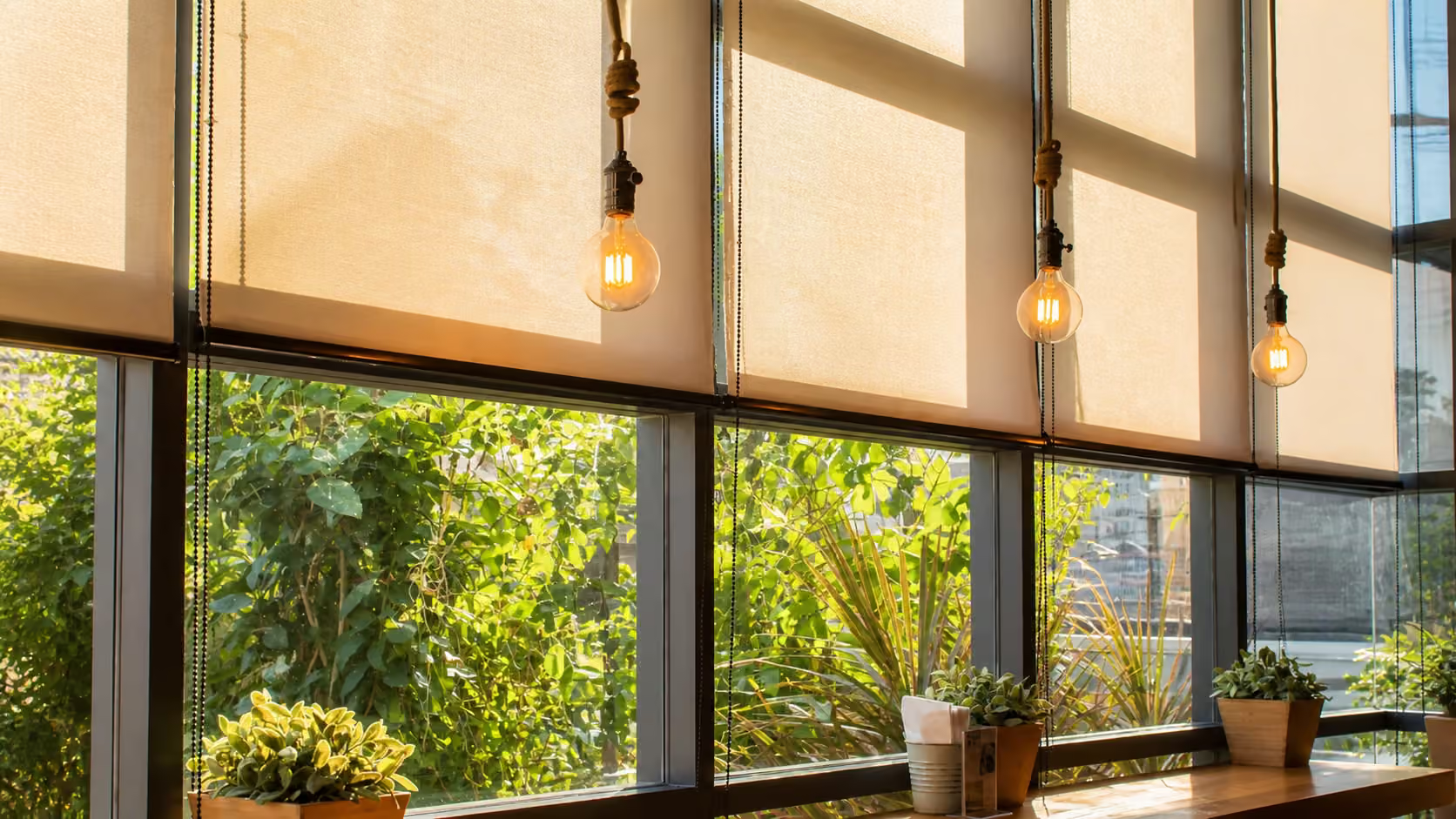
Glare occurs when a bright light source or reflection creates uncomfortable contrast within a person’s view. In an office, the source may be direct sunlight, a bright uncovered window or light reflected from glass, pale walls, desks and polished surfaces. Comcare’s guidance on lighting in work areas identifies glare as a possible contributor to headaches and eye strain.
The position of a screen also matters. Comcare recommends avoiding a monitor position directly in front of or behind a window because the contrast or reflection can make viewing uncomfortable. Its computer and workstation guidance suggests positioning screens at an appropriate angle to windows and other light sources.
Rearranging desks may solve part of the problem, but it is not always practical in established offices. Power points, meeting tables, shared workstations and room dimensions can restrict furniture placement. In these situations, a professionally measured office roller blind can provide another level of control.
Keeping Useful Daylight in the Workspace
Completely covering every office window throughout the day can create another problem. The workspace may become unnecessarily dark and depend more heavily on artificial lighting. The Australian Government’s Your Home lighting guide explains that well-planned natural daylight can reduce reliance on electric lighting, although direct sun and glare still need to be controlled.
The most appropriate roller blind is therefore not always a blockout blind. A light-filtering or sunscreen fabric may soften the brightness while allowing the room to retain some natural light. Sweet Home Blinds offers roller blind fabrics for different levels of light control, including sunscreen, light-filtering and blockout options.
The required fabric may change across the same workplace. Open-plan desk areas may benefit from filtered daylight, while a presentation room may need stronger coverage. Treating each window according to its actual use can produce a better result than specifying one fabric for the entire building.
Sunscreen Roller Blinds for Daytime Glare
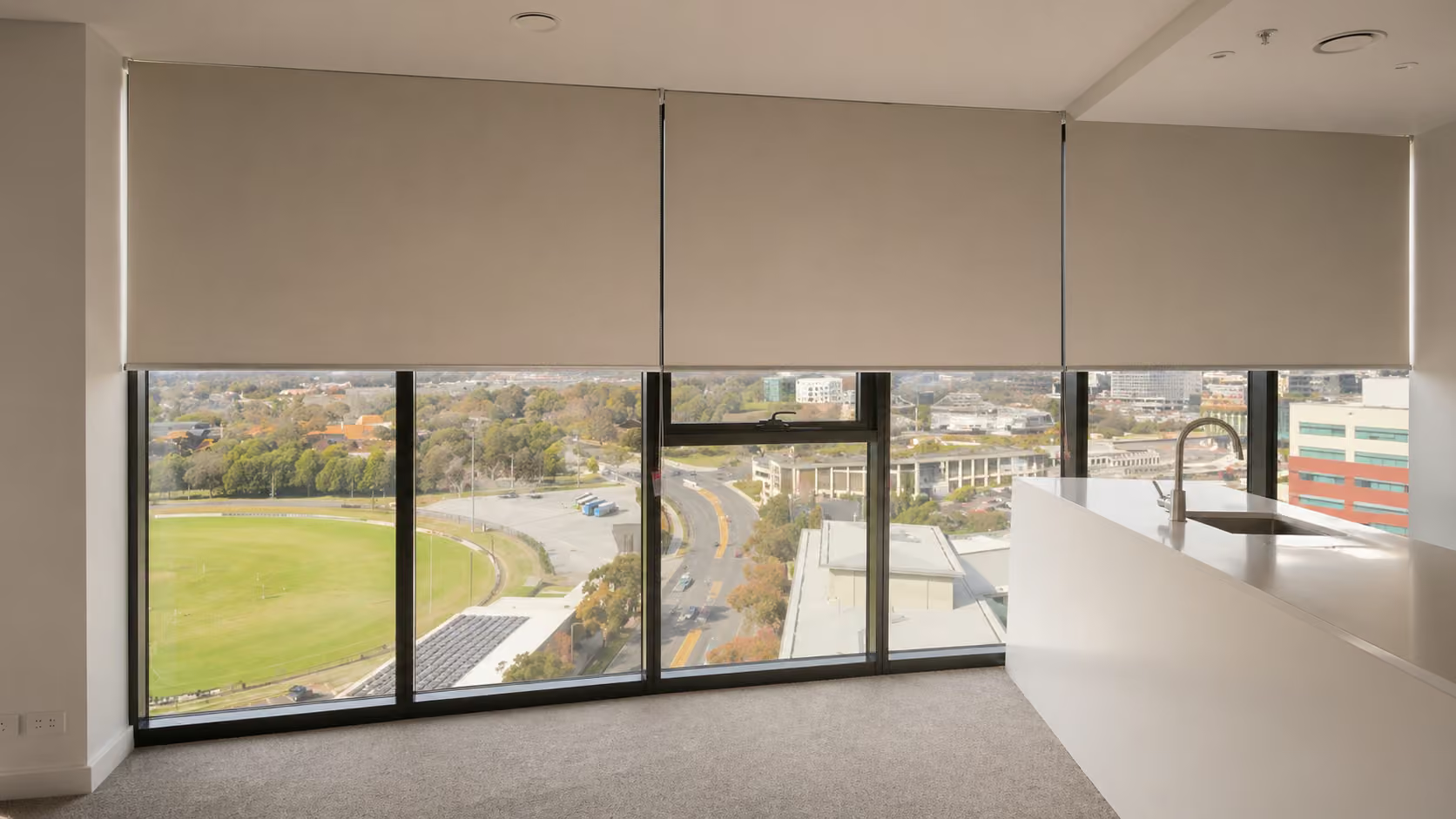
Sunscreen fabrics contain an open weave that reduces brightness while preserving some connection with the view. They can be useful in offices where staff want to see outside and maintain natural daylight without leaving the glass completely uncovered. Available fabric options can be reviewed through the Sweet Home Blinds roller blind collection.
The openness of the fabric influences how much light and visibility remain. A more open sunscreen fabric generally retains a clearer view but allows more light through, while a tighter weave offers stronger coverage. Colour can also affect how the blind looks from inside and how much contrast remains around the window.
Sunscreen blinds should not be treated as reliable night-time privacy. During the day, a brighter exterior may make it difficult to see into the office. Once the interior lights are on and it is dark outside, visibility can change substantially. A street-facing office used after hours may therefore need a different fabric or an additional privacy strategy.
When Are Blockout Roller Blinds More Suitable?
Blockout roller blinds use opaque fabric to provide stronger coverage. They can be appropriate in meeting rooms, presentation areas, training rooms and offices containing screens that need to be viewed without strong surrounding light. Sweet Home Blinds discusses similar commercial requirements in its article about blockout curtains for professional office light control.
Blockout fabric can also provide stronger privacy for ground-floor windows, confidential work areas or rooms used after dark. However, closing the blind removes most of the natural view and daylight, so it may be unnecessarily restrictive in a general workspace.
The word “blockout” describes the fabric, not a guarantee that the complete room will become totally dark. Light can still enter around the sides, top or bottom of a roller blind. If darkness is important for presentations, the recess, mounting position and edge gaps should be discussed during Sweet Home Blinds’ professional consultation process.
Light-Filtering Fabrics as a Middle Option
Light-filtering roller blinds sit between sunscreen and blockout options. They soften incoming daylight and create a more even glow but generally provide less view-through than an open sunscreen fabric. This can suit reception spaces, staff rooms and offices where gentle light matters more than preserving the outdoor view.
This fabric can also support daytime privacy, although the exact result depends on fabric colour, weave and the difference between indoor and outdoor brightness. Samples should be viewed in the intended room because material appearance can change under real sunlight. The Fyshwick showroom allows businesses to compare blind fabrics and finishes before making a selection.
A fabric that looks attractive under showroom lighting may behave differently on a west-facing office window during the afternoon. Taking samples to the site or arranging an on-site consultation makes it easier to assess transparency, colour and glare under the conditions the blind will actually experience.
Why Window Orientation Matters
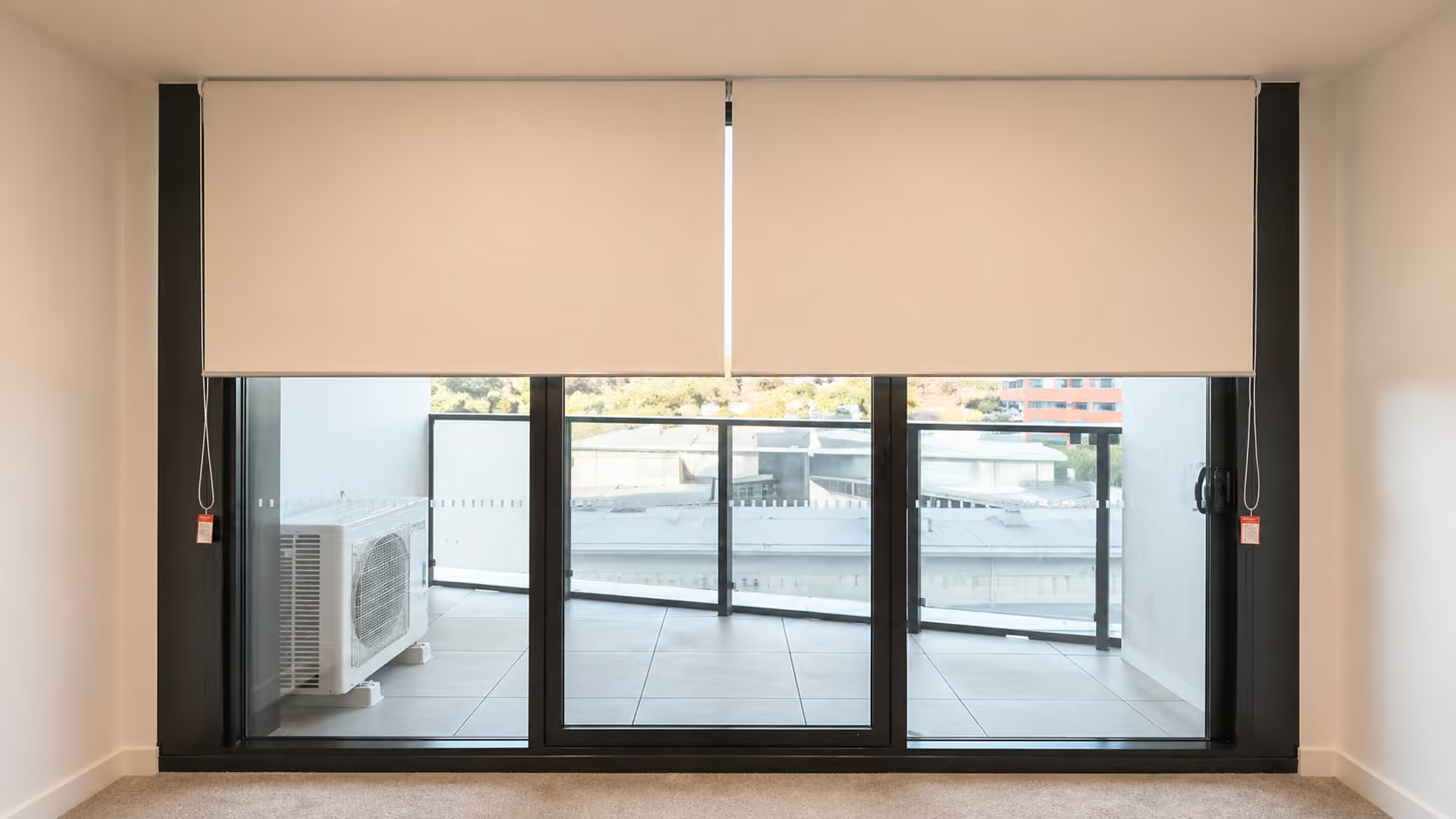
The direction of the window affects when sunlight enters and how difficult it is to control. East-facing windows may receive strong low-angle light in the morning, while west-facing windows can experience intense afternoon sun. The Australian Government’s orientation guidance explains how sun exposure changes according to direction and season.
Low-angle sunlight is particularly difficult because it can travel deeply into the workplace and pass beneath fixed external structures. Adjustable internal blinds help staff respond as conditions change, although the government’s shading guidance notes that suitable external shading is generally more effective at stopping unwanted summer heat before it reaches the glass.
Roller blinds should therefore be considered as one part of the complete building strategy. Glazing, external shading, window direction and air-conditioning also affect comfort. An internal blind can manage daylight, privacy and some direct exposure, but it cannot correct poorly performing glass or replace appropriate external solar control.
Privacy in Street-Facing and Shared Offices
An office window may face a road, car park, neighbouring building or shared internal corridor. Staff may want natural light during the day without feeling visible to everyone passing outside. A sunscreen or light-filtering roller blind can provide a more balanced daytime setting than leaving the window completely open.
Privacy needs change after dark. A fabric that obscures views during daylight may become more transparent when the interior is brighter than the exterior. Businesses that operate in the evening should assess the blind from both inside and outside before relying on it for privacy.
Rooms used for confidential meetings may require opaque coverage regardless of the time of day. In those spaces, blockout fabric may be the more appropriate choice. The final decision should consider glass partitions, doors and other sightlines as well as the exterior window.
Manual or Motorised Office Roller Blinds?
Manual roller blinds can be suitable when windows are easy to reach and staff only need to adjust them occasionally. Their simple operation makes them familiar and practical, although any chain-operated system must be installed and maintained correctly.
Motorisation becomes useful when an office contains many blinds, wide windows or openings positioned behind desks and equipment. Sweet Home Blinds’ motorisation collection explains how compatible blinds can be operated using remote controls, apps or integrated systems.
A motorised system can also make consistent glare management easier. Blinds may be grouped by façade or room and adjusted together instead of relying on individual staff members to operate every window. Automated schedules can respond to predictable morning or afternoon sunlight, although users should retain appropriate control over their immediate workspace.
Motorisation must be confirmed for the selected blind size, fabric and operating system. Power supply, control method, charging access and integration requirements should be discussed during measurement rather than assumed after the blinds have been ordered.
Measurement and Installation in a Commercial Space
Accurate measurement affects appearance, light control and everyday operation. A blind that is unnecessarily narrow may leave larger edge gaps, while a blind that is too wide may interfere with handles, walls or adjacent fittings. Sweet Home Blinds outlines its measure-to-install approach on the company’s process page.
Commercial installations also need to consider air-conditioning vents, cable trays, access panels, alarms and existing ceiling systems. A roller blind must be positioned so it can move freely without striking desks, monitors or window hardware.
Installation planning should account for when the workspace is occupied. Access, noise, safety requirements and protection of equipment may influence when work can be completed. Businesses can discuss these details when they book a commercial consultation.
Cleaning and Long-Term Maintenance
Roller blinds have a relatively simple surface, which makes them practical for offices. Light dust can usually be removed carefully, while marks should be treated according to the fabric manufacturer’s instructions. Sweet Home Blinds provides general information on its care and maintenance page.
The fabric should not be scrubbed or saturated unless the care instructions specifically allow it. Cleaning products that appear safe on one material may discolour or damage another. Testing an approved method on an inconspicuous area can help reduce risk.
Chains, brackets and motorised components should also be checked if operation becomes uneven or noisy. Staff should not pull a blind past its intended limit or attempt to repair a commercial system without appropriate guidance.
A Canberra Example: Canberra Data Centre Hume 6
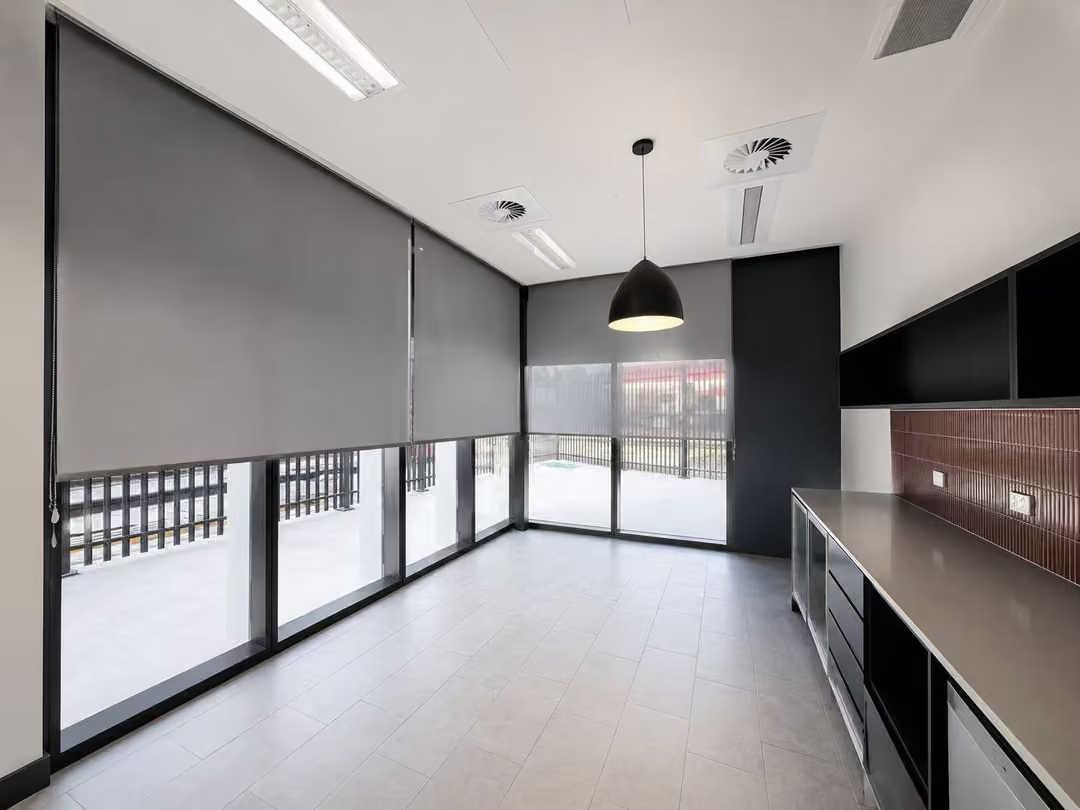
The Canberra Data Centre Hume 6 project provides a real commercial example. Sweet Home Blinds installed roller blinds across the workspace to provide practical light control, privacy and a clean commercial finish.
The project demonstrates why roller blinds work well in modern offices. Their compact design does not compete with workstations, equipment or the broader interior. When lowered, the flat fabric provides consistent window coverage; when raised, it leaves the glazing visually open.
The project page identifies roller blinds as the installed product but does not state that every window used the same fabric or operating system. Those details should not be invented. The case is useful because it shows the completed appearance of custom commercial roller blinds in a real Canberra facility.
Frequently Asked Questions
Are roller blinds suitable for offices?
Yes. Their compact design, fabric options and straightforward operation suit many commercial spaces. Businesses can compare available configurations on the roller blinds product page.
Which roller blind fabric is best for screen glare?
Sunscreen or light-filtering fabrics can reduce brightness while retaining some daylight, but stronger glare may require blockout coverage. Desk and monitor positions should also follow Comcare’s workstation guidance.
Do sunscreen blinds provide privacy at night?
They should not be relied upon for dependable night-time privacy because visibility changes when the office is brighter than the exterior. A blockout fabric may be more appropriate for after-hours privacy, depending on the window and room.
Can office roller blinds be motorised?
Compatible roller blinds can be motorised and controlled individually or in groups. Window dimensions, power options and control requirements should be confirmed through the motorisation collection.
Do roller blinds stop office heat?
Internal roller blinds can manage direct light and provide another layer at the glass, but they are not a replacement for efficient glazing or external shading. The government’s Your Home shading guide explains why preventing sunlight from reaching the glass is generally more effective for summer heat control.
Choosing Roller Blinds for a Canberra Office
A successful office roller blind should respond to the way the room is actually used. Sunscreen fabric can help preserve daylight and views, light-filtering fabric can create softer coverage, and blockout fabric can support privacy or presentation requirements. All three options are available within Sweet Home Blinds’ roller blinds collection.
The Canberra Data Centre Hume 6 installation demonstrates how roller blinds can provide practical light control and a clean finish in a completed commercial workspace. The best configuration for another office will depend on window direction, screen placement, privacy and daily operating requirements.
Ready to improve light control in your Canberra workplace? Book a consultation with Sweet Home Blinds to compare roller blind fabrics, measurement options and manual or motorised systems.
Browse more commercial projects, or follow Sweet Home Blinds on Facebook and Instagram for completed Canberra installations.