
PVC Plantation Shutters Canberra: Where Do They Work Best?
PVC plantation shutters can give a home a clean, structured finish while providing adjustable privacy, light control and airflow. Unlike fabric curtains or roller blinds, shutters are fitted as framed panels and can feel like a permanent part of the window. However, this does not mean that every window should automatically receive the same shutter. A product that works comfortably in a small bathroom may not be the best answer for a wide sliding door. A bedroom may require stronger darkness...
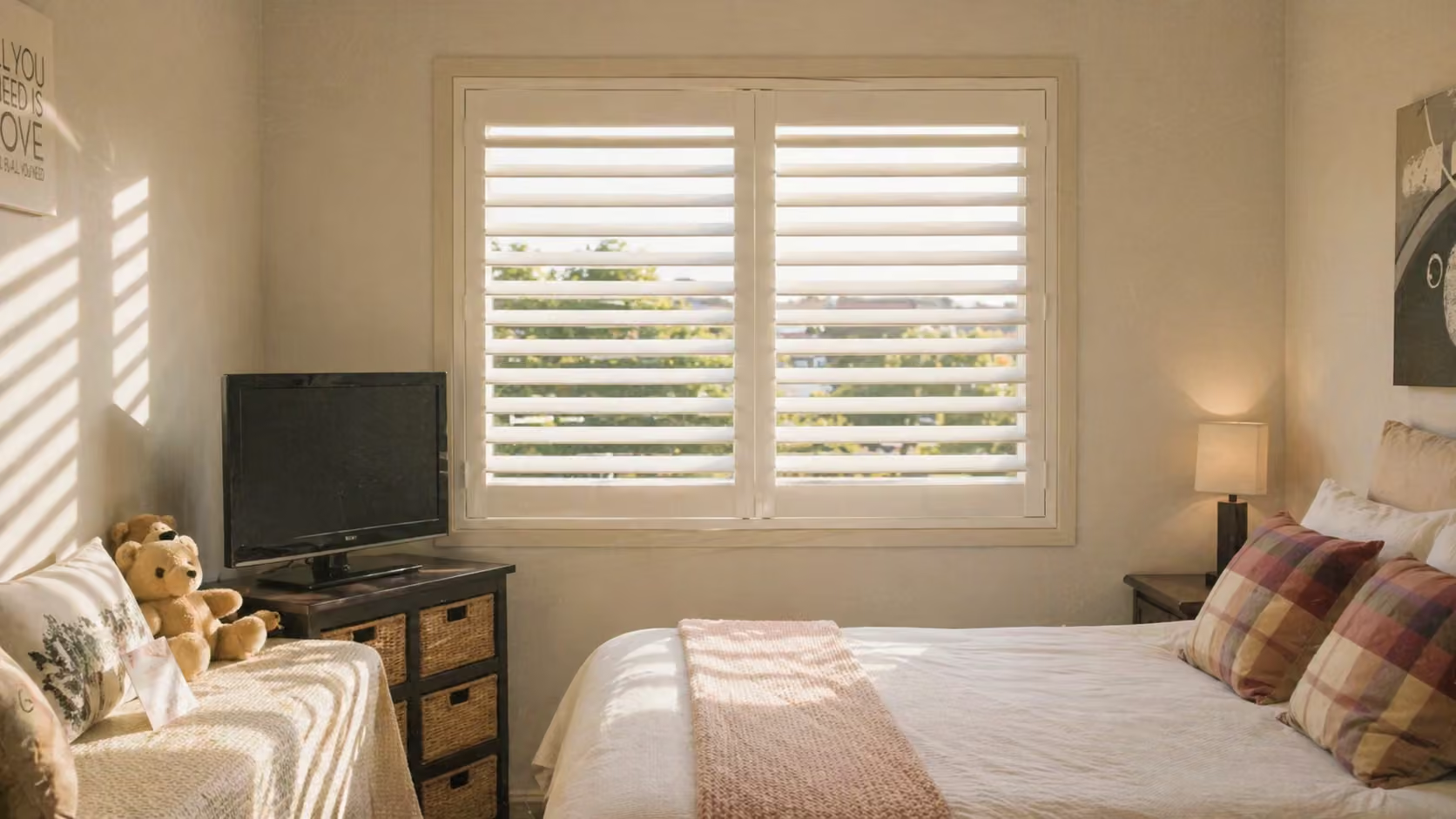
PVC plantation shutters can give a home a clean, structured finish while providing adjustable privacy, light control and airflow. Unlike fabric curtains or roller blinds, shutters are fitted as framed panels and can feel like a permanent part of the window.
However, this does not mean that every window should automatically receive the same shutter. A product that works comfortably in a small bathroom may not be the best answer for a wide sliding door. A bedroom may require stronger darkness than shutter louvres can provide, while a living room may benefit from their ability to redirect light throughout the day.
The most effective approach is to assess each room separately.
Sweet Home Blinds’ completed projects show several ways to use PVC plantation shutters. At Ainslie House, shutters were installed throughout the residence. At Red Hill House, they were selected for the toilet and bedroom while roller blinds were used in the living room. At Whitlam House, shutters and blockout curtains were combined within the same home.
These projects demonstrate an important point: PVC plantation shutters can work across many rooms, but they do not have to be installed at every window to create a consistent interior.
What Are PVC Plantation Shutters?
PVC plantation shutters consist of framed panels containing horizontal louvres. The louvres can be tilted to change the amount and direction of incoming light. Depending on the window and configuration, the panels may also swing open to provide fuller access to the glass.
The solid frame gives shutters a more architectural appearance than a hanging or rolling window furnishing. Their lines remain visible whether the louvres are open or closed, so the frame style, panel divisions and louvre proportions all influence the final look.
Sweet Home Blinds describes its PVC shutters as a durable, low-maintenance product manufactured in Australia. The material is moisture resistant and suitable for living areas, bedrooms, kitchens, bathrooms and other frequently used spaces.
PVC should not be confused with basswood. Both products can create the familiar plantation-shutter appearance, but they use different materials and may suit different project priorities. Homeowners should compare the finish, weight, dimensions and available configurations before ordering.
The final result depends on more than the shutter material. Window depth, handles, panel size, opening direction and surrounding furniture all affect how comfortably the shutters operate.
Why Choose Shutters on a Room-by-Room Basis?
Homes rarely contain identical windows in identical conditions. A small toilet window has different requirements from a living-room wall of glass, even when both rooms use the same colour scheme.
Bedrooms often prioritise privacy and darkness. Bathrooms introduce moisture and usually require privacy throughout the day. Kitchens contain heat, cooking residue and surfaces that need regular cleaning. Living rooms may place more importance on the view, natural light and access to outdoor areas.
Window direction changes the decision as well. An east-facing bedroom may receive strong early sunlight, while a west-facing living room may experience low afternoon glare. A shaded bathroom window may require privacy without needing substantial sun control.
Selecting one product for the entire house can create visual consistency, but it can also produce compromises. A better approach is to identify what each window needs to do and then coordinate colours and finishes across the selected products.
The Red Hill House project demonstrates this strategy clearly. Roller blinds were used in the living room, while PVC plantation shutters were installed in the toilet and bedroom. Rather than forcing one product into every space, the installation matched the furnishing to the function of each room.
Are PVC Plantation Shutters Suitable for Bedrooms?
PVC plantation shutters can work well in bedrooms where adjustable privacy and a structured appearance are more important than complete darkness.
The louvres can be tilted to restrict direct views while allowing some natural light into the room. This is helpful for street-facing or ground-floor bedrooms that need privacy during the day. The shutters can remain across the window while the louvres are adjusted according to changing light conditions.
Their fitted design also avoids fabric hanging beside the bed or touching nearby furniture. This can be useful in compact bedrooms where curtains would occupy valuable wall or floor space.
However, shutters contain functional gaps. Light may enter around the frame, between panels and where the louvres meet. They can make a room substantially darker when closed, but they should not automatically be presented as a complete blockout solution.
Someone who works night shifts, sleeps very lightly or requires a particularly dark nursery may need another product or a carefully planned layered arrangement. The complete window and required darkness should be discussed before choosing shutters.
At Red Hill House, PVC plantation shutters were selected for a bedroom as part of a mixed window-furnishing scheme. The project shows how shutters can provide bedroom privacy and adjustable light without requiring the same product in the adjoining living areas.
Do PVC Shutters Work in Bathrooms and Toilets?
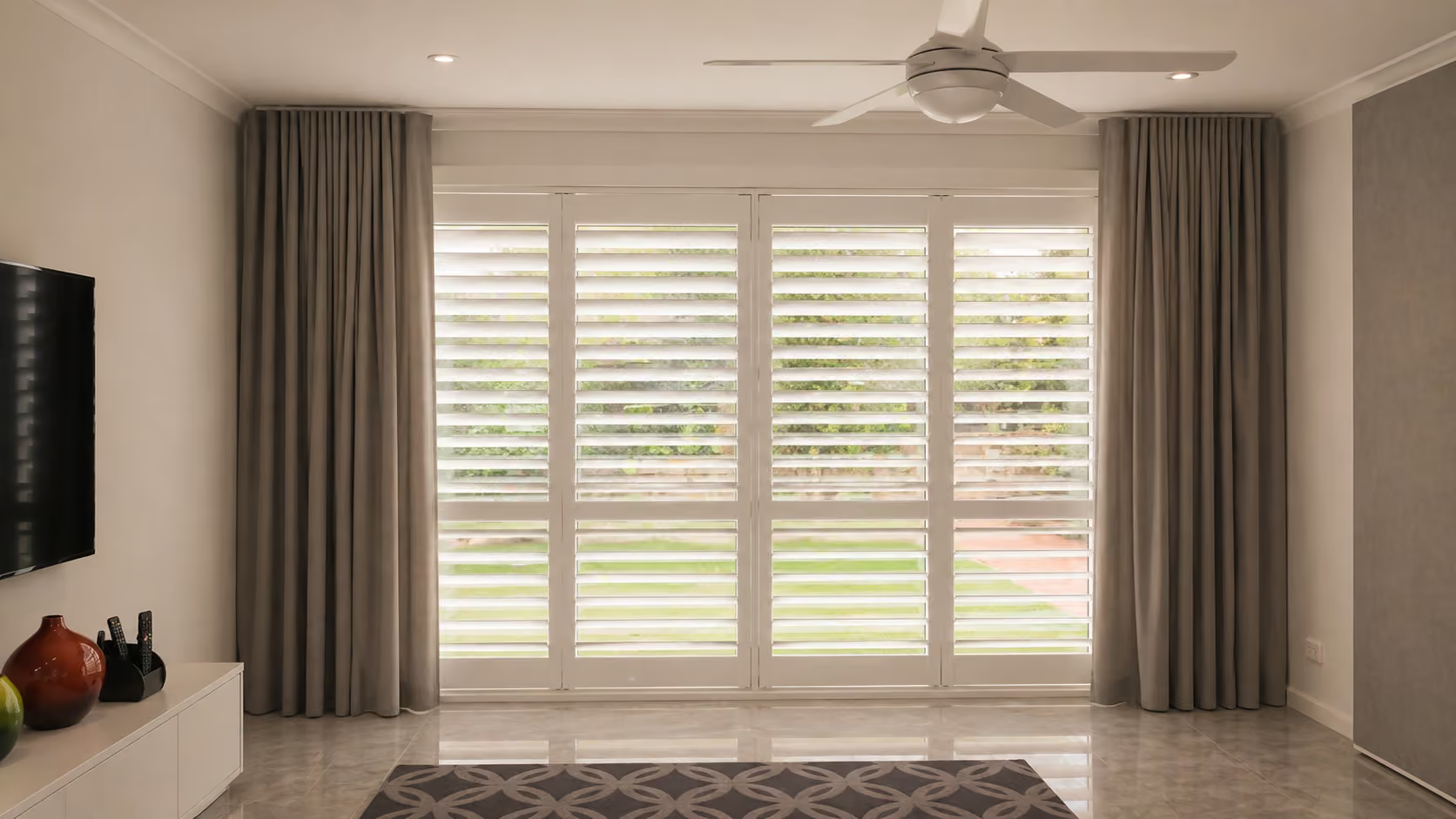
Bathrooms and toilets are among the strongest applications for PVC plantation shutters. These rooms require privacy, are used frequently and may expose window furnishings to higher humidity than other parts of the home.
Sweet Home Blinds identifies PVC shutters as moisture resistant and suitable for bathrooms and kitchens. Their solid surface can generally be wiped according to the supplied care instructions, making them more practical around splashes and everyday bathroom use than many delicate fabrics.
The louvres also provide useful privacy adjustment. A homeowner can angle them to reduce direct views while still allowing some daylight and ventilation through an open window.
Moisture resistance does not mean that the complete installation should be continuously soaked or cleaned with harsh chemicals. Hinges, screws, frames and surrounding building materials still need appropriate care. Persistent condensation may also indicate a ventilation issue that cannot be solved by the shutter itself.
The shutter must not obstruct the window’s intended operation. If the window is needed for ventilation, the panel configuration should allow residents to reach its handle or winder without forcing the shutter.
At Red Hill House, PVC plantation shutters were installed in the toilet as well as the bedroom. This room-by-room choice demonstrates how the same product can serve different purposes: privacy and adjustable light in the bedroom, and moisture-resistant everyday coverage in the toilet.
Are They Practical in Kitchens?
PVC plantation shutters can suit kitchens because their surface is relatively easy to maintain and their louvres provide flexible control over daylight.
A kitchen window above a bench or sink may be difficult to furnish with full curtains. Fabric can occupy working space, collect cooking residue or sit close to water. A fitted shutter remains contained around the window and does not require a curtain stack at the side.
The louvres can be adjusted to reduce glare across benchtops while maintaining some daylight. If the window opens, the shutter panels may also provide access for ventilation, depending on the selected configuration.
The position of taps, splashbacks, overhead cupboards and appliances must be checked before installation. A shutter panel needs enough clearance to open without striking a tap or nearby cabinet. Window winders and projecting handles can also interfere with the frame.
A shutter should not be installed too close to an unsuitable heat source. The complete kitchen layout and manufacturer’s requirements need to be considered during measurement.
Cleaning should remain gentle. Cooking residue may require more frequent attention, but abrasive pads and strong chemicals can damage surfaces and fittings. Sweet Home Blinds’ care and maintenance information should be reviewed before cleaning any installed product.
How Do Shutters Perform in Living Rooms?
Living rooms can suit plantation shutters when adjustable daylight, privacy and a strong architectural finish are the main priorities.
The louvres allow residents to respond to changing conditions without raising or removing the complete window furnishing. They can be angled to reduce direct glare, admit more natural light or restrict views from the street.
This adjustability is particularly useful in rooms that face a public footpath or neighbouring home. The shutters can provide coverage throughout the day without making the room feel completely closed.
However, the frame and louvres remain visible at all times. Even when fully open, the panels require space and may cover part of the window or surrounding wall. Homeowners who want an uninterrupted view may prefer a blind that rolls above the glass or a curtain that stacks beside it.
Large living-room windows can also require several shutter panels. The divisions between these panels affect the view and should align sensibly with the window frame wherever possible.
Sliding doors and frequently used outdoor openings may be less convenient for standard hinged shutter panels. The screen, door handle and walking path must be assessed before choosing a configuration.
The decision at Red Hill House provides a useful example. Roller blinds were selected for the living room, while shutters were used elsewhere. This suggests that the clean lines and retractable form of a roller blind suited the living area’s requirements better than applying shutters throughout the complete home.
Can Shutters Help Manage Canberra Sunlight?
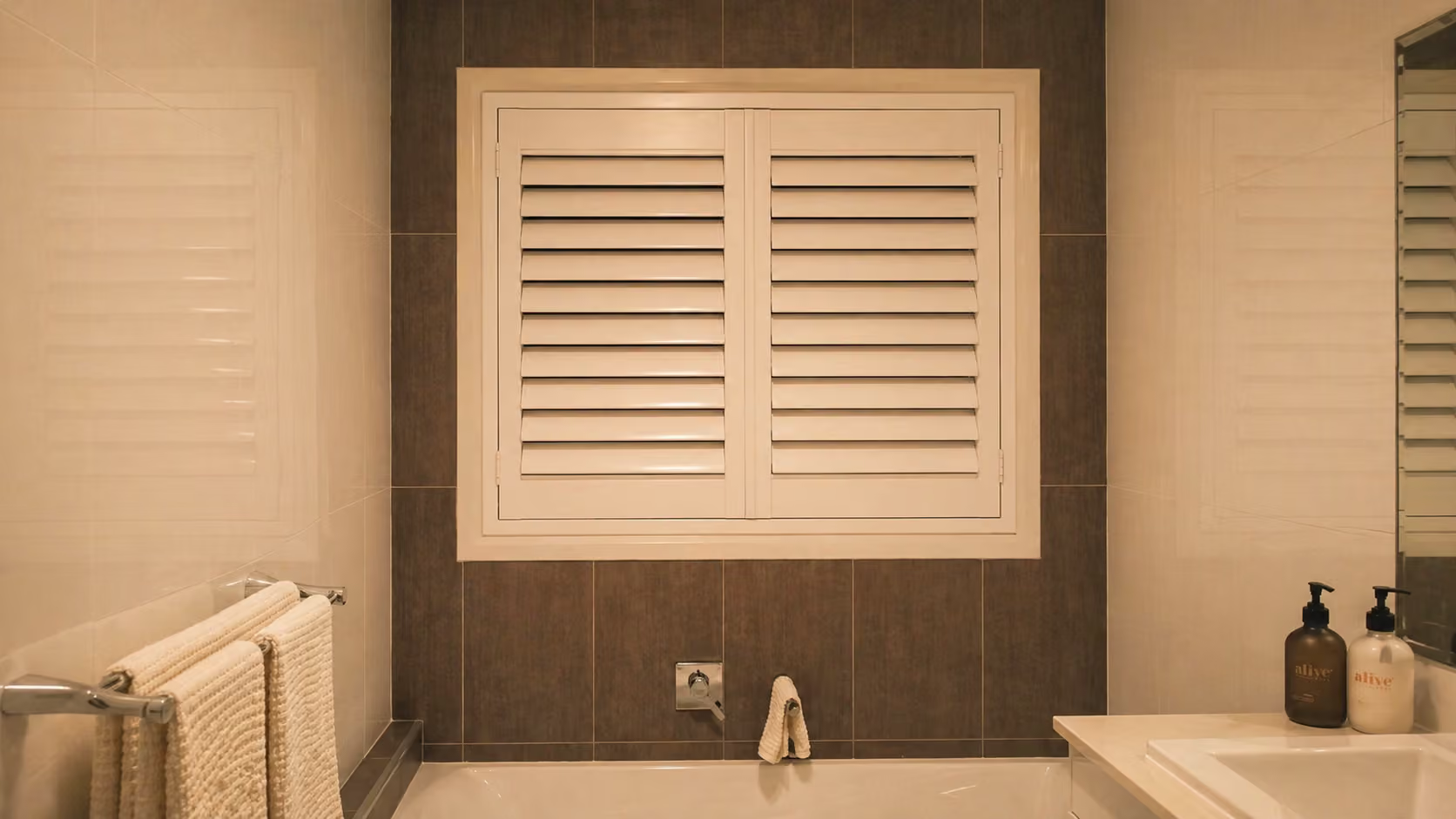
PVC plantation shutters provide flexible internal light control because the louvres can change the direction of incoming sunlight.
In an east-facing room, residents may close or angle the louvres to manage strong morning light. In a west-facing room, the same adjustment can reduce low afternoon glare. During less intense periods, the louvres can remain more open to admit daylight.
This flexibility distinguishes shutters from window furnishings that offer only fully open or fully closed positions. The room can remain covered while the angle changes throughout the day.
Shutters manage sunlight after it passes through the glass. The Australian Government’s Your Home shading guide explains that suitable external shading is generally more effective at preventing unwanted summer heat from reaching the glazing.
Internal shutters remain helpful for managing brightness, privacy and direct exposure within the room, but they should be considered alongside the orientation, glazing and existing external shading.
The colour of the shutter also affects the visual result. White and light neutral shutters can create a bright, continuous appearance around the window, while darker finishes may become a stronger design feature.
Privacy Without Keeping the Room Dark
One of the main advantages of plantation shutters is the ability to balance privacy with daylight.
Closing a blockout blind removes most direct views, but it can also make a room significantly darker. Shutter louvres provide intermediate positions. They can limit a direct sightline without covering the window with a completely opaque surface.
This can be useful for windows facing streets, paths or neighbouring properties. The exact louvre angle required will depend on the height of the window and the viewing position outside.
Some shutter configurations may divide the window into separate sections. Where available and appropriate, this can allow different parts of the window to be adjusted independently. A lower section may provide privacy while an upper section admits more daylight.
No setting guarantees privacy from every possible angle. Homeowners should consider the view from outside during both day and night, especially when interior lights are on.
For bathrooms and bedrooms, the selected configuration should be checked carefully rather than assuming that partially open louvres will always prevent visibility.
Airflow and Access to Open Windows
Plantation shutters can allow air to move through tilted louvres when the window behind them is open. This may help a bedroom, kitchen or bathroom feel less enclosed.
However, the shutter is another physical layer across the opening. Airflow depends on the louvre angle, panel design, window type and outdoor conditions.
For maximum access, the shutter panels may need to be opened. This requires enough space inside the room for the panels to swing without hitting furniture, mirrors, taps or walls.
Casement and awning windows can create particular planning challenges because their handles and opening mechanisms may project into the shutter area. Sliding windows may be easier to access in some situations, but their locks and handles still require clearance.
The Australian Government’s Your Home guide to ventilation explains that natural ventilation depends on the location and design of openings as well as local breezes. A shutter can help residents control an opening, but it cannot create cross-ventilation where the home’s layout does not support it.
The window should therefore be operated during measurement, not assessed only in its closed position.
Windows That May Be Less Suitable for Shutters
Plantation shutters are versatile, but they are not the best solution for every opening.
Very wide windows may require multiple panels and visible divisions. Large panels also need enough room to open and must remain suitable for the selected frame and hinges.
Sliding doors and balcony access points require careful planning because residents need to move through them frequently. A panel that must be opened before using the door may feel inconvenient in a busy living area.
Windows with shallow recesses, projecting handles or unusual shapes may require a face-mounted frame or a different product. This can change how far the shutter projects into the room.
Furniture can also create conflicts. A desk, bedhead or sofa positioned directly below the window may prevent the panels from opening fully. In small rooms, the shutter’s swing area should be checked before furniture placement is finalised.
A window with an important landscape view may be better suited to a furnishing that retracts more completely. Shutters frame the view but do not disappear from the opening.
Professional measurement helps determine whether these limitations can be managed through panel layout, mounting position or another product.
Planning Panel Configuration
The number and arrangement of shutter panels affect both appearance and operation.
Panel divisions should relate to the existing window wherever possible. A vertical shutter stile placed directly in front of an important section of glass may interrupt the view, while a layout aligned with the window mullions can appear more integrated.
The location of hinges determines how the panels open and where they sit. A panel that folds towards a wall may require clearance from switches, artwork and furniture.
Louvre size influences the amount of visible structure across the glass. Larger louvres can create broader lines and may provide a more open view at certain angles. Smaller louvres create a denser visual pattern. Availability depends on the selected shutter system.
The tilt-control method also contributes to the appearance. Some systems display the control mechanism more clearly, while others create a cleaner front surface.
These details are difficult to judge from a small material sample. Homeowners should consider the entire elevation of the window, including panel proportions and frame thickness.
A Whole-Home Example: Ainslie House
The Ainslie House project demonstrates how PVC plantation shutters can create consistency throughout a residence.
Sweet Home Blinds installed the shutters across the home to provide flexible light control, privacy and a timeless finish. Using the same product at multiple windows helped establish a repeated architectural language.
A whole-home installation can work well when the windows have compatible proportions and the household values a consistent appearance. Matching frames and louvres can connect rooms even when their furniture and wall colours differ.
However, consistency should not replace practical assessment. Each panel still needs to suit its individual window, handle and surrounding space.
The Ainslie project represents one valid approach: selecting shutters as the dominant window furnishing. The Red Hill project represents another approach by limiting shutters to rooms where their qualities were especially useful.
Neither method is automatically better. The decision depends on the windows, interior design and way each room is used.
Mixing Shutters with Curtains or Blinds
A home does not need to choose between shutters, curtains and blinds as complete competing systems. Different products can perform different roles within the same interior.
The Whitlam House project combined PVC plantation shutters with blockout curtains. The shutters provided structured light and privacy control, while the curtains offered softer coverage at other windows.
This type of mixed scheme can respond to differences between bedrooms, living areas and window sizes. Colour coordination can maintain a consistent look even when the product changes.
For example, white shutters can be paired with neutral curtains and discreet blind hardware. Repeating similar undertones across the home helps the products feel connected without making every window identical.
Layering curtains directly over shutters may also be possible where sufficient clearance exists. The curtain track must project far enough to allow the shutter panels to open, and the curtain stack should not obstruct the panels.
Adding curtains after shutters have been installed can be more difficult if projection and wall space were not considered initially. Where both products are required at the same window, they should be measured as one complete solution.
Cleaning and Everyday Maintenance
PVC plantation shutters are generally easy to maintain because their solid surfaces can be dusted and wiped carefully.
Routine cleaning can begin with a soft cloth or suitable duster. Each louvre should be supported and handled gently rather than pushed or twisted. The frame, hinges and panel edges also need attention.
A slightly damp cloth may be suitable for certain marks, subject to the supplier’s instructions. Abrasive pads, harsh chemical cleaners and excessive water should be avoided unless they are specifically approved.
Bathrooms and kitchens may require more frequent cleaning because of moisture, cooking residue and regular contact. Allowing dirt to build up around moving components can make the shutters less pleasant to operate.
The louvres should be adjusted using their intended control. Forcing an individual louvre or pushing a panel against an obstruction may damage the system.
Although shutters are wipeable, a large installation contains many individual surfaces. Homeowners should consider whether they are comfortable cleaning each louvre, particularly across several rooms.
Children, Furniture and Daily Operation
Plantation shutters do not usually require the loose fabric folds associated with curtains, and many designs avoid accessible hanging chains. The exact operating arrangement should still be confirmed during product selection.
Panels must open into clear space. Beds, cots, desks and storage furniture should not prevent normal operation or encourage children to climb near an open window.
If another window furnishing with an accessible cord or chain is installed nearby, households should follow Product Safety Australia’s window-covering guidance.
Pets may also interact with shutters. Cats may sit on windowsills behind the panels, while dogs may place pressure against lower sections. The shutters should not be treated as a safety barrier or substitute for an appropriate window restrictor.
The room layout should be discussed during measurement, especially when large furniture has not yet been delivered.
Cost and Long-Term Value
PVC plantation shutter pricing depends on the dimensions and complexity of the installation rather than only the number of windows.
Frame style, panel configuration, louvre selection, unusual shapes and installation access can all influence the quote. A small, straightforward rectangular window has different manufacturing requirements from a wide opening with several panels.
Shutters may require a higher initial investment than a basic blind because they contain custom frames, panels, hinges and multiple moving louvres. Their long-term value comes from their fitted appearance, adjustable operation and durable, maintainable surface.
Value should be judged room by room. Installing shutters at a suitable bathroom or street-facing bedroom may provide more practical benefit than applying them to a wide door where the panels interrupt everyday access.
A professional measure can identify difficulties before the shutters are manufactured. This reduces the risk of selecting a configuration that clashes with handles, furniture or the window’s opening path.
Frequently Asked Questions
Are PVC plantation shutters suitable for bathrooms?
Yes. PVC shutters are moisture resistant and can suit bathrooms and toilets. The complete installation should still be kept clean, ventilated and cared for according to the supplied instructions.
Do plantation shutters provide complete blockout?
No. Closed shutters can make a room significantly darker, but light may enter around the frame, between panels and through small functional gaps.
Can PVC shutters be used in bedrooms?
Yes. They provide adjustable privacy, light control and a structured finish. Homeowners who need a particularly dark bedroom should discuss whether another product or a layered solution is required.
Are plantation shutters suitable for living rooms?
They can work well where adjustable daylight and privacy are priorities. Wide windows, important views and frequently used doors should be assessed carefully before selection.
Can plantation shutters be opened fully?
Shutter panels can generally open according to their hinge and panel configuration. The available opening space depends on the window, frame and nearby furniture.
Are PVC shutters easy to clean?
Their solid surfaces are generally straightforward to dust and wipe carefully. Each louvre needs individual attention, so larger installations can still require time.
Can curtains be installed over plantation shutters?
Often yes, provided there is enough space for the shutter panels, curtain track and fabric stack. Both products should be planned together where possible.
Are PVC plantation shutters waterproof?
They are moisture resistant, but the complete shutter and its fittings should not automatically be treated as suitable for continuous soaking or harsh cleaning. Care instructions should always be followed.
Choosing the Right Rooms for PVC Plantation Shutters
PVC plantation shutters are particularly useful in rooms that need adjustable privacy, clean architectural lines and a wipeable surface. Bathrooms, toilets, bedrooms, kitchens and selected living areas can all be suitable when the window provides enough space for the frame and panels.
The Ainslie House project demonstrates the consistent appearance possible when shutters are installed throughout a home. Red Hill House shows a more selective approach, with PVC shutters used in the toilet and bedroom while roller blinds served the living room. Whitlam House demonstrates how shutters and blockout curtains can coexist as part of one coordinated interior.
The best result does not come from using the same product everywhere. It comes from matching each window furnishing to the room, window and household routine.
Explore PVC plantation shutters, browse more completed Canberra projects, or view Sweet Home Blinds’ complete range of curtains, blinds, shutters and screens.
Ready to find out where plantation shutters will work best in your home? Book a consultation with Sweet Home Blinds for professional measurement, room-by-room product advice and installation across Canberra and surrounding regions.
Follow Sweet Home Blinds on Facebook and Instagram for completed projects and Canberra window-furnishing inspiration.