
Motorised Veri Shades Canberra for Wide Windows and Sliding Doors
Explore motorised Veri Shades for Canberra homes, including light control, privacy, sliding doors, power options, smart controls, cost and care.
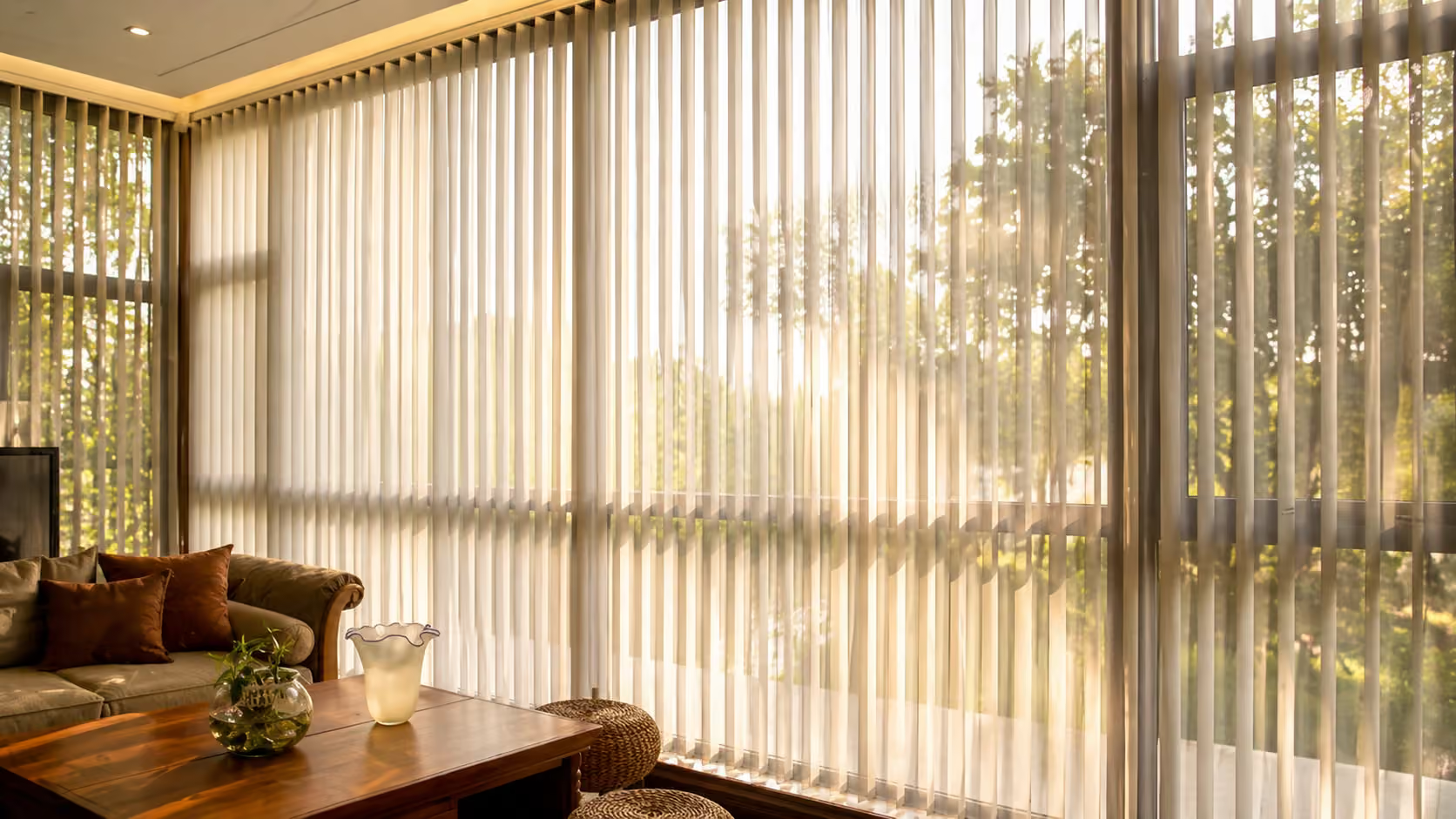
Large windows and sliding doors can make a Canberra home feel bright, open and connected to the outdoors. They can also create practical problems. Morning sunlight may be too strong, afternoon glare can reflect across television and computer screens, and a living area that feels private during the day may become exposed after dark.
Traditional curtains provide softness and broad coverage, while blinds offer more adjustable light control. Veri Shades are designed to bring aspects of both products together. Their soft vertical fabric folds create a curtain-like appearance, while the fabric can be rotated to change the balance between filtered light and privacy.
Adding motorised operation makes this adjustment easier across wide windows and doors. Instead of manually moving or rotating the fabric whenever the light changes, compatible motorised Veri Shades can be controlled through the operating system selected for the installation.
Motorisation does not automatically improve the fabric’s light-filtering or thermal properties. Its main benefit is simpler, more consistent operation. When a window furnishing is easy to adjust, homeowners may be more likely to use it throughout the day rather than leaving it permanently open or closed.
What Are Veri Shades?
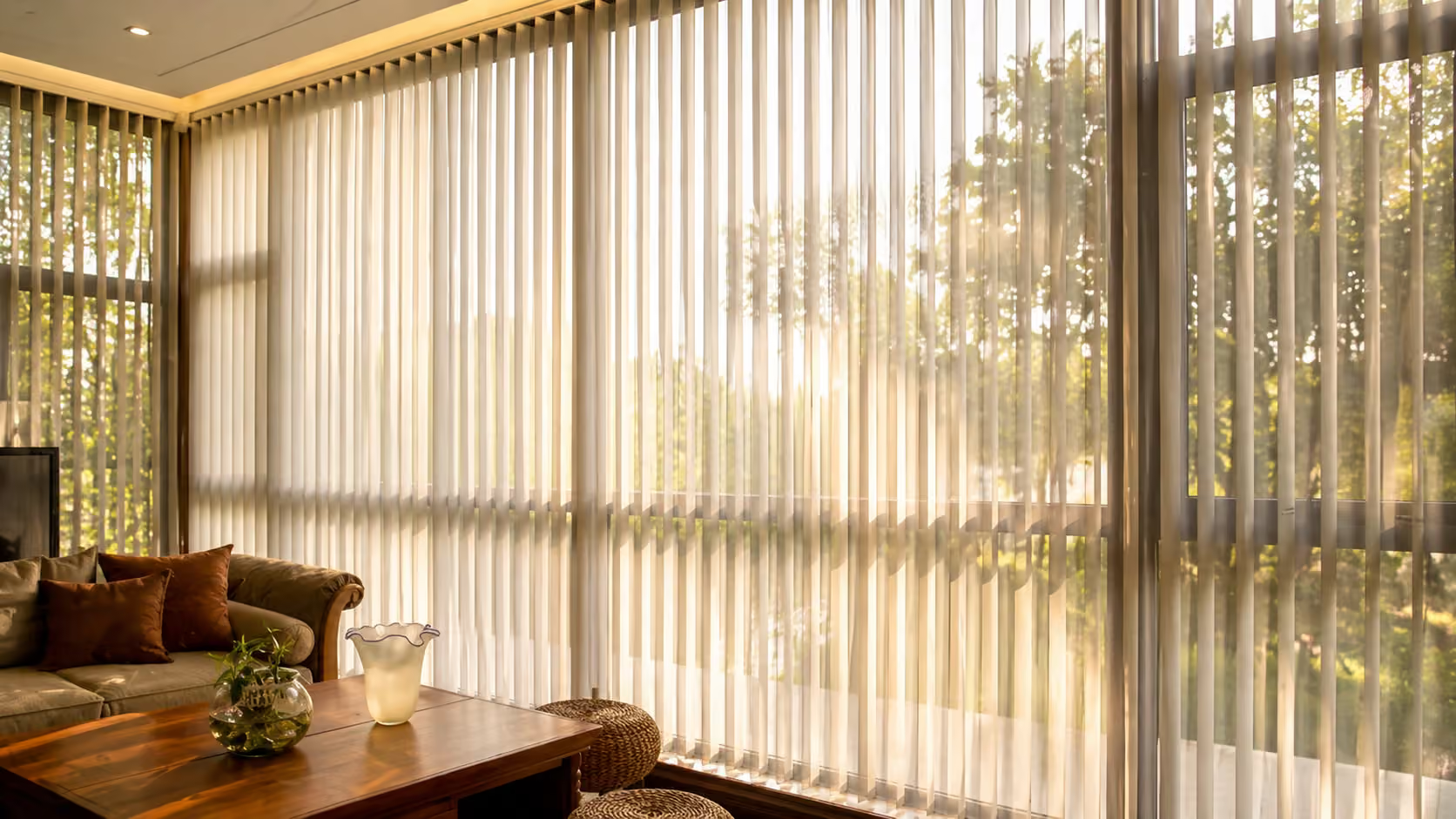
Veri Shades use individual vertical fabric folds suspended from a track. Each fold contains alternating sections that allow the appearance and light level to change when the fabric is rotated.
In a more open position, daylight passes through the sheer sections and the room retains a lighter atmosphere. As the folds rotate, the more opaque sections overlap to provide stronger privacy and light control. The complete shade can also be moved away from the opening when fuller access to the window or door is required.
This gives Veri Shades a different visual character from conventional vertical blinds. They do not use the same rigid-looking slats, bottom weights and connecting chains. Their soft folds move more like curtains, which can make a living room or apartment interior feel less formal.
They are also different from standard sheer curtains. A sheer curtain mainly filters daylight and provides a degree of daytime privacy. Veri Shades offer another level of adjustment because the position of the folds can be changed without adding a separate blind behind the fabric.
Sweet Home Blinds explains the basic design in its guide to using Veri Shades for exposed sliding doors. Homeowners can also explore the company’s complete Veri Shades collection before deciding whether manual or motorised operation is more suitable.
What Does Motorisation Change?
Motorisation changes how the shade is operated, not the basic function of the fabric.
Depending on the compatible motor and control system, motorisation may allow the shade to open, close or rotate using a remote, wall control, app, voice assistant or programmed schedule. Available functions must be confirmed for the specific track and motor rather than assumed from the general term “smart blinds”.
This matters because different households want different levels of technology. One homeowner may only want a simple remote control. Another may want the shades to close at a particular time each evening. A third may want selected window furnishings connected to a broader smart-home platform.
Sweet Home Blinds’ guide to blind motorisation in Canberra homes provides a useful introduction to these control choices. Its detailed article on motorised curtains in Canberra also explains why the motor, track, fabric weight and opening dimensions need to be planned as one system.
Motorisation is most valuable when it removes a genuine inconvenience. A small window beside the sofa may remain easy to operate manually. A wide sliding door, high window or multi-panel living area may benefit more because the covering is larger and adjusted more frequently.
Why Wide Windows Need Better Light Control
Wide glazing introduces more daylight into a room, but more daylight does not always mean better visual comfort. The position of the sun, window orientation, glazing type, nearby buildings and interior surfaces all influence how the light is experienced.
A systematic review of how windows affect indoor environments and occupant health found that window design influences daylight, views, thermal conditions and circadian health. These factors interact, so a window covering should not simply remove all daylight whenever glare becomes inconvenient.
The goal is usually to retain useful natural light while reducing direct brightness and unwanted visibility. Veri Shades support this flexible approach because the fabric can be rotated between more open and more private positions.
Motorisation makes repeated adjustments easier. A shade can be changed when sunlight moves across the window without requiring the homeowner to walk to a wide opening and move the complete covering by hand.
Research into automated shading and daylight controls from Lawrence Berkeley National Laboratory also highlights the importance of balancing daylight, glare, energy demand and occupant preferences. Although that research examines broader automated shading systems rather than Veri Shades specifically, it supports the principle that successful automation should respond to how people actually use a space.
Managing Glare Without Closing the Room
Glare occurs when part of the visual field is much brighter than the surrounding area. It may become noticeable when direct sunlight reaches a television, computer screen, reflective benchtop or seating position.
Closing an opaque window covering can solve the immediate problem, but it may also remove useful daylight and the sense of connection to the outdoors. This is why adjustable fabric can be more practical than a simple open-or-closed solution.
With Veri Shades, the folds can be rotated to change the path of incoming light. The correct position will vary according to the time of day and the location of furniture. A west-facing living room may need stronger adjustment during the afternoon, while an east-facing apartment may experience its main glare problem in the morning.
A peer-reviewed study using Australian office data developed a model for predicting discomfort glare in open-plan spaces. The setting differs from a home, but the study demonstrates that glare is influenced by the brightness, position and distribution of light rather than by one simple measurement.
Motorised control cannot identify the ideal setting unless the selected system includes compatible sensors or programming. Even then, household preferences remain important. Some people enjoy a bright room, while others are more sensitive to contrast and reflections.
For a broader apartment example, Sweet Home Blinds’ article about motorised blinds for modern Canberra apartments discusses how easier adjustment can support privacy and glare management throughout the day.
Daytime and Night-Time Privacy
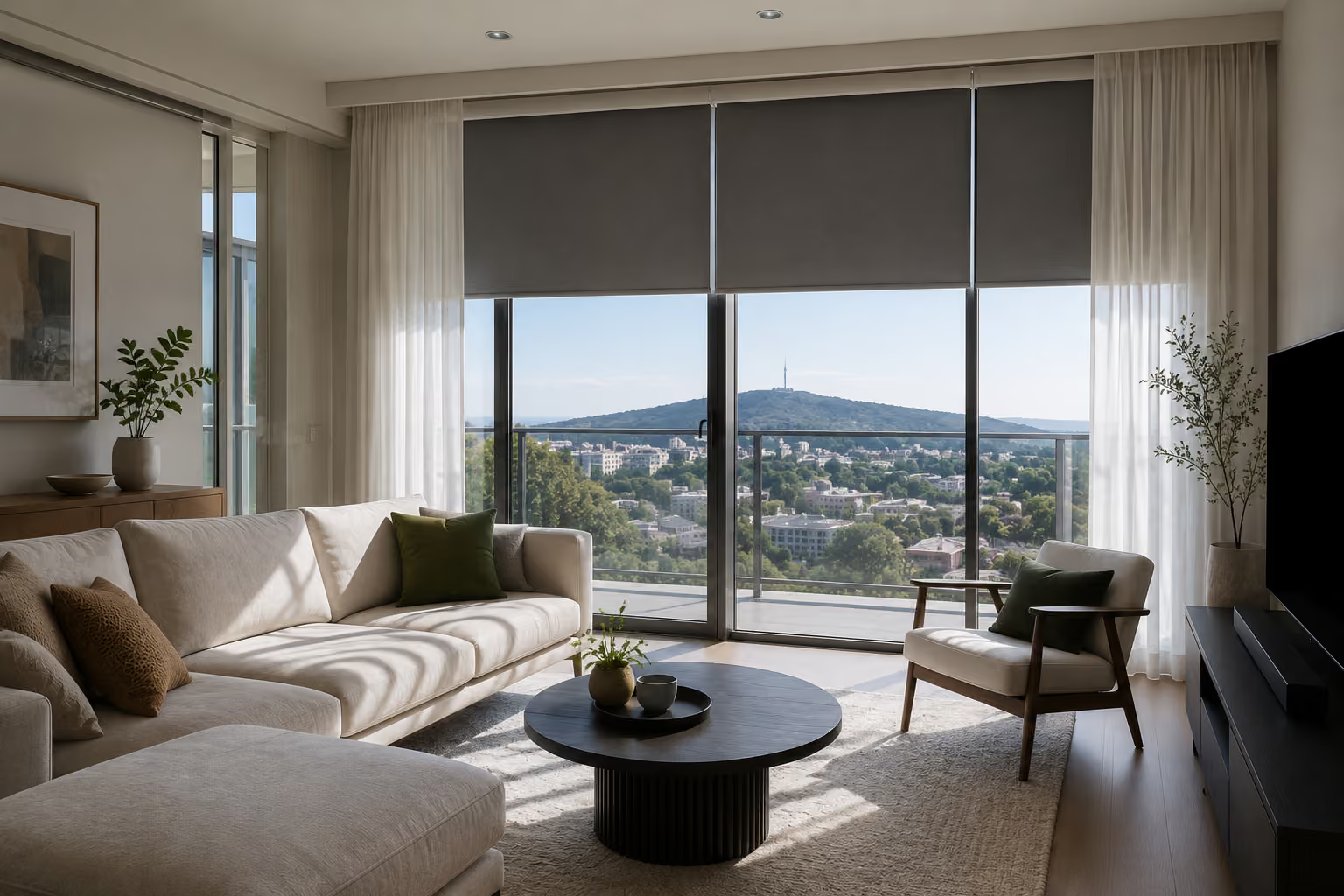
Privacy changes with lighting conditions. During the day, a brighter exterior and darker interior can make it more difficult to see into a room through a sheer section. At night, the relationship reverses when indoor lights are on.
This means no sheer-style fabric should be treated as reliable night-time privacy while it remains in its open or light-filtering position.
Veri Shades allow the fabric folds to rotate so the more opaque sections overlap. This creates stronger privacy than the open position, although the final result depends on the selected fabric, installation and the viewing angle around the edges.
Motorisation can make this transition easier to maintain. The shades can be changed manually with a remote when privacy is needed or, where compatible controls are available, scheduled to move at a chosen time.
A schedule should still be reviewed as daylight hours change. Canberra sunset times vary considerably between winter and summer, so one permanent setting may close the shades unnecessarily early during part of the year or too late during another.
Households requiring stronger room darkening should confirm whether Veri Shades alone will meet their expectations. Their main strength is flexible light and privacy control with a soft appearance, not necessarily the same darkness produced by a dedicated blockout curtain.
Sweet Home Blinds’ article about morning light, blockout curtains and sheer curtains is helpful for homeowners deciding whether a layered blockout solution is more appropriate for a bedroom.
Why Veri Shades Suit Sliding Doors
A sliding door must remain easy to access. Any window furnishing installed across it needs to work with the direction of travel, door handles, furniture placement and the way people move between indoor and outdoor areas.
Veri Shades are particularly relevant for wide doors because their fabric folds can be moved across the track and provide a softer alternative to rigid vertical slats. The individual folds can also make the covering feel less restrictive around an opening that is used frequently.
Motorisation is useful when the complete shade is wide or when the homeowner wants to clear the doorway without manually drawing a large amount of fabric. However, the motor should never be used to compensate for an unsuitable layout. Track length, stacking position, motor access and the clear door opening must be planned before installation.
The most important details to assess are:
Total width and height of the opening
Direction in which the glass door slides
Position of handles, locks and door frames
Preferred side for the fabric to stack
Nearby walls, furniture and curtain returns
Access to power or a future charging point
Required level of daytime and night-time privacy
Compatibility between the selected fabric, track and motor
Apartment or owners corporation requirements
These checks are best completed during professional measurement. Approximate dimensions may identify the general product category, but they do not show whether the final shade will clear the handle, stack in the preferred location or leave enough of the doorway accessible.
Battery-Powered or Hardwired?
Motorised window furnishings generally require either a permanent electrical connection or a battery-based power source. The appropriate option depends on the product, motor compatibility, window size and stage of the building project.
Hardwired systems can be planned into a new build or major renovation before walls and ceilings are finished. They provide permanent power but may require coordination between the window-furnishing installer, electrician and builder.
Battery motors can be more practical in completed homes because they may avoid running new electrical wiring to the window. They still need to be accessible for charging or battery servicing, so the location of the motor and nearby furniture should be considered.
Sweet Home Blinds’ article on battery motors for blinds and curtains explains how window size, product weight, frequency of operation and charging access affect the decision.
Battery life should not be presented as one universal number. It varies according to motor capacity, shade dimensions, frequency of movement and the functions being used. A wide Veri Shade operated several times each day may have different charging requirements from a smaller covering moved occasionally.
Homeowners should also confirm what happens during a power interruption or when the battery requires charging. The answer depends on the selected motor and control system.
Remote, App, Voice or Schedule?
A motorised product does not need a complicated smart-home system. For many households, a dedicated remote provides the simplest and most reliable control.
App control can be helpful when several window furnishings need to be organised into rooms or groups. Voice control may be convenient when someone is cooking, carrying items or has limited mobility. Scheduling can support regular routines, such as changing the privacy position near sunset.
These functions depend on the selected motor, hub and platform. Compatibility should be checked before purchase because not every motor communicates with every app or voice assistant.
The control method should also remain understandable to everyone in the home. A system that depends on one person’s phone or an unfamiliar app may become less useful for visitors, children or older residents.
The most practical approach is often layered: a physical remote or wall control for everyday use, with app or schedule functions added where they provide a clear benefit.
Sweet Home Blinds’ motorisation guide discusses these options in more detail and helps homeowners decide whether automation is worth adding to selected windows rather than the entire home.
Can Automation Improve Energy Efficiency?
Motorisation does not make Veri Shades inherently more insulating. The possible benefit comes from operating window coverings at useful times instead of leaving them in one position all day.
The Australian Government’s Your Home glazing guide explains that windows influence heat gain, heat loss and overall home comfort. It also notes that suitable window furnishings can improve the performance of existing window systems.
During winter, a homeowner may open the shades when useful sunlight reaches the room and close them before the temperature drops. During summer, rotating or closing the fabric before strong sunlight enters may help manage glare and indoor comfort.
Research into shading strategies and building energy performance shows that the effect of a blind depends on factors including window orientation, climate, control strategy and operating time. That study focuses on roller blinds in a different climate, so its numerical results should not be applied directly to motorised Veri Shades in Canberra. It does, however, demonstrate why timing and window direction matter.
Any energy-saving claim must therefore be cautious. Actual outcomes depend on the glazing, external shading, building insulation, fabric, orientation and household behaviour. Automation can support more consistent operation, but it cannot replace an efficient building envelope.
Safety, Accessibility and Easier Daily Use
Motorisation can reduce the need for manual cords, chains or wands around the opening. This can create a cleaner appearance and may improve accessibility for people who find reaching, pulling or twisting difficult.
Product Safety Australia warns that unsecured cords on internal window coverings can create a strangulation hazard for young children. Its blinds, curtains and window fittings safety guide advises households to choose compliant products and keep cords away from children and climbable furniture.
A motorised shade still requires safe planning. Remote controls and charging cables should be stored appropriately, the track must be securely installed, and users should not pull against the fabric while the motor is moving.
Motorisation may also be useful in homes occupied by older adults or people with limited mobility. A wide window furnishing can be adjusted without walking across the room or applying repeated manual force. However, control buttons, apps and charging arrangements should remain simple and accessible.
Braddon Apartment: A Real Veri Shades Example
The Braddon Apartment project shows how Veri Shades can work across a contemporary Canberra apartment opening.
Sweet Home Blinds selected Veri Shades to combine the softness of curtains with adjustable privacy and light control. The vertical folds created a clean finish while avoiding the harder appearance associated with some conventional blind systems.
The project is useful for understanding the product’s visual effect. It demonstrates how Veri Shades sit in a real living area, respond to natural light and complement a modern apartment interior.
The project page does not identify the installation as motorised. It should therefore not be presented as evidence of a completed motorised Veri Shades system. Instead, it provides a realistic reference for homeowners considering the fabric style before discussing a compatible motorised option.
This distinction matters because the appearance of a product and its operating system are separate decisions. A homeowner may like the Braddon Apartment’s soft folds but still need professional advice about motor capacity, track configuration, control method and power supply.
Maintenance and Motor Access
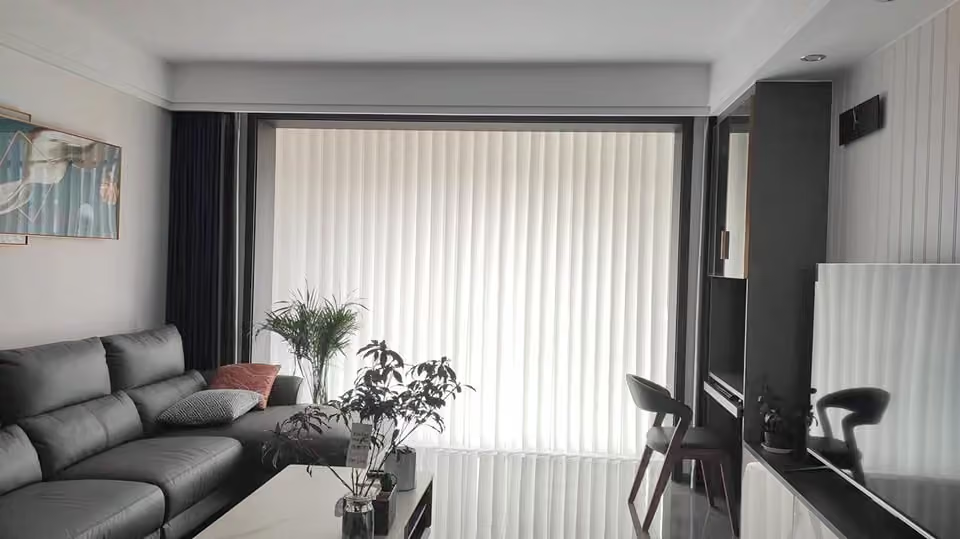
Veri Shades require gentle maintenance because the individual fabric folds can collect dust and may move when exposed to airflow around an open door.
Routine cleaning should follow the instructions supplied with the selected fabric. Light dust may be removed carefully with a suitable duster or low-suction vacuum attachment. Stains should not be scrubbed or treated with strong cleaning products unless specifically approved.
Motorised systems introduce additional components. The track should remain clear, the fabric should move without obstruction and battery-powered motors must remain accessible for charging. Furniture should not be positioned where it presses against the hanging folds or blocks the stacking area.
Users should operate the shade through the intended control rather than pulling against a moving motor. If the system becomes noisy, uneven or unresponsive, repeated operation may worsen the problem. The track, power source and control should be checked according to the supplier’s guidance.
Visit Sweet Home Blinds’ care and maintenance page for general ownership guidance, while following the product-specific instructions supplied with the final installation.
Cost and Planning Considerations
There is no single price for motorised Veri Shades. Cost depends on the width and height of the opening, selected fabric, track configuration, motor capacity, power source, control method and installation access.
A simple remote-controlled system may cost less than an installation that requires a hub, app integration or connection to a broader automation platform. Hardwired projects can involve additional electrical planning, while battery systems require consideration of charging access and long-term battery maintenance.
Motorisation may not be necessary for every opening. Homeowners can prioritise the sliding door, main living area or other windows that are wide, difficult to reach or frequently adjusted. Smaller secondary windows may remain manual.
The value of motorisation comes from regular use. If the shade is likely to move several times each day, easier control may noticeably improve the room. If it will remain in one position most of the time, manual Veri Shades may provide the required appearance and privacy at a lower starting cost.
Frequently Asked Questions
What are motorised Veri Shades?
They are Veri Shades fitted with a compatible motorised track or operating system. Depending on the system, users may be able to open, close or rotate the fabric through a remote, app, voice assistant or schedule.
Are Veri Shades suitable for sliding doors?
They can suit many wide windows and sliding doors because the fabric travels horizontally and can stack away from the opening. Door direction, handles and the required clear opening must be measured first.
Do Veri Shades provide complete blockout?
They provide adjustable light control and stronger privacy when the opaque sections overlap, but they should not automatically be treated as a complete blockout system. Fabric selection and installation gaps affect the result.
Can motorised Veri Shades use battery power?
Compatible battery-powered options may be available, depending on the selected track, motor and shade dimensions. Charging access and expected use should be discussed during consultation.
Can they connect to a smart home?
Some motor systems support apps, schedules or voice assistants, sometimes through an additional hub. Compatibility should be confirmed before ordering.
Are motorised Veri Shades safe for children?
Motorisation can reduce the need for loose manual cords and chains, but the complete product must still be correctly specified, installed and used. Furniture should also be kept away from any hazardous cords or moving components.
Can existing manual Veri Shades be motorised later?
Possibly, but not every existing track or configuration can be converted. The installer needs to inspect the current product, dimensions, track condition and available power before recommending a retrofit.
Are Motorised Veri Shades Right for Your Home?
Motorised Veri Shades are most relevant when a homeowner wants soft fabric, adjustable privacy and easier control across a wide opening. They can suit apartment living rooms, sliding doors and other spaces where light conditions change throughout the day.
They are not automatically the best choice for every room. A bedroom requiring stronger darkness may need blockout curtains or blinds. A small, accessible window may not justify motorisation. A high-use sliding door, however, may benefit significantly from simpler opening and rotation.
Explore Sweet Home Blinds’ motorised Veri Shades, read more practical advice in the Sweet Home Blinds Journal, or browse the company’s completed Canberra projects.
When you are ready to discuss your window dimensions, sliding-door access and preferred control method, book a consultation with Sweet Home Blinds. You can also visit the Fyshwick showroom by appointment to compare Veri Shades, fabrics and other window-furnishing options in person.
Ready to make a wide window or sliding door easier to control? Contact Sweet Home Blinds for professional measurement, motorisation advice and installation across Canberra and surrounding regions.
Follow Sweet Home Blinds on Facebook and Instagram for completed projects and Canberra window-furnishing ideas.