


Blinds Canberra: How to Choose the Right Style for Every Room
- Qi Xin
- Mar 23
- 10 min read
Choosing blinds sounds simple until you’re actually standing in a room trying to decide what will work every single day. A style that looks perfect in a showroom can feel too dark in the lounge room, too hard to clean in the kitchen, or not private enough in the bedroom. That’s why the best choice usually doesn’t come from picking one blind and using it everywhere. It comes from looking at how each room is used, how much light it gets, and what you want the space to feel like.
In Canberra, that decision matters even more. Homes here deal with bright summer light, colder winter mornings, changing sun angles, and the very practical need for warmth, privacy, and comfort across the year. Good blinds are not only about appearance. They affect how your home feels at breakfast, how well your child naps in the afternoon, whether your study gets glare on the screen, and whether your living room still feels inviting once the sun drops.
At Sweet Home, we often find that homeowners are not really asking, “What blinds look nice?” They’re asking, “What will make this room easier to live in?” That’s a much better question. If you’re comparing custom blinds in Canberra, this guide will help you choose the right style for each room without overcomplicating the process.
Why a Room-by-Room Approach Works Better
One of the most common mistakes people make is choosing blinds based only on a single photo, trend, or fabric sample. The problem is that every room asks for something slightly different. A bedroom usually needs stronger light control. A kitchen needs practicality. A living room often needs a balance of softness, privacy, and flexibility. A home office needs glare control without making the room feel shut in.
When you choose blinds room by room, you get a home that feels more consistent in daily use, even if the actual products vary from space to space. That’s also why the best homes often mix solutions. You might use roller blinds in one area, Roman blinds in another, and a layered treatment with curtains somewhere else. The goal is not to force one look everywhere. The goal is to make the whole home feel considered.
For most Canberra homes, the right blind usually comes down to four things:
how much privacy the room needs
how much natural light you want to keep
how easy the blind is to clean and use
how well it supports comfort through the seasons
Once you look at each room through that lens, the decision becomes much clearer.
Living Rooms: Balance Light, Privacy, and Softness
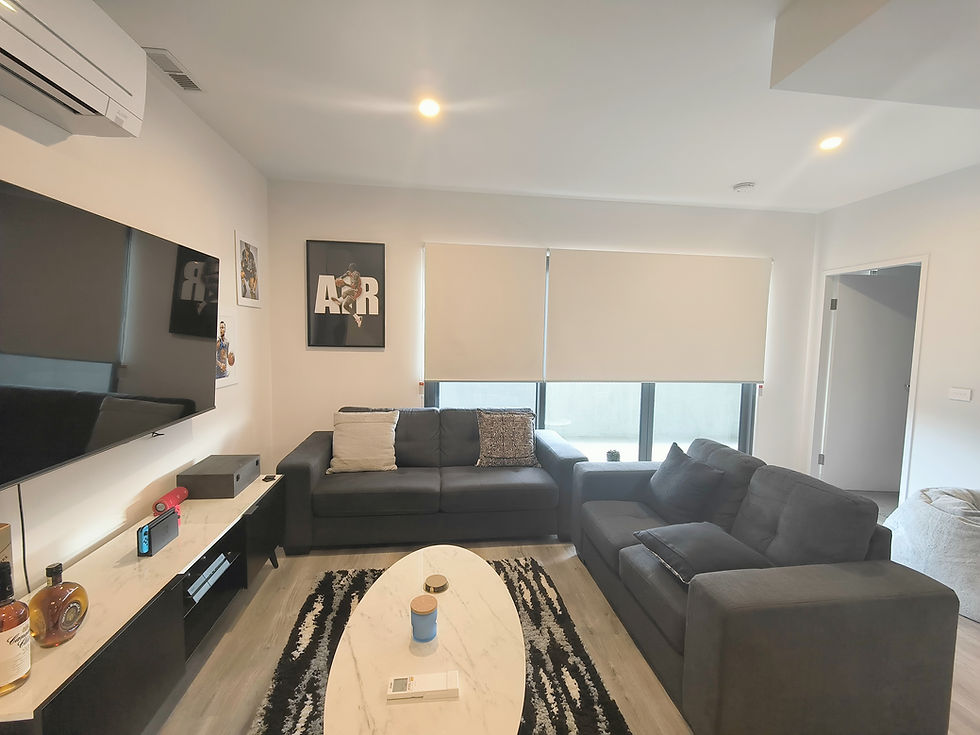
The living room is usually where people want the most flexibility. You may want full daylight in the morning, softer filtered light in the afternoon, and privacy once the lights come on in the evening. That’s why living rooms often benefit from blinds that can shift with the day rather than simply being open or closed.
Roller blinds are a popular choice because they’re clean, minimal, and easy to operate. They suit modern interiors especially well and don’t visually overcrowd the room. If you like a streamlined look, they are often a very practical starting point. Roman blinds, on the other hand, bring a softer, more decorative feel. They can make a living area feel warmer and more finished, especially in homes where you want texture and fabric to do a bit more of the design work.
Venetian blinds can also work well in living spaces, especially if precise light control matters to you. Their angled slats let you adjust the amount of light without fully exposing the room, which can be useful if your front lounge faces the street or receives harsh afternoon sun.
For living rooms, these styles tend to work best:
Roller blinds for a clean, modern look and simple operation
Roman blinds for softness, texture, and a more decorative finish
Venetian blinds for adjustable light and privacy control
Layered blinds with curtains when you want the room to feel more complete and luxurious
If your living room is one of the most visible spaces in the house, it’s often worth pairing blinds with curtains to create a more refined, layered look. That combination can soften hard lines, improve comfort, and make the room feel more intentionally designed.
Bedrooms: Prioritise Sleep, Privacy, and Quiet Comfort
Bedrooms ask different things from window furnishings. Here, appearance still matters, but function matters first. If a blind looks beautiful but lets in too much early light, it can become frustrating very quickly. Bedrooms usually need better darkness, better privacy, and a sense of comfort that suits rest rather than activity.
That’s why roller blinds with blockout fabric remain one of the most practical choices for bedrooms. They’re simple, effective, and easy to coordinate with most interior styles. If you want a more tailored or elevated look, Roman blinds can also work beautifully, particularly when the bedroom design leans more classic or soft contemporary.
For families, shift workers, and anyone who values sleep quality, the best blinds for bedrooms in Canberra are usually the ones that reduce light leakage and help the room feel more insulated during colder months. In some cases, layering a blockout blind with curtains gives the best result, especially in larger bedrooms or rooms with strong morning sun.
Here’s what to prioritise in bedroom blinds:
Blockout performance for better sleep and less early-morning glare
Privacy at night when interior lights are on
A warmer, softer feel that suits a restful space
Easy operation for everyday use, especially in children’s rooms
If you are fitting blinds in a child’s bedroom, safety matters as much as style. Australia has mandatory requirements around blind and curtain cord safety, and loose cords should always be secured and installed correctly. It’s worth reviewing the official Product Safety Australia guide for blinds, curtains and window fittings when planning bedrooms, nurseries, or any room used by young children.
Kitchens and Dining Areas: Think Practical First
Kitchens are not the place for anything that is fussy, high-maintenance, or difficult to wipe down. This is one room where practicality should lead the decision. Steam, cooking residue, splashes, and regular handling all matter. Even if the window is beautiful, the wrong blind will quickly show wear if it is not suited to the space.
This is where roller blinds tend to shine. They are simple, tidy, and generally easy to maintain. Their low-profile design works well above sinks and benches, where you want the window treatment to stay out of the way visually and physically. Venetian blinds, particularly in practical materials, can also be useful where you want more adjustable light control during the day.
Dining spaces sit somewhere between function and atmosphere. If your dining area is open-plan and connected to the living zone, you may want the blinds to visually match nearby areas. If it is a separate room, you have more freedom to bring in softness and character.
In kitchens and dining areas, it helps to look for:
Easy-clean surfaces that handle day-to-day mess
Moisture-friendly materials where steam is present
Good daytime light without harsh glare
A design that feels visually light, especially in smaller spaces
The best choice in these rooms is usually the one that feels effortless to live with. If you have to think about it too much while cooking, cleaning, or setting the table, it is probably not the right solution.
Bathrooms and Laundries: Privacy Without Heaviness
Bathrooms and laundries are often overlooked when people plan their blinds, but they deserve just as much thought. These are utility spaces, yes, but they still contribute to the feel of the home. More importantly, they need privacy at all times and materials that can cope with moisture.
Blinds here should feel neat, hygienic, and easy to manage. A heavy, fabric-rich option may not be ideal in a space that deals with humidity. Something simple and more moisture-tolerant usually works better. If the bathroom window is small, you also want to avoid a treatment that makes the whole room feel boxed in.
This is often a case where less is more. A blind that gives privacy, diffuses light, and sits neatly within the frame will usually do the job better than something more decorative. In laundries, where function matters most, simplicity almost always wins.
Home Offices and Study Nooks: Reduce Glare, Keep Focus
More Canberra homes now include a study, a work-from-home setup, or at least a desk area that needs to perform properly during the day. These spaces present one very specific problem: glare. A window that feels lovely in the morning can become a headache by mid-afternoon when sunlight hits the screen directly.
For a study, the right blind is less about drama and more about control. You want enough light to keep the room bright and pleasant, but not so much that it causes eye strain or forces you to shut the room off completely. Venetian blinds can be useful here because they allow more precise adjustment. Roller blinds also work well when you want a clean look and consistent filtering or blockout performance, depending on the window orientation.
For study areas, the best features are usually:
glare reduction for screens and video calls
adjustable light through the day
a tidy look that doesn’t distract from the space
privacy if the room faces the street or nearby homes
This is one of those spaces where custom sizing really helps. A poorly fitted blind in a study is noticeable every day because you are spending hours in the room. If you’re comparing options, it’s often worth starting with a professionally measured Blinds Canberra range rather than trying to make a standard size work.
Hallways, Sliding Doors, and Awkward Windows Need Their Own Strategy
Not every space in a home is a standard square window in a bedroom or lounge. Canberra homes often include tall stair windows, narrow hallway openings, wide stacker doors, and odd-shaped feature windows. These areas can be the most frustrating to furnish if you try to treat them like ordinary rooms.
Sliding doors, for example, need blinds that are easy to move and don’t become annoying every time someone walks outside. Narrow side windows may need something visually subtle so they don’t dominate the wall. Tall windows may need motorisation simply because everyday use becomes impractical otherwise.
When a space is awkward, these questions help:
How often is this blind going to be used?
Does the blind need to move with a door?
Will standard sizing leave obvious gaps?
Would motorisation make the space more usable?
These are also the spaces where homeowners often realise that one-size-fits-all rarely delivers the best outcome. Awkward windows are exactly where custom blinds Canberra services start to make real sense, because the finish looks cleaner and the room works the way it should.
Blinds vs Curtains: Do You Actually Need Both?
A lot of homeowners think they need to choose between blinds and curtains, but the truth is that many of the best interiors use both. Blinds handle privacy, light control, and clean lines. Curtains add softness, depth, and a more finished visual feel. Together, they can solve functional issues while also improving how the room looks.
This layered approach works especially well in living rooms and bedrooms. A blind can manage everyday light and privacy, while curtains add insulation, texture, and a more polished result. It is one of the easiest ways to make a room feel warmer and more complete without changing the structure of the space.
That doesn’t mean every room needs both. Kitchens, laundries, and some bathrooms are often better with blinds alone. But in the main living and sleeping zones, layering is often what turns a practical choice into a beautiful one.
If you want to understand how different furnishing styles can work together, you can also explore more about the Sweet Home approach on the About Us page, where the focus is clearly on tailored solutions rather than purely off-the-shelf window coverings.
What Matters Specifically in Canberra Homes
Canberra homes need window furnishings that do more than just look good. Seasonal comfort is a real part of the conversation here. Sun exposure changes significantly through the year, and windows can strongly affect how warm or cool a room feels. Australian Government guidance through YourHome highlights the importance of shading in controlling solar gain, while ACT Government advice also points to energy-efficient window treatments such as honeycomb or Roman blinds and thermally backed curtains as practical ways to improve comfort.
That doesn’t mean every home needs the same product. It means your blinds should be chosen with orientation, sunlight, and room use in mind. A west-facing family room may need a different strategy from a shaded south-facing bedroom. A north-facing living room may benefit from something that controls glare but still welcomes winter sun.
A Canberra-focused blind selection usually benefits from thinking about:
sun direction and heat gain across the day
winter comfort and insulation
privacy in denser suburbs or front-facing rooms
flexibility, especially in multifunctional spaces
This is also why showroom samples alone are not enough. The right blind is the one that works in your actual room, with your actual light, and your actual routine.
Common Mistakes to Avoid When Choosing Blinds
Sometimes choosing the right style is less about finding the perfect blind and more about avoiding the wrong decision. Most disappointments come from rushing, copying a look without considering use, or underestimating installation details.
Here are the mistakes we see most often:
Choosing by colour only, without thinking about light control
Using the same blind in every room, even when each room functions differently
Ignoring window direction, especially on hot western or bright eastern sides
Forgetting safety, particularly where children are involved
Buying on dimensions alone, without considering how the blind will sit and operate in the space
A beautiful blind that is annoying to use will never feel like a good investment. A practical blind that clashes with the room will also disappoint. The sweet spot is always where function and design meet.
Final Thoughts: The Right Blind Should Make the Room Easier to Live In
When people search for Blinds Canberra, they are often really searching for clarity. They want to know what will suit their home, what will last, and what will make daily life feel easier. The answer is rarely just one product. It is a room-by-room choice built around how you live.
For living rooms, think balance and softness. For bedrooms, think sleep and privacy. For kitchens, think durability and ease. For studies, think glare control. And for awkward windows or sliding doors, think practicality before trends.
The good news is that once you stop looking for one perfect blind for the entire house, the process gets much simpler. You begin choosing what works, not just what photographs well.
If you’re ready to explore a more tailored approach, start with the Sweet Home blinds collection, browse complementary curtain options, or get in touch to book a measure and quote. The best result usually comes from seeing the options in context and choosing blinds that genuinely suit the way each room is lived in.


Comments